

10 Effective Ways to Break Through Writer’s Block
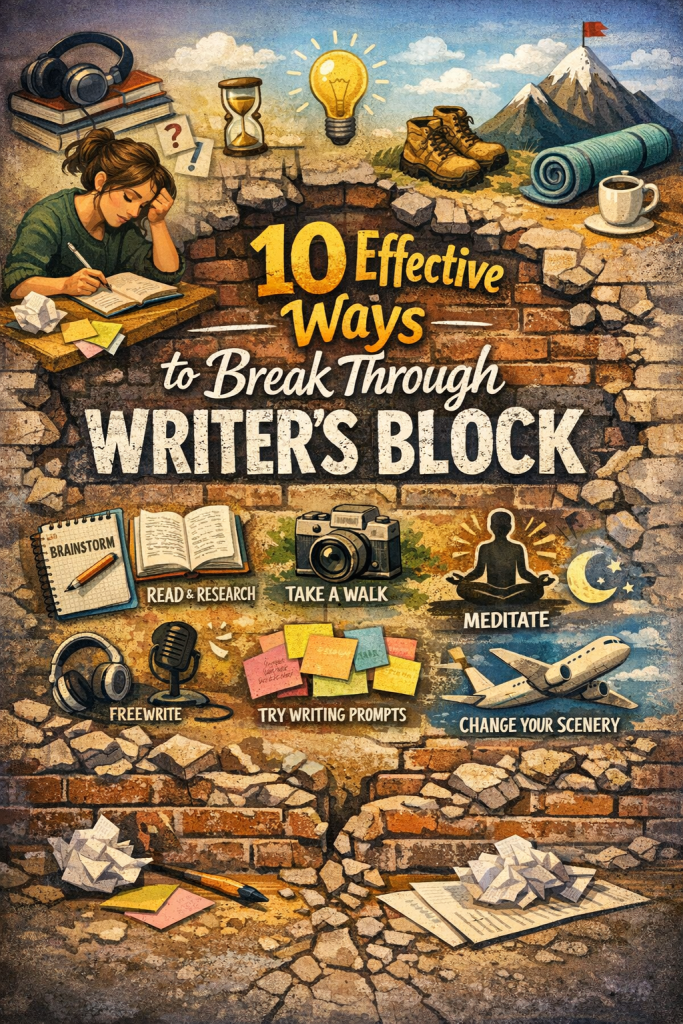
10 Effective Ways to Break Through Writer’s Block
Staring at a blank page — the cursor blinking like it’s mocking you — is a feeling every author and songwriter knows all too well. Writer’s block can leave you frustrated, uninspired, and doubting your creative abilities. But the good news is that writer’s block isn’t permanent. With the right strategies, you can break through the barrier and reignite your creative spark.
Here are 10 effective, actionable techniques to help you overcome writer’s block and get your ideas flowing again.
1. Change Your Environment
A fresh environment can spark fresh ideas.
Try:
- writing in a café, park, or library
- switching to a different room
- adding new lighting, décor, or music to your workspace
A new setting can shift your mindset and stimulate creativity.
2. Freewrite Without Judgment
Perfectionism is one of the biggest creativity killers.
Set a timer for 5–10 minutes and write nonstop. Don’t edit. Don’t evaluate. Don’t delete.
Let your thoughts spill onto the page. Freewriting helps bypass your inner critic and unlock ideas you didn’t know you had.
3. Seek Inspiration
Creativity thrives on input.
Engage with:
- art
- music
- books
- films
- nature
New sensory experiences can spark new perspectives — and new writing ideas.
4. Break Down Your Goals
Writer’s block often comes from overwhelm.
Instead of focusing on the entire piece, break your task into small, manageable steps:
- one paragraph
- one verse
- one scene
- one idea
Small wins build momentum.
5. Take a Break
Sometimes the best way to move forward is to step away.
Try:
- going for a walk
- meditating
- stretching
- doing a hobby you enjoy
A rested mind is more creative and more resilient.
6. Experiment With Prompts
Writing prompts give you a starting point when you feel stuck.
Try:
- random words
- first‑line prompts
- character prompts
- emotional themes
Prompts push your imagination in new directions.
7. Collaborate With Fellow Writers
Creativity expands when shared.
Connect with:
- other authors
- songwriters
- writing groups
- online communities
Fresh perspectives, feedback, and shared energy can help you break through blocks you can’t tackle alone.
8. Read and Listen Widely
Expose yourself to new voices, genres, and styles.
Read books outside your usual preferences. Listen to music you wouldn’t normally choose. Explore poetry, podcasts, or audiobooks.
New influences expand your creative vocabulary.
9. Establish a Routine
Creativity thrives on consistency.
Set a writing schedule — even if it’s just 10 minutes a day — and stick to it. Over time, your brain learns to show up creatively when you ask it to.
Routine builds discipline, and discipline fuels inspiration.
10. Embrace Imperfection
Your first draft doesn’t need to be brilliant — it just needs to exist.
Give yourself permission to write badly. You can refine, revise, and polish later. Progress matters more than perfection.
Perfectionism stalls creativity. Imperfection frees it.
Final Thoughts
Writer’s block is a challenge, not a dead end. By changing your environment, seeking inspiration, collaborating with others, and embracing imperfection, you can break through creative barriers and rediscover your flow.
Every writer — from bestselling authors to chart‑topping songwriters — faces writer’s block. What matters is how you move through it.
So the next time you feel stuck, return to these strategies and watch your words begin to dance across the page again.
Happy writing — the world is waiting for your voice.