

10 Effective Ways to Break Through Writer’s Block
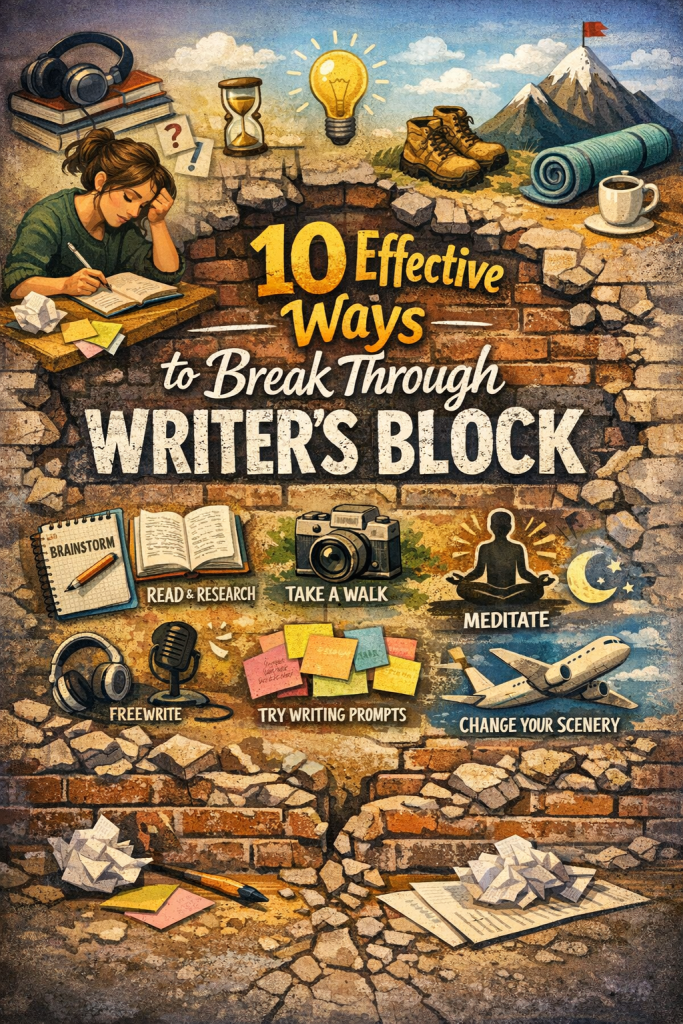
10 Effective Ways to Break Through Writer’s Block
Staring at a blank page — the cursor blinking like it’s mocking you — is a feeling every author and songwriter knows all too well. Writer’s block can leave you frustrated, uninspired, and doubting your creative abilities. But the good news is that writer’s block isn’t permanent. With the right strategies, you can break through the barrier and reignite your creative spark. Let’s delve deeper into each method, providing examples and insights that not only help you overcome writer’s block but also enrich your writing process.
Here are 10 effective, actionable techniques, along with detailed examples and insights, to help you overcome writer’s block and get your ideas flowing again. Each technique not only serves as a tool for overcoming obstacles but also enhances your writing skills and creativity.
1. Change Your Environment
A fresh environment can spark fresh ideas. Consider the psychological effects of your surroundings on your creativity.
For instance, a writer may find that working in a bustling café filled with the aroma of coffee and the sound of chatter helps them think more creatively than in a quiet office. Or perhaps a park, with its vibrant colors and natural sounds, can inspire a writer to explore themes of nature and tranquility.
Try:
- writing in a café, park, or library
- switching to a different room
- adding new lighting, décor, or music to your workspace
A new setting can shift your mindset and stimulate creativity.
2. Freewrite Without Judgment
Perfectionism is one of the biggest creativity killers. Many writers struggle with the pressure to produce perfect content on their first try.
Set a timer for 5–10 minutes and write nonstop. Don’t edit. Don’t evaluate. Don’t delete.
Let your thoughts spill onto the page. Freewriting helps bypass your inner critic and unlock ideas you didn’t know you had.
Consider famous authors who’ve spoken about the necessity of freewriting. For example, author Anne Lamott famously advocated for ‘shitty first drafts’ — emphasizing that the first draft doesn’t have to be good; it just needs to exist. This perspective can significantly reduce the fear associated with writing.
3. Seek Inspiration
Creativity thrives on input. Seeking inspiration from various sources can re-invigorate your writing process.
Engage with:
For example, a writer might draw inspiration from a powerful piece of music, leading them to explore deep emotional themes in their work. Or watching a thought-provoking documentary could spark an idea for a story that addresses societal issues.
- art
- music
- books
- films
- nature
New sensory experiences can spark new perspectives — and new writing ideas.
4. Break Down Your Goals
Writer’s block often comes from overwhelm. Breaking tasks down into smaller, manageable steps can make writing feel less daunting.
Instead of focusing on the entire piece, break your task into small, manageable steps:
- one paragraph
- one verse
- one scene
- one idea
Small wins build momentum.
5. Take a Break
Sometimes the best way to move forward is to step away. Taking breaks allows your mind to rest and can lead to breakthroughs.
For instance, if you’re writing a novel, instead of thinking about the entire story, focus on writing just one scene or character interaction each day. This approach allows for gradual progress, making it easier to stay motivated and engaged with your work.
Try:
- going for a walk
- meditating
- stretching
- doing a hobby you enjoy
A rested mind is more creative and more resilient.
6. Experiment With Prompts
Writing prompts give you a starting point when you feel stuck. They can lead you into unexpected directions.
Try:
- random words
- first‑line prompts
- character prompts
- emotional themes
Prompts push your imagination in new directions.
Consider the technique of the Pomodoro Technique, where you work for 25 minutes followed by a 5-minute break. This structured approach can help maintain focus while ensuring you get regular mental breaks, allowing ideas to percolate without the pressure of constant writing.
7. Collaborate With Fellow Writers
Creativity expands when shared. Collaborating with other writers can introduce new ideas and techniques.
Connect with:
- other authors
- songwriters
- writing groups
- online communities
Fresh perspectives, feedback, and shared energy can help you break through blocks you can’t tackle alone.
8. Read and Listen Widely
Expose yourself to new voices, genres, and styles.
Expose yourself to new voices, genres, and styles. Immersing yourself in diverse media can lead to unexpected insights.
For example, using a prompt like ‘Write about a time you faced a fear’ can lead to personal storytelling, while a prompt like ‘Imagine a world where people only communicated through colors’ can inspire imaginative fiction. The possibilities are endless.
New influences expand your creative vocabulary.
9. Establish a Routine
Creativity thrives on consistency.
Creativity thrives on consistency. Establishing a writing routine helps you cultivate a habit of writing.
Routine builds discipline, and discipline fuels inspiration.
10. Embrace Imperfection
Your first draft doesn’t need to be brilliant — it just needs to exist. Accepting imperfection is a crucial part of the creative process.
Give yourself permission to write badly. You can refine, revise, and polish later. Progress matters more than perfection.
For instance, co-writing a song can blend different styles and perspectives, or participating in a writing workshop can provide constructive feedback that enhances your work. Engaging with a community of writers fosters growth and offers motivation.
Perfectionism stalls creativity. Imperfection frees it.
10 Effective Ways to Break Through Writer’s Block
Writer’s block is a challenge, not a dead end. By changing your environment, seeking inspiration, collaborating with others, and embracing imperfection, you can break through creative barriers and rediscover your flow.
Every writer — from bestselling authors to chart‑topping songwriters — faces writer’s block. What matters is how you move through it.
So the next time you feel stuck, return to these strategies and watch your words begin to dance across the page again.
Happy writing — the world is waiting for your voice.
For example, reading a mystery novel can inspire you to incorporate suspense elements into your writing, while listening to classical music might lead you to explore lyrical beauty in your poetry. Each new experience enriches your creativity.
For example, many successful authors have specific times when they write, whether early in the morning or late at night, creating a ritual that signals their brain to enter a creative state. This practice can gradually build your writing muscles.
Consider how famous authors often emphasize that writing is rewriting. For example, Ernest Hemingway famously said, ‘The first draft of anything is shit.’ This reinforces that the writing process is iterative and that initial drafts are merely stepping stones towards excellence.
Additionally, maintaining a positive mindset and believing in your abilities can empower you to navigate through difficulties. Remember, even the most successful writers experience periods of doubt and stagnation. It’s how you respond that makes all the difference.
For example, J.K. Rowling faced numerous rejections before finding success with the Harry Potter series. Her journey illustrates that persistence and a willingness to adapt are key components in overcoming writer’s block.
In conclusion, embrace these strategies as tools in your writing arsenal. Remember, the journey of writing is as important as the destination. Keep exploring, keep creating, and know that with each word, you are contributing to a richer world of ideas.
Consider exploring additional resources that delve deeper into writing techniques, creativity, and overcoming challenges. These can complement the strategies discussed and provide further insights into achieving your writing goals.
Finally, remember that every writer’s path is unique. Embrace your journey and make the most of the process. With dedication and the right mindset, you will not only overcome writer’s block but also grow as a writer.
And always remember, creativity is a journey, not a destination. Embrace the process, and let your unique voice be heard.
Further Reading:
Resources to help you go deeper
- check out Fast-Track Your Songwriting Career
- grab your copy of The Emotional Hooks Handbook
- learn more in Write a Song in a Day