

5 Simple Fixes for a Cluttered Digital Life
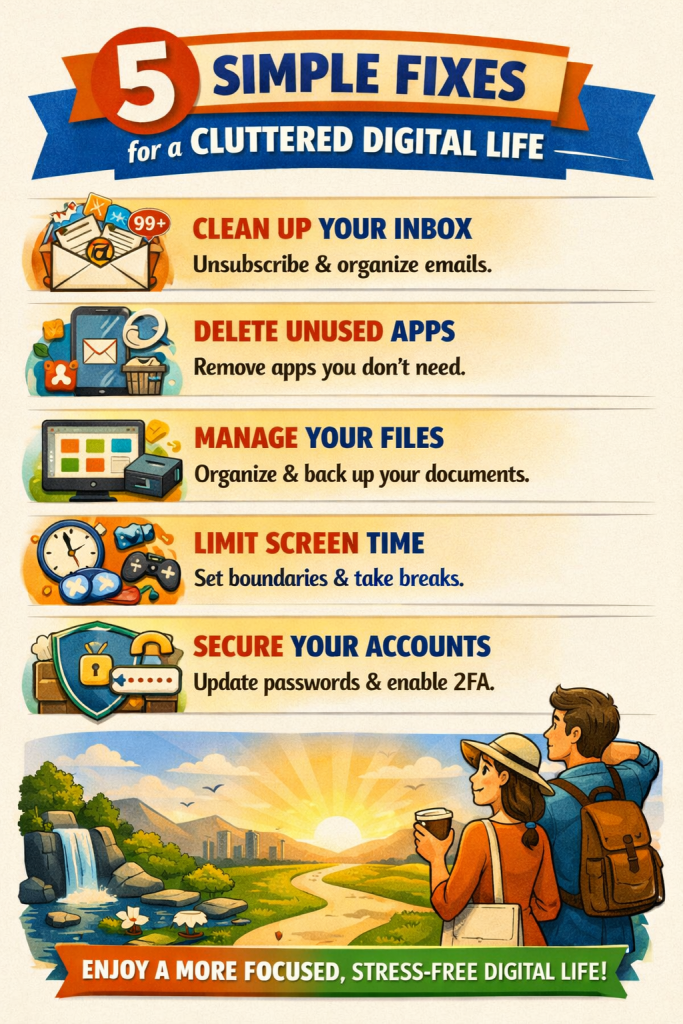
A calmer, more intentional digital life becomes possible when you treat digital decluttering not as a one‑time purge, but as a set of simple, repeatable habits that protect your focus and mental clarity.
5 Simple Fixes for a Cluttered Digital Life
Decluttering Your Digital World in Five Simple Steps
In a fast‑paced digital world, it’s easy to feel buried under overflowing inboxes, constant notifications, and endless streams of content. Every ping, pop‑up, and unread badge competes for your attention. Over time, this invisible clutter drains focus, increases stress, and makes it harder to stay present. Even when you’re not actively checking your devices, the mental residue of digital overload lingers in the background.
The good news is that a few simple habits can restore clarity and help you take back control of your digital life. You don’t need a full digital detox or a complicated system—just small, intentional shifts that reduce noise and create space for what truly matters.
1. Unsubscribe and Unfollow
Your digital environment shapes your mental environment. When your inbox and feeds are filled with noise, your mind becomes noisy too. Clearing out unnecessary inputs reduces mental friction and frees up attention for the things that genuinely support your goals and well‑being.
Spend a few minutes:
- Unsubscribing from newsletters you no longer read
- Unfollowing social accounts that don’t inspire, inform, or support you
- Muting or removing sources that add stress rather than value
A cleaner feed means more attention for what matters—your creativity, your relationships, your peace of mind. This small act of pruning can dramatically reduce the sense of overwhelm you feel each time you open your phone.
Why This Works
Every notification, headline, or post you scroll past requires a micro‑decision: Do I care about this? Should I click? Should I ignore it? These micro‑decisions add up. Reducing the number of inputs reduces the number of decisions, which reduces mental fatigue.
2. Organize Your Files
A chaotic file system slows you down and subtly increases stress. When you can’t find what you need—or when your desktop looks like a digital junk drawer—your brain registers it as unfinished business.
Create a simple structure that works across your devices:
- Use folders and labels for documents, photos, and downloads
- Archive or delete files you no longer need
- Keep your desktop and home screens minimal
An organized digital space makes it easier to find what you need when you need it. It also creates a sense of calm each time you open your device.
A Simple Structure That Works
You don’t need a complex system. Try:
- Work
- Personal
- Finances
- Creative Projects
- Archive
Inside each folder, add subfolders only when necessary. The goal is clarity, not perfection.
3. Turn Off Notifications
Notifications are one of the biggest contributors to digital overwhelm. They interrupt your focus, hijack your attention, and create a constant sense of urgency—even when nothing is actually urgent.
Reduce distractions by:
- Turning off non‑essential alerts
- Keeping only critical notifications active
- Scheduling “Do Not Disturb” periods during focused work or rest
Fewer interruptions help you stay grounded and intentional. You reclaim your ability to choose when to engage with your devices instead of reacting to them.
The Hidden Cost of Notifications
Each interruption—even a quick glance—can take your brain several minutes to fully refocus. Multiply that by dozens of notifications a day, and you lose hours of deep focus without realizing it.
4. Take a Digital Detox
Stepping away from screens resets your mind. A detox doesn’t have to be extreme or long to be effective. Even short breaks can dramatically improve clarity and calm.
Try:
- A few hours without your phone
- A screen‑free evening
- A weekend unplugged
Use the time to reconnect with nature, creativity, or activities that bring you joy. These pauses give your brain a chance to rest, reset, and return to your digital world with more intention.
Why Breaks Matter
Your brain needs downtime to process information, integrate ideas, and recover from constant stimulation. Without breaks, you stay in a low‑grade state of mental fatigue that makes everything feel harder.
5. Create Healthy Tech Boundaries
Boundaries prevent technology from taking over your day. Without them, your devices become the default filler for every spare moment—morning, night, and every pause in between.
Try:
- Avoiding your phone first thing in the morning and before bed
- Establishing tech‑free zones like the dining room or bedroom
- Setting specific times for checking email or social media
These small shifts help you build a more mindful relationship with your devices. You become more intentional about when and how you engage with technology, rather than letting it dictate your attention.
The Power of Ritual
Replacing automatic scrolling with intentional rituals—morning journaling, a walk, a cup of tea, a moment of stillness—creates a healthier rhythm for your day.
Reclaiming Your Digital Peace
Digital clutter doesn’t just fill your devices—it fills your mind. By making these simple changes, you can reduce overwhelm, regain focus, and create a healthier, more intentional connection with technology. A calmer digital world supports a calmer mind—and opens up space for what truly matters in your life.
Which part of your digital world feels most ready for a reset right now?