

5 Simple Ways to Reduce Waste Without Overhauling Your Lifestyle
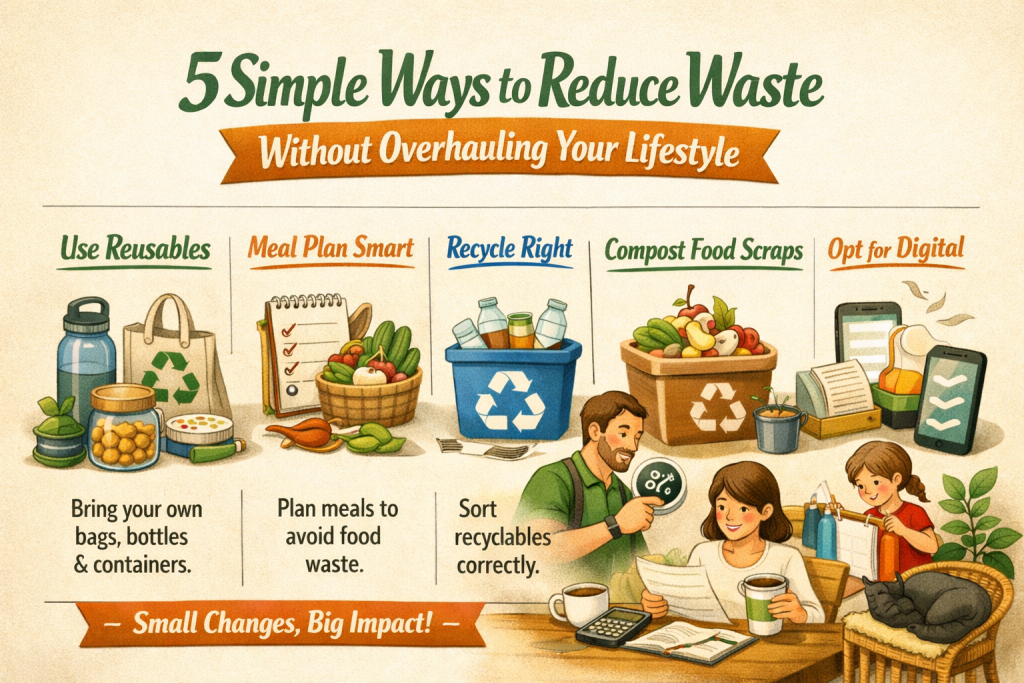
Reducing waste without overhauling your lifestyle works because the smallest, most repeatable habits are the ones that actually stick. When a change takes less than a minute, doesn’t require new skills, and fits into your existing routine, it becomes automatic—and automatic habits are the ones that create real environmental impact over time. The five actions you highlighted—reusable bags, reusable bottles, composting, buying in bulk, and choosing minimal packaging—cover the biggest everyday waste streams while staying simple enough to maintain for years.
Why Small Waste‑Reduction Habits Create Big Impact
Tiny habits scale in a way dramatic lifestyle changes rarely do. Each small action replaces dozens or hundreds of disposable items over the course of a year, and because the effort is low, you’re far more likely to keep doing it.
These habits also sharpen your awareness. Once you start noticing waste in one area, you naturally begin spotting opportunities elsewhere. This creates a positive feedback loop where progress leads to more progress—without burnout or guilt.
🛍️ Reusable Shopping Bags as a Simple Default
Plastic bags are one of the most common forms of household waste, and also one of the easiest to eliminate. Reusable bags are durable, inexpensive, and incredibly low‑effort once they become part of your routine.
Why they work:
- They prevent hundreds of plastic bags from entering landfills or waterways each year.
- They reduce clutter at home—no more overflowing bag-of-bags.
- They’re easy to keep accessible in your car, backpack, or entryway.
The key is consistency. When reusable bags become your automatic choice, the impact compounds quickly.
💧 Reusable Water Bottles as a Daily Anchor Habit
A reusable water bottle is one of the highest‑impact swaps you can make because it replaces something people use constantly. It’s also a habit that reinforces itself: the more you carry it, the more you hydrate, and the less you rely on single‑use plastics.
Why this habit sticks:
- It saves money—bottled drinks add up fast.
- It reduces plastic waste dramatically.
- It’s visible, which makes the habit feel rewarding.
- It encourages healthier hydration patterns.
Choosing a bottle you genuinely enjoy using—comfortable, easy to clean, and suited to your routine—makes this habit effortless.
🌱 Composting as a Way to Transform Organic Waste
Food waste is a huge portion of household trash, and when it ends up in landfills, it produces methane, a potent greenhouse gas. Composting diverts this waste and turns it into something useful.
Why composting is so impactful:
- It dramatically reduces the volume of your trash.
- It prevents methane emissions from landfills.
- It creates nutrient‑rich soil for gardens or community programs.
- It’s easy to start with a small countertop bin or local drop‑off site.
Even if you don’t garden, composting is one of the most meaningful waste‑reduction habits available.
🥣 Buying in Bulk to Reduce Packaging
Bulk shopping reduces packaging waste and often lowers cost per unit. It also encourages more intentional purchasing because you buy only what you need.
Best items to buy in bulk:
- Grains
- Nuts
- Spices
- Dried fruit
- Beans
- Baking staples
Bringing your own containers or jars makes the process even more sustainable. Over time, bulk shopping simplifies your pantry and reduces the amount of packaging entering your home.
📦 Choosing Products With Minimal or Sustainable Packaging
Packaging is one of the biggest contributors to household waste. Choosing products with minimal, recyclable, or compostable packaging reduces your environmental impact at the source.
Why this habit matters:
- It shifts demand toward companies that prioritize sustainability.
- It reduces clutter and trash at home.
- It encourages more mindful purchasing.
- It’s an easy filter to apply while shopping.
This habit doesn’t require perfection—just a preference for simpler, lower‑waste options.
How These Habits Work Together
Each habit targets a different category of waste—plastic bags, bottles, food scraps, packaging, and unnecessary purchases. Together, they create a balanced, low‑effort system that reduces your footprint without requiring major lifestyle changes.
They also build momentum. Once these habits feel natural, you may find yourself exploring additional sustainable practices that fit your routine, like repairing items instead of replacing them or choosing secondhand goods.
A sustainable lifestyle isn’t built through dramatic changes—it’s built through small, consistent actions that align with your values and daily rhythms.
As you look at your own routine, which of these five habits feels like the easiest one to strengthen or expand next?