

Navigate Negative Feedback: How Musicians Can Grow Without Losing Heart
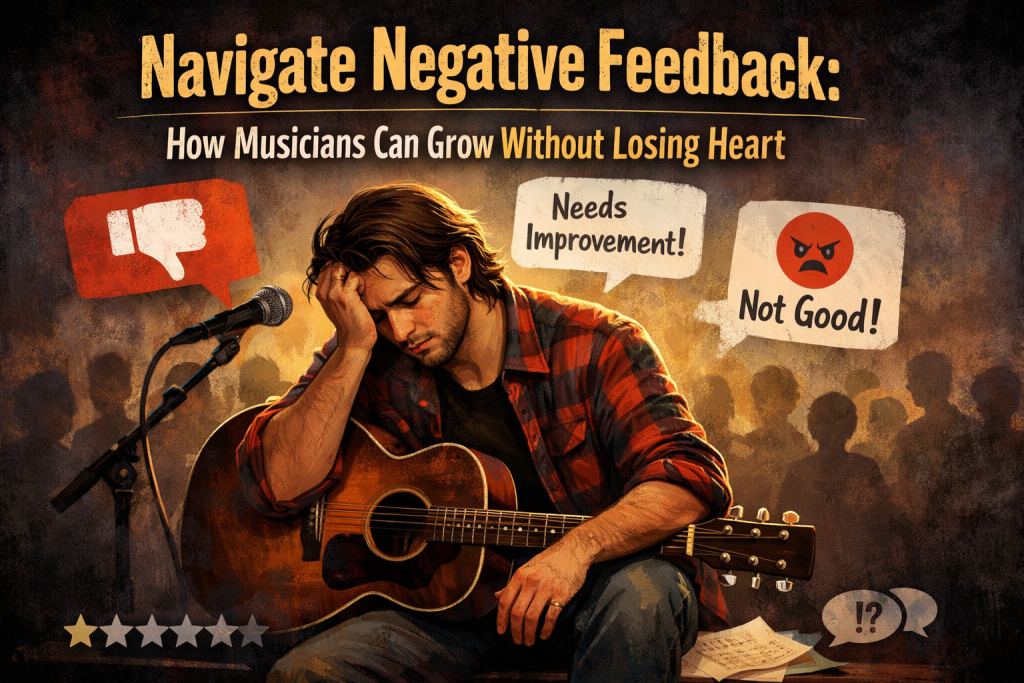
Navigate Negative Feedback: How Musicians Can Grow Without Losing Heart
Feedback is an essential part of growth — especially in creative fields like music. Whether it comes from fans, peers, mentors, or industry professionals, feedback can help you refine your craft, strengthen your artistic voice, and connect more deeply with your audience. But let’s be honest: receiving feedback, especially negative feedback, can feel intimidating. Sometimes it’s tempting to avoid it altogether.
Yet avoiding feedback doesn’t protect you — it limits you. Learning to navigate negative feedback with clarity and confidence can turn potential setbacks into powerful stepping stones.
Here’s how to approach feedback in a way that supports your growth rather than undermines your confidence.
Why Feedback Matters
Feedback gives you something you can’t get on your own: perspective.
It helps you:
- identify blind spots
- refine your strengths
- understand how your music lands with others
- grow faster and more intentionally
Without feedback, you risk repeating the same mistakes, staying stuck in your comfort zone, or missing opportunities to evolve your sound.
Common Reasons Musicians Avoid Feedback
1. Fear of Criticism
Negative feedback can feel personal — especially when your art is deeply tied to your identity. Many musicians fear that criticism will crush their confidence or confirm their worst insecurities.
But avoiding criticism prevents growth. Learning to separate your worth from your work is a game‑changer.
2. Perfectionism
Perfectionists often avoid feedback because they fear it will expose flaws. But perfectionism is a trap — it keeps you polishing endlessly instead of progressing.
Feedback isn’t a spotlight on your shortcomings; it’s a guide toward improvement.
3. Overwhelm
Sometimes feedback is simply too much — too many opinions, too many contradictions, too many directions. This can leave you confused and unsure of what to do next.
Filtering feedback is essential (more on that below).
4. Comfort Zone
Avoiding feedback allows you to stay safe — but safe rarely leads to growth. Creativity thrives when you stretch yourself, experiment, and take risks.
Feedback helps you evolve beyond what you already know.
How to Avoid the Pitfalls of Feedback
1. Shift Your Mindset
Instead of seeing feedback as a threat, view it as a tool. Feedback is information — not a judgment of your talent or potential.
Growth requires curiosity, not defensiveness.
2. Filter Feedback
Not all feedback is useful.
Consider:
- Who is giving it
- Why they’re giving it
- Whether they understand your goals
- How their perspective aligns with your artistic vision
Feedback from someone who understands your genre, your goals, and your craft is far more valuable than random opinions online.
3. Set Boundaries
You don’t have to accept feedback from everyone.
You can choose:
- when you want feedback
- who you want it from
- what kind of feedback you’re open to
Boundaries protect your creativity and keep you from feeling overwhelmed.
4. Practice Receiving Feedback
Receiving feedback is a skill — and like any skill, it improves with practice.
Start small:
- ask trusted friends or collaborators
- request feedback on drafts, not finished work
- focus on one area at a time
As you build confidence, you can open yourself up to broader input.
5. Focus on Constructive Feedback
Constructive feedback is:
- specific
- actionable
- supportive
- aligned with your goals
Seek out people who can offer this kind of insight — and encourage them to be honest and helpful.
6. Reflect and Decide
You don’t have to act on every piece of feedback.
After receiving input:
- take time to reflect
- consider how it aligns with your artistic vision
- decide what to keep and what to let go
Feedback is a resource, not a rulebook.
Conclusion
Avoiding feedback may feel like self‑protection, but it ultimately limits your growth. When you learn to navigate feedback with confidence, you transform it into one of your most powerful tools for artistic development.
Remember:
- Feedback is not a measure of your worth
- You control what you accept and what you release
- Growth comes from openness, not perfection
Embrace feedback, filter it wisely, and use it to elevate your craft. Your music — and your audience — will be better for it.
Further Reading:
Resources to help you go deeper
- learn more in How to EQ Your Feelings
- dive deeper with The Musician’s Tech Toolbox
- explore Producer’s Guide to Avoiding Human Contact