

Building a Simple Marketing Funnel Without Ads
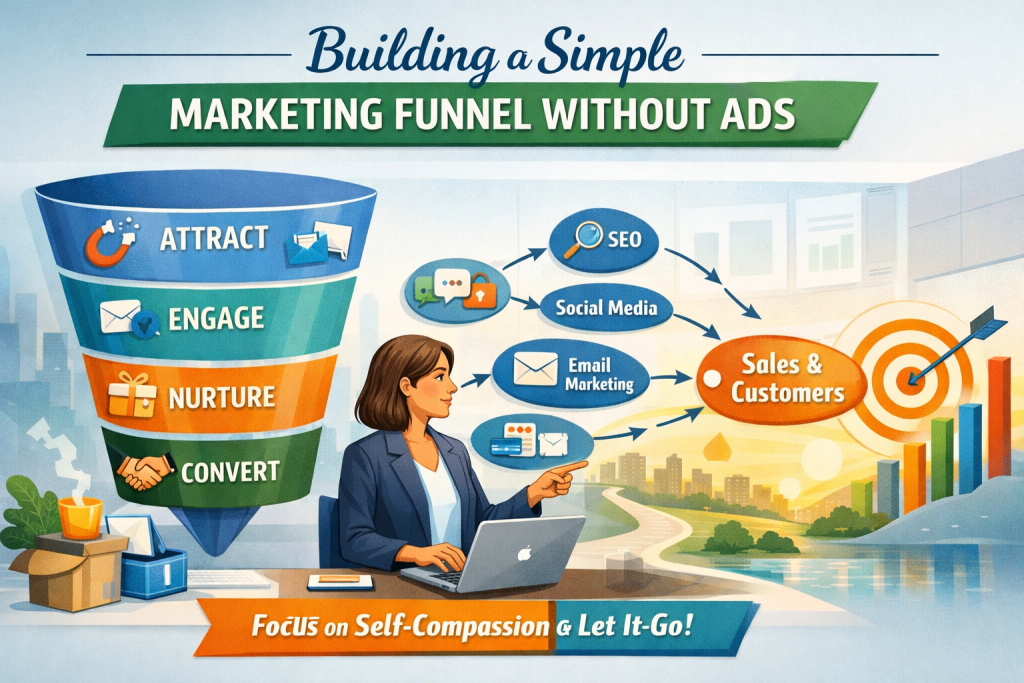
How do you build a simple, effective marketing funnel without using paid ads?
A simple marketing funnel without ads works when every step — discovery, connection, and conversion — is built on clarity and genuine value rather than pressure. You don’t need complex automation or paid traffic to guide people toward your work; you need a clear path that helps the right audience find you, trust you, and stay engaged over time. When your content attracts attention, your email list deepens the relationship, and your offers are easy to understand, your funnel becomes a natural extension of how people already move through the internet. This guide breaks down how to build an organic, no‑ads funnel that feels human, sustainable, and effective — one that grows through trust, not tactics.
A no‑ads marketing funnel works because it replaces paid reach with trust, relevance, and a clear path that guides people from first contact to long‑term relationship. When each stage—attraction, capture, nurture, and conversion—works together, your funnel becomes a self‑sustaining system that grows through value rather than budget.
Attracting people with content that solves real problems
Organic funnels begin with content that meets people where they already are: searching for answers, trying to solve a problem, or looking for guidance. When your content provides that clarity, you earn attention in a way ads can’t replicate.
Effective top‑of‑funnel content includes:
- Educational blog posts that address common pain points
- Videos or tutorials that demonstrate expertise
- Social posts that spark curiosity or offer quick wins
- Lead magnets such as checklists, templates, or guides
This kind of content positions you as a credible resource before any selling begins. It also creates the first moment of trust—someone discovers you because you helped them, not because you interrupted them.
Turning visitors into subscribers through intentional website design
Once someone lands on your website, the goal shifts from attention to connection. A well‑structured site makes it easy for visitors to take the next step, whether that’s subscribing, downloading a resource, or exploring more of your work.
Key elements include:
- Clear calls to action that guide visitors toward subscribing or downloading
- Simple, intuitive navigation that reduces friction
- Landing pages designed specifically for lead capture
- Opt‑in forms offering something valuable in exchange for an email address
Lead generation is the foundation of a scalable funnel because it transforms anonymous visitors into contacts you can nurture over time. A visitor who leaves without subscribing is gone; a subscriber becomes part of your ecosystem.
Using email to build trust and guide the buyer’s journey
Email is the engine of a no‑ads funnel. It’s where trust deepens, where value compounds, and where buying decisions happen naturally rather than through pressure.
A strong email funnel typically includes:
- Awareness‑stage emails that offer educational content and build rapport
- Consideration‑stage emails with case studies, comparisons, or deeper insights
- Decision‑stage emails with clear calls to action, offers, or invitations
- Retention‑stage emails that support customers after purchase and encourage loyalty
Each stage aligns with the buyer’s journey and helps prospects move forward at their own pace. Instead of pushing for a sale, you’re guiding, supporting, and clarifying—making the eventual “yes” feel like the obvious next step.
Measuring performance so your funnel gets stronger over time
A funnel is a living system. Tracking performance helps you refine it, strengthen weak points, and scale what works.
Important metrics include:
- Conversion rates on landing pages
- Email open and click‑through rates
- Lead‑to‑customer conversion
- Engagement with content across platforms
Regular analysis reveals where people drop off, where they get stuck, and where they’re most engaged. With that insight, you can adjust your content, refine your messaging, or strengthen your offers.
Why organic funnels work without paid ads
Organic funnels succeed because they:
- Build trust before asking for anything
- Attract people who are already searching for what you offer
- Create long‑term assets (content, email lists, relationships)
- Reduce dependency on fluctuating ad costs
- Allow you to grow sustainably at your own pace
For creatives and small businesses, this approach is especially powerful. It prioritizes depth of connection over volume of traffic, and it rewards consistency rather than budget.
A no‑ads funnel thrives when each stage—content, capture, nurture, conversion—works together as a cohesive system. As you look at your own funnel, which part feels like it would make the biggest difference if strengthened next: the content that attracts people, the website elements that capture leads, or the email nurturing that builds trust?
- grab your copy of Why People Ghost You
- check out I’m Married, Now What?
- dive deeper with How to Train Your Human