
Navigating Copyright: How to Protect Your Original Music
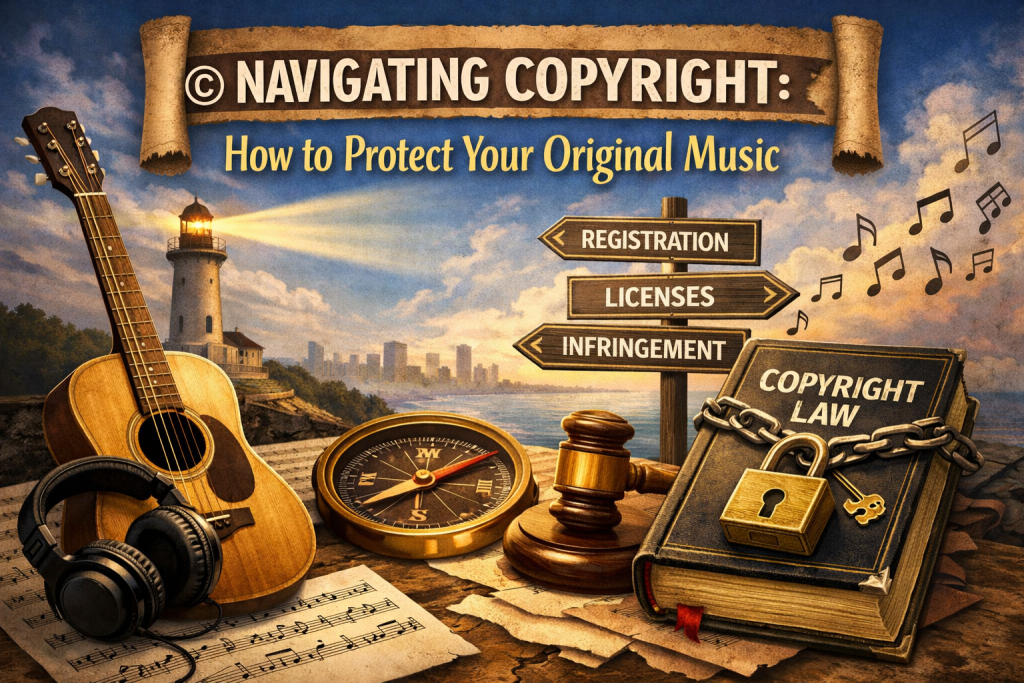
Navigating Copyright: How to Protect Your Original Music
As a musician, your songs are more than just recordings — they’re your creative legacy. Every lyric, melody, and production choice represents hours of imagination, emotion, and hard work. That’s why understanding copyright and knowing how to protect your original music is essential. This guide breaks down the basics of copyright, how it works, and the steps you can take to safeguard your creative rights.
What Is Copyright?
Copyright is a legal protection granted to creators of original works — including music, lyrics, recordings, and compositions. The moment you create an original piece of music, you automatically own the copyright to it.
Copyright gives you exclusive control over how your music is used, shared, and monetized.
Key Rights Under Copyright Law
When you own the copyright to your music, you gain several important rights:
Reproduction Rights
You control who can make copies of your music.
Distribution Rights
You decide how your music is distributed — digital downloads, CDs, streaming, etc.
Public Performance Rights
You control public performances of your music, including concerts, radio, and streaming platforms.
Derivative Works
You can create remixes, adaptations, or new versions of your original work.
Synchronization Rights
You control how your music is used in visual media like films, TV shows, ads, and video games.
These rights ensure you maintain ownership and receive compensation when your music is used.
Steps to Safeguard Your Music
Copyright is automatic — but taking additional steps strengthens your legal protection and makes it easier to enforce your rights.
1. Document Your Work
Documentation helps prove ownership if a dispute arises.
How to Document Your Music
- Save drafts: Keep all versions of your lyrics, recordings, and project files.
- Timestamp your files: Digital timestamps help establish a creation timeline.
- Use a copyright notice: Add “© Your Name, Year” to your work as a public declaration of ownership.
These simple habits can make a big difference.
2. Register Your Copyright
Registration isn’t required — but it gives you powerful legal advantages.
Why Register?
- You can take legal action against infringement
- You gain stronger evidence of ownership
- You may be eligible for statutory damages and attorney’s fees
How to Register in the U.S.
Register with the U.S. Copyright Office by submitting:
- An online form
- A copy of your work
- A small fee
International Registration
Many countries have their own copyright offices, and international treaties help protect your work across borders.
3. Use Digital Rights Management (DRM)
DRM tools help control how your music is used online.
DRM Options
- Digital watermarking: Embeds invisible identifiers in your audio files.
- DRM software: Restricts copying, sharing, or unauthorized distribution.
- Protected platforms: Services like Spotify, Apple Music, and Bandcamp offer built‑in protections.
DRM helps deter piracy and unauthorized use.
4. Consider Publishing and Licensing Agreements
If you plan to monetize your music, understanding publishing and licensing is essential.
Music Publishing
A publisher can:
- Manage your rights
- Collect royalties
- Pitch your music for placements
They typically take a percentage of your earnings.
Licensing Agreements
If someone wants to use your music (e.g., in a film or commercial), a licensing agreement outlines:
- How the music will be used
- Duration of use
- Compensation
Clear agreements protect both your rights and your income.
5. Monitor Your Work
Keeping track of where your music appears helps you catch unauthorized use early.
How to Monitor Your Music
- Use monitoring services: ASCAP, BMI, SESAC, and SoundExchange track performances and collect royalties.
- Search online: Use Google Alerts or reverse audio search tools.
- Take action: If you find unauthorized use, you can send a cease‑and‑desist or pursue legal action.
Monitoring ensures you stay in control of your work.
6. Understand Fair Use and Public Domain
Not every use of your music requires permission — but these exceptions are specific and limited.
Fair Use
Covers uses such as:
- Commentary
- Criticism
- Parody
Fair use is complex and evaluated case‑by‑case.
Public Domain
Works eventually enter the public domain after a certain period, depending on the country. Once there, they can be used freely.
Understanding these concepts helps you navigate what others can and cannot do with your music.
Conclusion
Protecting your original music ensures you maintain control over your creative work and receive the recognition and compensation you deserve. By understanding copyright, documenting your creations, registering your work, and monitoring its use, you can confidently navigate the music industry and safeguard your artistic legacy.
Your music is your intellectual property — take the steps to protect it.
Further Reading:
Resources to help you go deeper
- learn more in How to EQ Your Feelings
- dive deeper with The Musician’s Tech Toolbox
- explore Producer’s Guide to Avoiding Human Contact