

Is Poor English a Problem for Becoming a Music Producer?
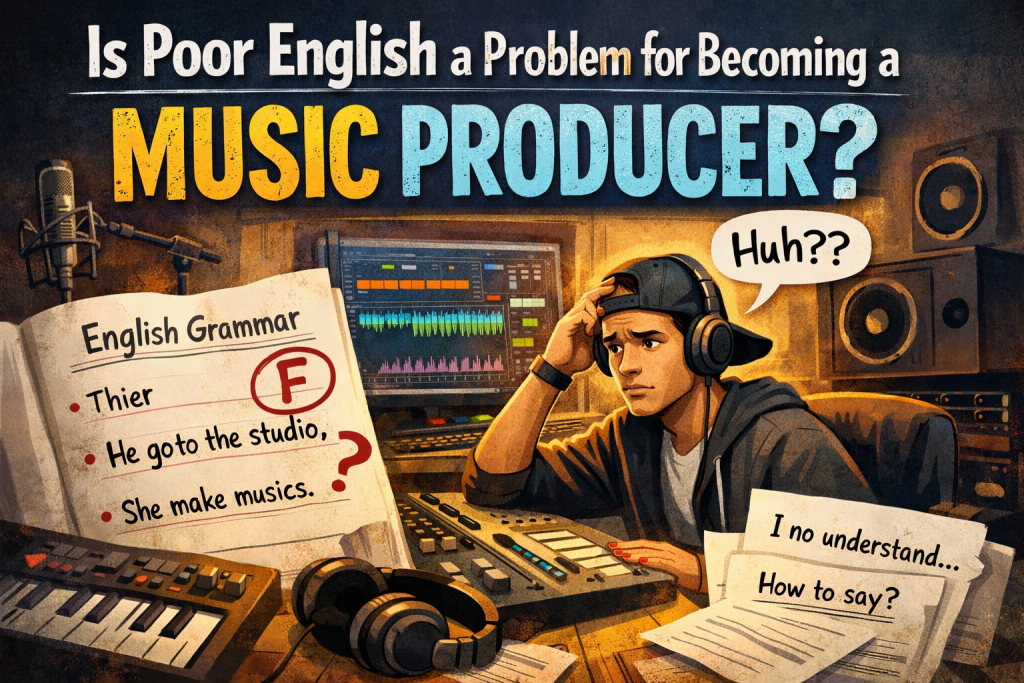
Is Poor English a Problem for Becoming a Music Producer?
In today’s globalized music world, it can feel like everything revolves around English — from software interfaces to tutorials, industry jargon, and networking. If English isn’t your first language, you might wonder: “Is poor English a problem for becoming a music producer?”
The short answer is no — absolutely not. Your potential as a music producer is not determined by your English proficiency. Creativity has no language barrier, and the music industry is far more diverse and multilingual than it may appear.
Here’s why you can thrive as a producer regardless of your English skills.
1. Music Is a Universal Language
Music communicates emotion, energy, and storytelling without needing words. Whether you produce EDM, hip‑hop, ambient, pop, or cinematic music, your sound speaks louder than any language.
What matters most:
- Your creativity
- Your ideas
- Your ear
- Your unique perspective
Listeners connect with feeling — not grammar.
2. You Can Learn the Technical Terms Over Time
Yes, much of the software and terminology is in English. But you don’t need perfect English to understand:
- EQ
- Compression
- Reverb
- MIDI
- Automation
These are universal concepts, and most DAWs use icons, visuals, and consistent terminology that become familiar quickly.
As you produce more music, your English naturally improves through exposure — without formal studying.
3. Translation Tools Are Your Superpower
Today’s technology makes language barriers smaller than ever.
Use tools like:
- Google Translate
- Browser translation extensions
- YouTube auto‑captions
- Multilingual forums
You can translate tutorials, manuals, plugin descriptions, and even entire web pages instantly.
4. You Can Network in Your Own Language
The music industry is global — not just English‑speaking.
You can build a career by connecting with:
- Local artists
- Regional producers
- Musicians in your native language
- Online communities that support multilingual creators
Some of the biggest music scenes in the world — K‑pop, Latin music, Afrobeat, Bollywood, J‑pop — thrive outside English.
Your language is not a limitation. It’s a cultural advantage.
5. Collaborate With English‑Speaking Producers
If you ever need help with communication, collaboration bridges the gap.
Benefits of collaborating:
- You learn faster
- You gain access to new audiences
- You get support navigating English‑based tools
- You build confidence
Music production is a team sport — you don’t have to do everything alone.
6. Your Cultural Background Is a Strength
Your musical identity is shaped by your culture, language, and lived experience. That uniqueness is something English‑speaking producers can’t replicate.
Your background can influence:
- Rhythm
- Melody
- Sound selection
- Storytelling
- Genre fusion
This is how new genres are born.
7. Use Bilingual Resources
There are thousands of tutorials, courses, and communities in languages other than English.
Look for:
- YouTube channels in your language
- Local music schools
- Regional producer groups
- Translated DAW manuals
- Books and courses created for your culture
Start in your language, then expand outward as needed.
8. Seek Mentorship
A mentor who understands your language — or who is bilingual — can help you navigate:
- Technical terms
- Industry expectations
- Communication challenges
- Creative development
Mentorship accelerates your growth and builds confidence.
Final Thoughts
Poor English is not a barrier to becoming a music producer. Your passion, creativity, and dedication matter far more than your language skills.
Music is a global language. Your voice is valid. Your sound is needed. Your culture is an asset.
With the right tools, support, and mindset, you can thrive in music production — no matter what language you speak.
Your journey is yours to shape. Let your creativity lead the way.
Further Reading:
Resources to help you go deeper
- grab your copy of Build a Studio That Loves You Back
- learn more in Music Production Mastery
- dive deeper with Pet Peeves of a Bedroom Producer
- explore Anti-Perfectionist’s Guide to Mixing
- check out Emotional Architecture of Home Studios