
Developing Your Music Brand: A Step‑by‑Step Guide
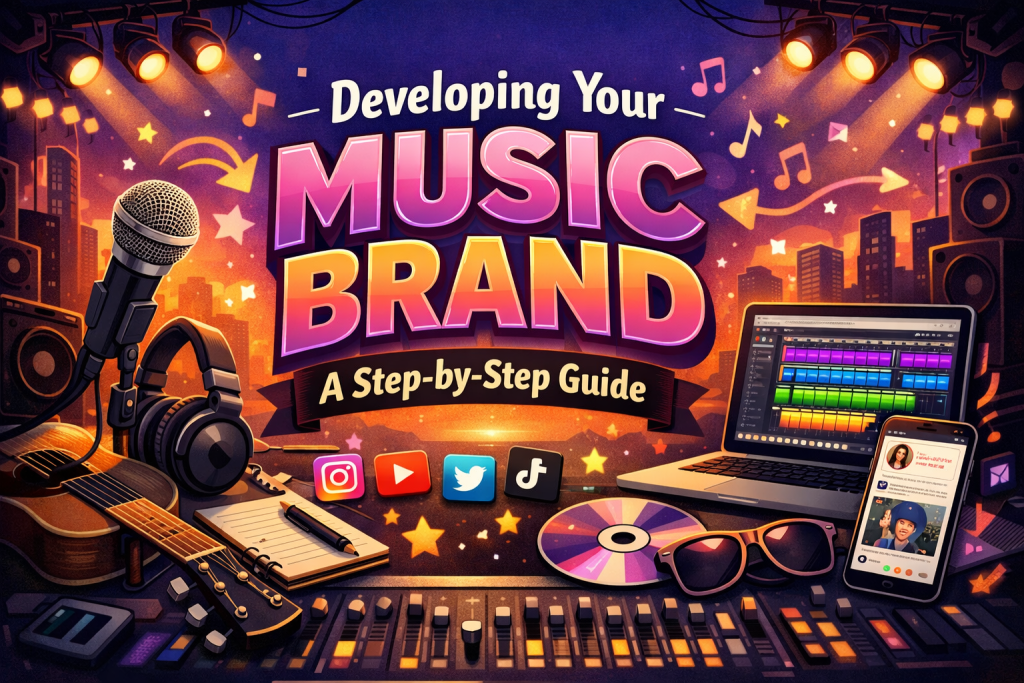
Developing Your Music Brand: A Step‑by‑Step Guide
In today’s dynamic music industry, artists are more than musicians—they’re brands. A strong brand identity helps you stand out, communicate your story, and build a deeper connection with your audience. Whether you’re an emerging artist or an established name, developing a cohesive brand is essential for long‑term success.
This guide explores the identity and consistency challenges artists face and offers practical strategies to help you build a powerful, authentic music brand.
Understanding Music Branding
Music branding is the process of shaping and communicating your artistic identity through visuals, sound, messaging, and public presence. A strong brand:
- Makes you recognizable
- Communicates your values and personality
- Creates emotional resonance
- Helps fans understand who you are and what you stand for
Your brand is the entire experience you offer—not just your music. It includes your visual style, social media presence, public image, and how you interact with your audience.
To build a strong brand, you must first understand yourself as an artist.
Identity Challenges in Music Branding
1. Defining Your Core Message
Your core message is the foundation of your brand. It reflects:
- What you stand for
- What you want your audience to feel
- The themes that run through your music
This message must be authentic and aligned with your lived experiences. Many artists struggle to articulate it, especially when balancing artistic expression with market expectations.
2. Navigating Genre Expectations
Genres come with built‑in expectations—sound, visuals, themes, and culture. The challenge is balancing:
- Staying true to your individuality
- Meeting the expectations of your genre or audience
You don’t have to fit perfectly into a box, but you do need clarity about where you belong.
3. Evolving Without Losing Identity
Artists grow. Sounds change. Visuals shift. But your brand must evolve without losing its core essence.
The challenge: How do you grow without confusing your audience?
Your brand should be flexible enough to evolve, yet grounded enough to remain recognizable.
Consistency Challenges in Music Branding
1. Visual and Aesthetic Consistency
Your visual identity includes:
- Logos
- Album artwork
- Color palettes
- Typography
- Stage design
- Merch
Inconsistent visuals dilute your brand and confuse your audience. Cohesion builds recognition.
2. Consistent Messaging Across Platforms
Your tone, themes, and personality should feel consistent whether you’re:
- Posting on social media
- Giving an interview
- Performing live
- Writing a bio
Inconsistent messaging creates disconnect and weakens your brand story.
3. Managing Multiple Channels
Artists today must maintain a presence on:
- TikTok
- YouTube
- Streaming platforms
- Websites
Each platform has its own culture and format, making consistency a challenge. But consistency is what builds trust and recognition.
Strategies for Developing a Strong Music Brand
1. Clarify Your Vision
Start by defining:
- Who you are
- What you stand for
- What you want your audience to feel
- The impact you want your music to have
Your vision becomes the compass for every branding decision.
2. Create a Brand Style Guide
A style guide keeps your brand cohesive. Include:
- Color palette
- Typography
- Logo usage
- Visual references
- Tone of voice
- Messaging guidelines
This ensures consistency across all platforms and collaborators.
3. Be Authentic
Authenticity is the heart of a powerful brand. Audiences connect with artists who are:
- Honest
- Vulnerable
- Consistent
- True to their story
Authenticity builds trust—and trust builds loyalty.
4. Adapt While Staying True to Your Core
As you evolve:
- Let your brand grow with you
- Keep your core message intact
- Ensure changes feel intentional, not random
Evolution should feel like a natural progression, not a sudden shift.
5. Engage with Your Audience
Branding isn’t just broadcasting—it’s relationship‑building.
Engage by:
- Responding to comments
- Sharing behind‑the‑scenes content
- Asking for feedback
- Showing appreciation
- Being present and human
Connection strengthens your brand more than any logo ever could.
Conclusion
Music branding is a powerful tool that can elevate your career and set you apart in a crowded industry. By overcoming identity and consistency challenges, you can develop a strong, authentic, and cohesive brand that resonates with your audience and stands the test of time.
Your brand is an extension of who you are as an artist—make it as unique, intentional, and compelling as your music.
Further Reading:
Resources to help you go deeper
- check out Branding & Networking for Bands
- grab your copy of Build a Brand That Feels Like You
- learn more in E-Commerce SEO Strategies
- dive deeper with Pitch Yourself Without Cringing
- explore Indie Artist’s Monetization Manual
- check out The Musician’s Marketing Playbook
- grab your copy of Ultimate Musician’s Website Guide
- learn more in Vulnerable Creator’s Marketing Playbook