
SEO for Musicians: Boosting Website Visibility and Optimizing for Search Engines
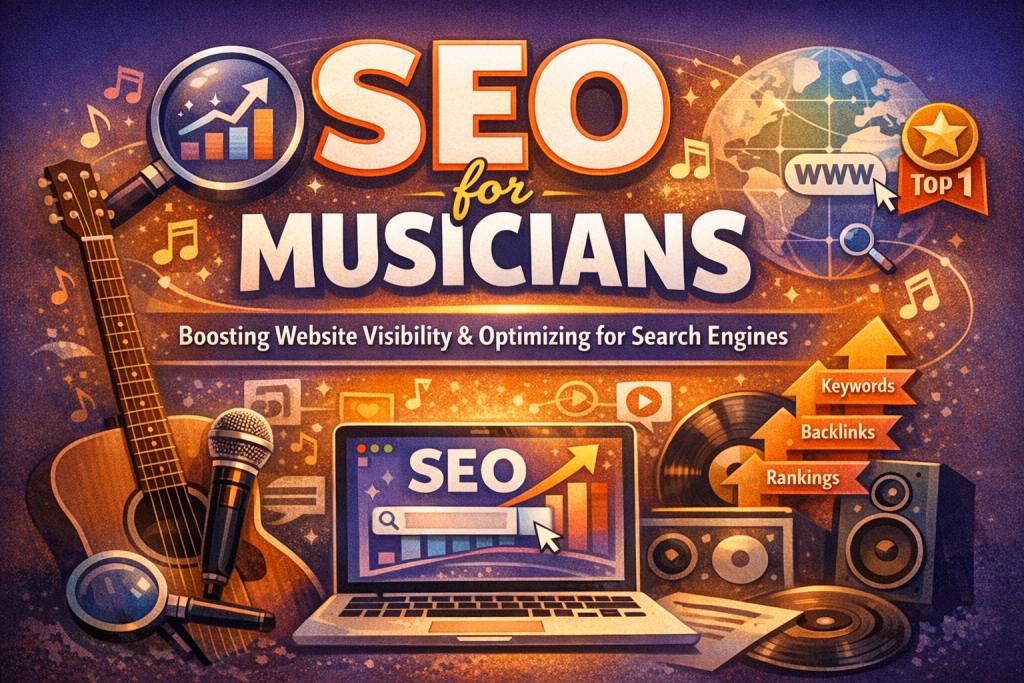
SEO for Musicians: Boosting Website Visibility and Optimizing for Search Engines
How can musicians use SEO to increase website visibility and get discovered online?
Your website can only help your music career if people can actually find it — and that’s where SEO becomes essential. Search Engine Optimization helps your site appear when listeners search for artists like you, music in your genre, local performers, or specific events. With the right SEO strategies, you can increase your visibility, attract new fans, and strengthen your online presence in a way that grows over time. This guide breaks down how musicians can optimize their websites using simple, approachable steps that make your music easier to discover without technical overwhelm.
In today’s digital world, your website is more than a business card — it’s your creative home base. It’s the one place online that you fully control, where fans, collaborators, and industry professionals can learn who you are without the noise of algorithms or the pressure of social platforms. But having a website isn’t enough. People need to find it.
That’s where SEO — Search Engine Optimization — becomes one of the most powerful tools in your career.
SEO helps your website show up in search results when someone looks for artists like you, music in your genre, local performers, or even specific songs and events. When done well, SEO increases your visibility, brings in new fans, and strengthens your online presence in a way that compounds over time.
This guide walks you through how to optimize your website as a musician using strategies that are clear, approachable, and emotionally intelligent — no jargon, no overwhelm, just practical steps that help your music reach the people who are already searching for it.
🎵 Why SEO Matters for Musicians
Think about how people discover music today. They search for:
- “best indie pop artists”
- “live music in Nashville tonight”
- “up‑and‑coming folk musicians”
- “new electronic music releases”
- “songwriters like [Artist Name]”
If your website is optimized, you can appear in those searches — even if someone has never heard your name before.
SEO helps you:
- rank higher in search results
- attract new listeners organically
- increase traffic to your website
- build credibility and professionalism
- create long‑term discoverability
- reach fans outside your social media bubble
With millions of websites competing for attention, SEO is often the difference between being discovered and being overlooked.
🔑 Key SEO Strategies for Musicians
Below are the essential strategies that help your website become more visible, more searchable, and more aligned with what fans and industry professionals are looking for.
🎯 1. Keyword Research and Optimization
Keywords are the phrases people type into search engines. Understanding what your audience searches for helps you create content that matches their intent.
Understand Your Audience
Think about what fans might search when looking for music like yours:
- your genre (“indie pop artist,” “lofi producer”)
- similar artists (“artists like Phoebe Bridgers”)
- song or album titles
- local music terms (“live music in Austin”)
- event‑related keywords (“wedding band NJ,” “open mic NYC”)
These keywords help search engines understand what your site is about.
Incorporate Keywords Naturally
Use your chosen keywords in:
- page titles
- meta descriptions
- headings
- website copy
- image alt text
- blog posts
Example: If you’re a folk singer‑songwriter, you might use phrases like:
- “folk music artist”
- “acoustic folk musician”
- “indie folk songwriter”
The goal is clarity, not keyword stuffing.
📝 2. Optimize Your Website Content
Search engines reward websites that are clear, helpful, and regularly updated.
Create Quality Content
Add content that gives fans and search engines something new to discover:
- blog posts
- news updates
- tour announcements
- behind‑the‑scenes stories
- new releases
- songwriting insights
Fresh content signals that your site is active and relevant.
Use Descriptive Text
Avoid vague language like “I make music.” Be specific:
- your sound
- your influences
- your story
- your mission
- your genre
Specificity helps both fans and search engines understand who you are.
Optimize Media
Search engines can’t “see” images or videos — they rely on alt text.
Example alt text: “Live performance by [Your Name] at [Venue]” “Album cover for [Album Title] by [Your Name]”
Alt text improves accessibility and SEO.
🧭 3. Improve Site Structure and Navigation
A well‑structured website helps visitors find what they need — and helps search engines understand your content.
User‑Friendly Design
Your site should have clear, intuitive sections:
- Bio
- Discography
- Tour dates
- Blog
- Contact
- Press kit
If visitors can’t find what they need, they leave — and search engines notice.
Internal Linking
Link related pages together.
Example: A blog post about your new album should link to:
- the album page
- your streaming links
- your merch page
Internal linking improves navigation and helps search engines index your site more effectively.
📱 4. Mobile Optimization
More than half of all web traffic comes from mobile devices. If your site isn’t mobile‑friendly, you’re losing fans.
Responsive Design
Your website should look great on:
- phones
- tablets
- laptops
- desktops
Most modern themes handle this automatically, but always double‑check.
Fast Loading Times
Slow websites frustrate users and hurt your rankings.
Improve speed by:
- compressing images
- reducing heavy scripts
- using reliable hosting
- minimizing unnecessary plugins
Speed = better user experience + better SEO.
🔗 5. Build Backlinks (Your Website’s Reputation Score)
Backlinks are links from other websites to yours. They act as “votes of confidence” and significantly boost your SEO.
Get Featured
Reach out to:
- music blogs
- online magazines
- influencers
- local media
- playlist curators
Ask them to feature your music and link back to your site.
Collaborate with Other Artists
Collaboration naturally generates backlinks through:
- interviews
- guest blog posts
- joint releases
- cross‑promotion
Backlinks build credibility and expand your reach.
📣 6. Leverage Social Media
Social media and SEO work together.
Promote Your Website
Share links to your:
- blog posts
- new releases
- tour dates
- music videos
- merch
Traffic from social media signals relevance to search engines.
Consistent Branding
Make sure your:
- visuals
- tone
- messaging
- links
…are consistent across platforms. Consistency builds trust and recognition.
📍 7. Utilize Local SEO
If you perform live or have a strong local presence, local SEO is essential.
Optimize for Local Searches
Use location‑based keywords:
- “Los Angeles indie musician”
- “Nashville live music”
- “NJ wedding band”
These help you appear in searches from people in your area.
Google My Business
Create a Google My Business profile to appear in:
- local search results
- Google Maps
- “near me” searches
This is especially important for live performers.
📊 8. Monitor and Analyze Your Performance
SEO isn’t a one‑time task — it’s an ongoing process.
Use Analytics Tools
Tools like:
- Google Analytics
- Google Search Console
…help you track:
- organic traffic
- bounce rate
- keyword rankings
- user behavior
- top‑performing pages
Adjust Your Strategy
If something isn’t working, refine it. If something is working, double down.
SEO evolves — your strategy should too.
🌱 Conclusion
SEO is one of the most powerful tools musicians can use to boost visibility, attract new fans, and build a sustainable online presence. By optimizing your website with clear content, smart keywords, strong structure, mobile‑friendly design, backlinks, and consistent updates, you create a digital home that’s discoverable, engaging, and aligned with your artistic identity.
SEO isn’t about gaming the system — it’s about clarity, connection, and making it easier for people to find the music they’re already searching for.
Start optimizing your website today, and watch your online presence — and your audience — grow.
Further Reading:
Resources to help you go deeper
- check out Branding & Networking for Bands
- grab your copy of Build a Brand That Feels Like You
- learn more in E-Commerce SEO Strategies
- dive deeper with Pitch Yourself Without Cringing
- explore Indie Artist’s Monetization Manual
- check out The Musician’s Marketing Playbook
- grab your copy of Ultimate Musician’s Website Guide
- learn more in Vulnerable Creator’s Marketing Playbook