

Website Loading Woes: Speed Optimization for Musicians
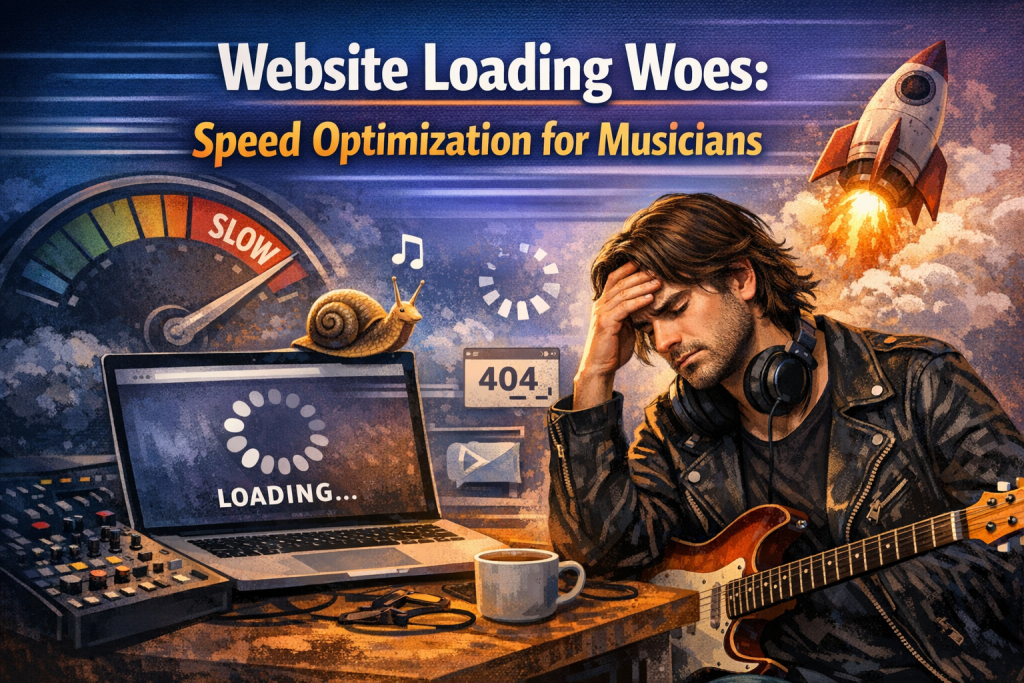
Website Loading Woes: Speed Optimization for Musicians
In today’s fast‑paced digital world, your website is often the first impression you make on potential fans, collaborators, and industry professionals. A slow‑loading site can turn visitors away before they even get a chance to hear your music or explore your work. Speed optimization isn’t just a technical detail—it’s a crucial part of building a strong online presence. Below are practical, musician‑friendly strategies to help you speed up your site and deliver a smooth, professional experience.
1. Choose the Right Hosting Provider
Your hosting provider plays a major role in how fast your website loads.
Shared vs. Dedicated Hosting
Shared hosting is affordable but often slow because multiple sites share the same server. If possible, upgrade to:
- Dedicated hosting
- Virtual Private Server (VPS)
Both offer better performance and stability.
Use a Content Delivery Network (CDN)
A CDN stores copies of your site on servers around the world, delivering content from the closest location to each visitor. This dramatically reduces load times for global fans.
2. Optimize Your Images
Images are often the biggest contributors to slow load times.
Use the Right File Format
- JPEG for photos
- PNG for transparency
- Avoid BMP and TIFF—they’re not web‑friendly
Compress Images
Use tools like:
- TinyPNG
- JPEGmini
- Photoshop’s “Save for Web”
Compression reduces file size without sacrificing quality.
Enable Lazy Loading
Lazy loading delays image loading until they appear on screen, reducing initial load time and improving user experience.
3. Minimize HTTP Requests
Every element on your page—images, scripts, stylesheets—requires an HTTP request.
Combine Files
Merge multiple CSS and JavaScript files to reduce requests.
Use CSS Sprites
Combine small images (icons, buttons) into a single file to reduce load time.
Reduce Plugins
If you use WordPress, remove unnecessary plugins. Each plugin adds weight and slows your site.
4. Enable Browser Caching
Browser caching stores files on a visitor’s device so they don’t need to reload them every time.
Set Expiry Dates
Use tools like Google PageSpeed Insights or YSlow to identify cacheable files.
Use .htaccess
If you have access, configure caching rules directly in your .htaccess file.
5. Minify CSS, JavaScript, and HTML
Minification removes unnecessary characters—spaces, line breaks, comments—to reduce file size.
Use Minification Tools
- UglifyJS (JavaScript)
- CSSNano (CSS)
- HTMLMinifier (HTML)
Automate the Process
If you use build tools like Gulp or Webpack, automate minification during deployment.
6. Optimize Your Music Player
Music players can slow down your site if not optimized.
Use Streaming Services
Embed music from:
- Spotify
- SoundCloud
- Bandcamp
These platforms are optimized for fast streaming and reduce server load.
Load Players Asynchronously
Ensure embedded players don’t block the rest of your site from loading.
7. Enable Gzip Compression
Gzip reduces file sizes before they’re sent to the browser.
Activate Gzip
Most servers (Apache, Nginx) support Gzip. Enable it via:
- Your hosting control panel
- .htaccess
- Server configuration
Test Compression
Use tools like GTmetrix or PageSpeed Insights to verify Gzip is active.
8. Use a Lightweight Theme
If you’re using WordPress or another CMS, your theme impacts speed.
Choose a Fast Theme
Avoid themes overloaded with animations, sliders, and heavy scripts.
Consider a Custom Theme
A custom‑built theme can be optimized specifically for your needs.
9. Monitor Your Website’s Performance
Regular monitoring helps you catch issues early.
Use Speed Testing Tools
- Google PageSpeed Insights
- Pingdom
- GTmetrix
These tools provide detailed reports and improvement suggestions.
Watch for Traffic Spikes
If your site slows during high traffic, consider:
- Cloudflare
- Upgrading your hosting plan
10. Keep Your Site Updated
Outdated software can slow your site and create security risks.
Update CMS and Plugins
Regular updates ensure optimal performance and compatibility.
Remove Unused Plugins and Themes
Even inactive plugins can slow your site—keep your installation clean.
Conclusion
Optimizing your website’s loading speed is essential for keeping visitors engaged and strengthening your online presence. With the right strategies—choosing reliable hosting, optimizing images, minimizing requests, and keeping your site updated—you can ensure your website performs at its best. In the digital age, speed isn’t a luxury; it’s a necessity. A fast, efficient website helps you showcase your music, connect with fans, and present yourself professionally to the world.
Further Reading:
Resources to help you go deeper
- explore Branding & Networking for Bands
- check out Build a Brand That Feels Like You
- grab your copy of E-Commerce SEO Strategies
- learn more in Pitch Yourself Without Cringing
- dive deeper with Indie Artist’s Monetization Manual
- explore The Musician’s Marketing Playbook
- check out Ultimate Musician’s Website Guide
- grab your copy of Vulnerable Creator’s Marketing Playbook