

How to Improve Stage Presence: Essential Performance Tips for Singers to Captivate Audiences
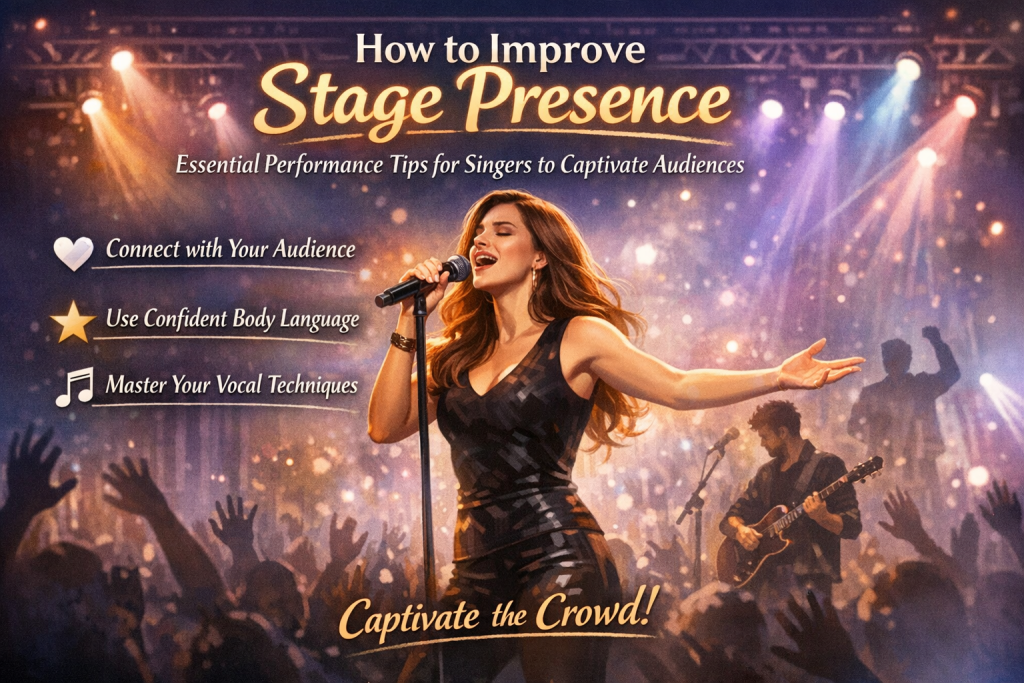
How to Improve Stage Presence: Essential Performance Tips for Singers to Captivate Audiences
For singers, delivering a powerful vocal performance is only one part of the equation. Truly captivating your audience requires strong stage presence — a blend of confidence, body language, emotional expression, and genuine connection. Whether you’re just starting out or refining your craft, mastering stage presence can transform your live shows and leave a lasting impression.
Stage presence is not just an innate trait but a skill that can be developed over time. It requires a combination of practice, self-awareness, and the ability to connect with your audience in a way that resonates. This article delves deeper into strategies that can significantly enhance your stage presence, irrespective of whether you’re performing in a small venue or a large arena.
You’ll learn how to harness the power of your voice, body, and emotions to create unforgettable performances that leave audiences wanting more. Let’s explore these essential tips in detail.
Below are essential performance tips to help you elevate your stage presence and captivate any audience.
Imagine stepping onto a stage where the lights shine bright, the crowd is buzzing with anticipation, and all eyes are on you. It’s in these moments that your confidence will shine through, transforming not just your performance but the entire atmosphere of the venue.
Power poses can be a game-changer. Studies have shown that adopting open, expansive postures can positively affect your self-perception and the perception of others. This simple act of physicality can shift your mindset, allowing you to embrace the role of a performer fully.
Confidence also stems from knowing your material inside and out. The more you rehearse, the more confident you’ll feel on stage. Consider practicing in various settings to simulate live performances, which can help you become comfortable with unexpected situations.
1. Project Confidence
The connection you build with your audience can determine the success of your performance. Think of your stage as a bridge between you and your listeners. Every glance, smile, and word exchanged can strengthen this connection, making your performance more engaging and relatable.
During your performance, scanning the crowd and making eye contact with different audience members can create a sense of involvement. It invites them to join you on this musical journey, making the experience much more immersive.
Sharing personal anecdotes or insights related to your songs can foster a deeper connection. It not only showcases your personality but also helps the audience feel more connected to your music and message.
Confidence is the foundation of great stage presence. Even if nerves are kicking in, learning to appear confident can dramatically improve how your performance is received.
Dynamic movement on stage can enhance your performance significantly. Think of your body as an instrument that adds to the music. Each gesture should complement the song’s energy, whether it’s a slow ballad or an upbeat anthem.
Engaging with the space around you is crucial. Walking towards the audience or moving to different areas of the stage can create visual interest and draw people in, making them feel like they’re part of the experience.
Practice is essential. The more you rehearse in front of a mirror, the more you’ll become aware of your body language and expressions. Recording yourself can also provide valuable feedback, enabling you to refine your movements and enhance your stage presence.
Tip: Practice power poses before stepping on stage. Standing tall with your shoulders back boosts both posture and confidence. Avoid slouching or shrinking your body — own the space, make eye contact, and use warm, intentional expressions.
Your facial expressions are crucial for conveying emotion. They should resonate with the song’s message, ensuring that your audience not only hears the music but also feels it. This emotional connection can turn a good performance into a great one.
To truly master your expressions, practice emoting in front of a mirror. Experiment with different feelings and see how they translate onto your face. Authenticity is key; the more genuine your expressions, the more they will resonate with your audience.
Tip: Channel nervous energy into your performance. Confidence grows from preparation, so rehearse consistently and get comfortable with your material.
2. Connect With Your Audience
When you lose yourself in the music, you create a magical experience for yourself and your audience. This emotional investment can be infectious, encouraging your listeners to become equally immersed in your performance.
Strong stage presence is rooted in connection. When your audience feels seen and included, your performance becomes more memorable.
If you’re playing an instrument, let it be an extension of your expression. Incorporate movements that reflect the energy of your playing, creating a visual representation of your musical storytelling.
Tip: Make eye contact with different sections of the crowd. Even if bright lights obscure faces, look toward various areas to create a sense of intimacy.
As you gain experience, you’ll notice a significant shift in your confidence and stage presence. Performing live not only hones your skills but also helps you adapt to various audience dynamics, enhancing your overall performance quality.
Mock performances can be an excellent way to simulate the pressure of a live show. This practice helps you to develop a routine and become accustomed to the nerves that come with performing.
Small performances help build your confidence and provide a safe space to experiment with your stage presence. As you grow more comfortable, challenge yourself with larger audiences and more complex performances.
Tip: Speak to your audience between songs. Share a brief story, express gratitude, or check in with the crowd. Authentic, concise communication builds rapport.
3. Use Dynamic Body Language
Your body language communicates emotion long before your voice does. Movement can elevate your performance — as long as it feels natural and intentional.
Tip: Avoid staying rooted in one spot. Incorporate gentle movement, walk the stage, or use expressive hand gestures that match the mood of the song. Engage the entire space.
Keep learning and exploring different aspects of performance art. Engaging with other performers, attending workshops, and seeking feedback can provide invaluable insights that enhance your stage presence further.
How to Improve Stage Presence: Essential Performance Tips for Singers to Captivate Audiences
In conclusion, mastering stage presence is a journey that requires dedication and practice. It’s a skill that evolves over time, and with each performance, you have the chance to grow and improve. With the right mindset and tools, you’ll be able to command the stage with confidence and artistry, captivating every audience you encounter.
Tip: Practice in front of a mirror to refine your movements. Ensure your gestures enhance the performance rather than distract from it.
4. Master Your Facial Expressions
Facial expressions are a subtle but powerful tool for emotional storytelling. They help the audience feel the meaning behind your lyrics.
Tip: Match your expressions to the song’s mood. Let sadness, joy, intensity, or excitement show naturally on your face.
Tip: Avoid blank or overly forced expressions. Rehearse emoting authentically so your expressions feel genuine on stage.
5. Engage With the Music
Stage presence isn’t just physical — it’s emotional. When you’re fully immersed in the music, the audience feels it.
Tip: Let the rhythm, melody, and lyrics guide your movements and expressions. Don’t be afraid to lose yourself in the moment.
Tip: If you play an instrument, incorporate it into your stage presence. Use your body language to reflect the emotion of your playing.
6. Practice Performing Live
Stage presence improves with experience. The more you perform, the more natural and confident you’ll feel.
Tip: Rehearse as if you’re already on stage. Create a mock performance setup at home, practice in front of a mirror, or record yourself. Review the footage to identify areas for improvement.
Tip: Start with smaller shows or open mics to build confidence. Gradually move to larger venues as your comfort level grows.
Final Thoughts
Improving your stage presence is essential for delivering unforgettable performances. By projecting confidence, connecting with your audience, using dynamic body language, and fully engaging with the music, you can elevate your live shows and create meaningful moments for your listeners. With consistent practice and a willingness to grow, your authentic presence will shine — leaving a lasting impact on every audience you meet. Remember, every performance is an opportunity to connect, inspire, and engage with those who come to hear you.
Further Reading:
Resources to help you go deeper
- dive deeper with The Musician’s Marketing Playbook
- check out Vulnerable Creator’s Marketing Playbook
- grab your copy of Pitch Yourself Without Cringing
- explore Build a Brand That Feels Like You