

The Psychology Behind Procrastination and How to Overcome It
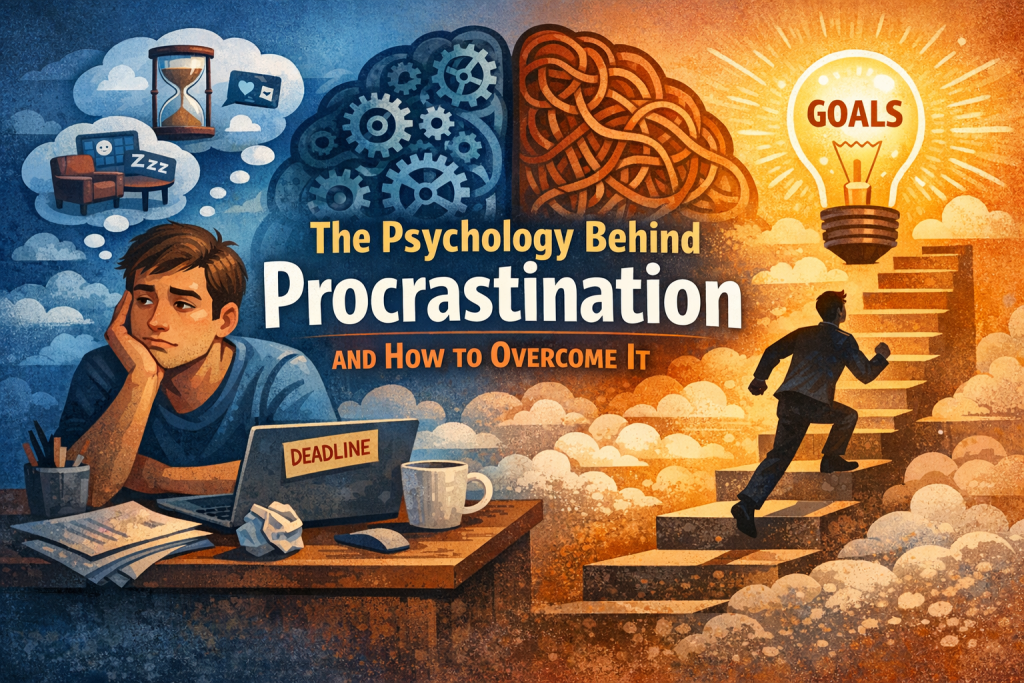
What causes procrastination, and how do you overcome it?
Procrastination is one of the most misunderstood human behaviors. It’s easy to label it as laziness or a lack of discipline, but the psychology behind procrastination tells a very different story. Procrastination is almost always a protective response — your mind trying to shield you from discomfort, uncertainty, or perceived threat. When you understand the emotional mechanics driving it, procrastination becomes less of a personal flaw and more of a signal pointing toward fear, perfectionism, overwhelm, or unclear structure. And once you know what your mind is trying to protect you from, you can work with it instead of fighting it. This guide breaks down the real psychological roots of procrastination and offers practical, compassionate strategies to help you move forward with more clarity and ease.
This guide takes you deep into the psychology of procrastination and gives you practical, compassionate strategies to overcome it—not through force, but through clarity, structure, and emotional understanding.
Why Procrastination Happens
Procrastination is rarely about the task itself. It’s about the emotion the task triggers. Several psychological patterns commonly drive procrastination, and they often overlap.
Fear of failure
Avoiding a task feels safer than risking a disappointing outcome. If you don’t start, you can’t fail—and your self-worth stays protected.
Fear of success
Success can bring pressure, expectations, visibility, or responsibility. If success feels threatening, your mind may stall to keep you “safe.”
Fear of the unknown
Starting something unfamiliar triggers uncertainty, which the brain interprets as danger. Procrastination becomes a way to avoid stepping into the unknown.
Perfectionism
If the standard is “perfect or nothing,” nothing often wins. Perfectionism creates impossible expectations that make starting feel overwhelming.
Overwhelm
When a task feels too big or vague, your brain shuts down to avoid cognitive overload. Procrastination becomes a way to escape the discomfort of ambiguity.
Low motivation or unclear reward
Tasks without immediate payoff are harder to initiate. The brain prioritizes short-term rewards over long-term benefits.
Poor time structure
Without defined boundaries, tasks expand, drift, or get avoided entirely. Structure gives tasks shape; without it, they feel amorphous and intimidating.
Understanding which of these resonates with you is the first step toward shifting the pattern.
How Fear and Perfectionism Shape Avoidance
Fear and perfectionism often operate beneath awareness. They create internal narratives that feel logical but are actually protective mechanisms.
Common narratives include:
- “If I can’t do it perfectly, I shouldn’t start.”
- “If I start, I might discover I’m not good enough.”
- “If I finish, people will expect more from me.”
- “If I don’t try, I can’t fail.”
These beliefs feel protective because they shield you from vulnerability. But they also keep you stuck. Naming them reduces their power and helps you choose action over avoidance.
Why naming the fear works
When you identify the fear driving your procrastination, you shift from emotional reaction to conscious choice. Instead of “I’m procrastinating because I’m lazy,” it becomes:
- “I’m procrastinating because I’m afraid of doing it wrong.”
- “I’m procrastinating because I don’t know where to start.”
- “I’m procrastinating because the task feels too big.”
This clarity opens the door to solutions that actually work.
Breaking Tasks Into Manageable Steps
Procrastination thrives on ambiguity. When a task is too large or undefined, your brain can’t see a clear entry point. Breaking it down into small, concrete steps reduces overwhelm and creates momentum.
Helpful approaches include:
- Define the first tiny action — open the document, gather materials, write one sentence.
- Set micro-goals — tasks that can be completed in 5–10 minutes.
- Use checklists — visible progress reinforces motivation.
- Celebrate small wins — reward your brain for taking action.
Small steps bypass the emotional resistance that big tasks trigger. They also build confidence through repetition.
Why small steps work
Your brain is wired to avoid discomfort. A big task feels threatening; a tiny step feels safe. Once you start, momentum takes over.
Creating Structure That Supports Follow-Through
A structured schedule helps counteract procrastination by reducing decision fatigue and creating external cues for action.
Effective structure includes:
- Specific time blocks — “Write from 9–10 AM” instead of “Work on writing.”
- Deadlines — even self-imposed ones create urgency.
- Habit stacking — pair a task with an existing habit (e.g., write after coffee).
- Distraction-free zones — remove temptations during focused work periods.
Structure doesn’t eliminate procrastination entirely, but it reduces the friction that fuels it.
Why structure matters
Without boundaries, tasks expand to fill the space available—or get avoided entirely. Structure gives your brain clarity and reduces the emotional load of deciding when and how to start.
Increasing Self-Awareness Around Triggers
Procrastination often follows predictable patterns—certain tasks, times of day, emotions, or environments. Paying attention to these patterns helps you intervene earlier.
Useful questions include:
- What emotion do I feel right before I procrastinate?
- What story am I telling myself about this task?
- What am I afraid might happen if I start?
- What conditions make it easier for me to begin?
Awareness turns procrastination from an automatic reaction into a choice you can influence.
Common triggers to watch for:
- Tasks that feel ambiguous
- Tasks tied to identity or self-worth
- Tasks with unclear rewards
- Tasks that require vulnerability
- Times of day when energy is low
- Environments full of distractions
Once you know your triggers, you can design strategies that support you instead of sabotage you.
Building Healthier Habits Over Time
Overcoming procrastination is not about forcing discipline; it’s about creating conditions where action feels safer, clearer, and more rewarding.
Helpful long-term habits include:
- Self-compassion — replacing self-criticism with understanding reduces emotional resistance.
- Realistic expectations — lowering the bar helps you start more often.
- Momentum-based strategies — like the “two-minute rule,” where you begin with a tiny action.
- Supportive environments — tidy spaces, clear tools, and fewer distractions.
- Regular reflection — noticing what works and adjusting accordingly.
With practice, these habits reshape your relationship with effort and follow-through.
Why habit-building works
Procrastination is a learned pattern. Habits create new patterns—ones that support action instead of avoidance.
Bringing It All Together
Procrastination is not a moral failing. It’s a psychological response rooted in fear, overwhelm, perfectionism, or unclear structure. When you understand the emotional mechanics behind it, you can respond with clarity and compassion instead of shame.
The most effective strategies are the ones that:
- Reduce emotional resistance
- Create clarity and structure
- Break tasks into manageable steps
- Support your energy and attention
- Build confidence through small wins
Over time, these shifts help you build a healthier, more sustainable relationship with effort, creativity, and follow-through.
As you reflect on your own patterns, which root cause feels most familiar—fear, perfectionism, overwhelm, or unclear structure?
- learn more in How to EQ Your Feelings
- dive deeper with The Musician’s Tech Toolbox
- explore Producer’s Guide to Avoiding Human Contact