

Unleashing the Power of Playfulness: How It Boosts Productivity
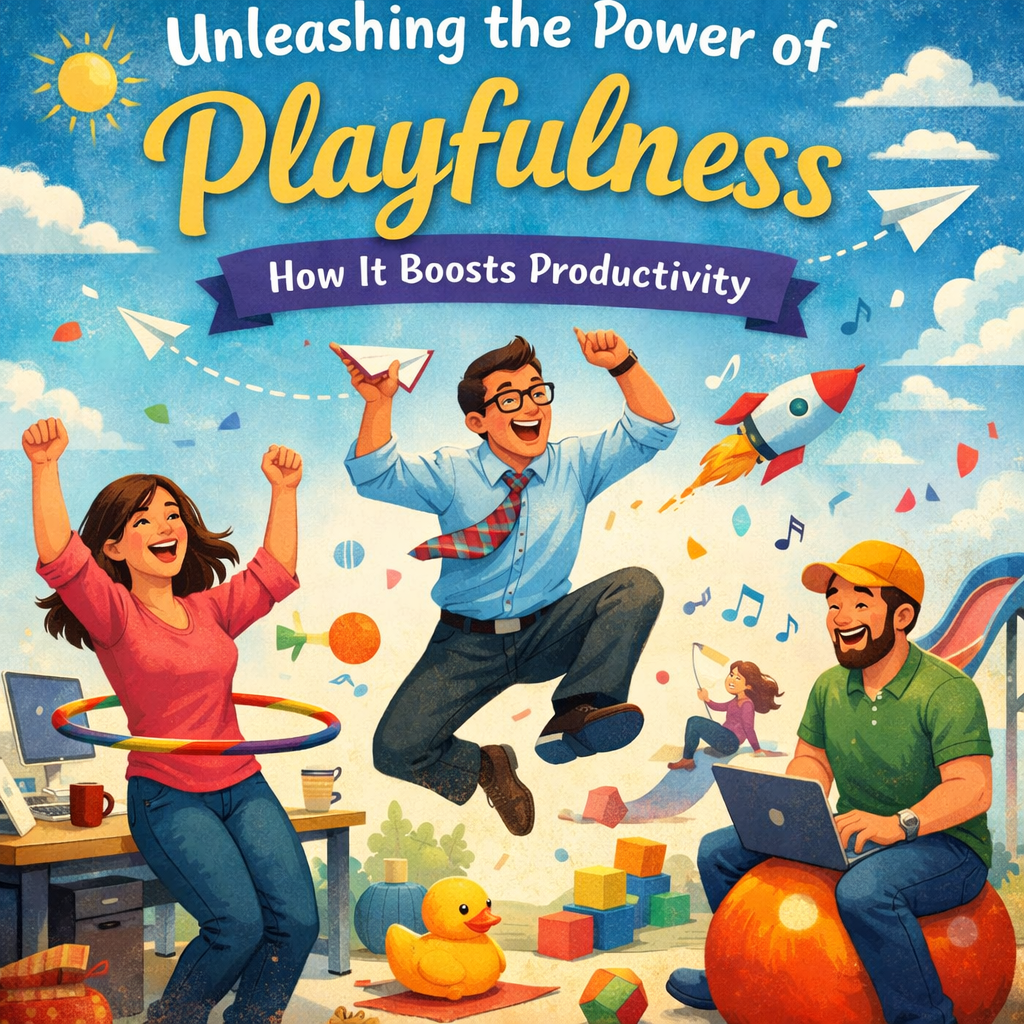
Playfulness boosts productivity because it shifts the mind out of rigid, high‑pressure modes and into a state that supports curiosity, flexibility, and problem‑solving. Research on workplace performance increasingly shows that environments infused with lightness, novelty, and psychological safety outperform those built on intensity alone. When people feel freer, they think better, collaborate more openly, and sustain effort for longer periods. Brainz Magazine
How Playfulness Enhances Cognitive Performance
A playful mindset reduces the mental strain that often accompanies productivity. When pressure decreases, the brain becomes more receptive to exploration and unconventional thinking. This shift supports:
- Greater cognitive flexibility — the ability to see multiple solutions instead of one fixed path.
- Faster recovery from setbacks — mistakes feel less threatening, making it easier to try again.
- Increased willingness to experiment — experimentation fuels innovation and creative problem‑solving.
Workplace research highlights that play taps into deep psychological motivators such as purpose, challenge, and connection, which are essential for sustained engagement. SHRM
Playfulness doesn’t replace discipline; it improves the quality of the effort you bring to your work by reducing cognitive rigidity and opening space for insight.
How Playfulness Reduces Stress and Supports Well‑Being
Stress narrows attention and drains energy. A playful approach counteracts this by lowering physiological tension and creating a sense of psychological spaciousness. When people feel more relaxed, they can sustain focus for longer periods and approach challenges with clearer thinking.
Modern productivity research shows that burnout is rising even as people work harder, suggesting that intensity alone cannot sustain performance. Integrating play helps restore balance, reduce stress, and improve overall well‑being. The CEO Magazine
This reduction in stress also improves emotional resilience. Tasks feel less like obstacles and more like opportunities to explore, which supports long‑term productivity.
How Playfulness Strengthens Collaboration
Teams that incorporate play tend to communicate more openly and trust one another more quickly. Shared moments of levity break down social barriers and create a sense of psychological safety—an essential ingredient for effective teamwork.
Playful environments support:
- More honest idea‑sharing — people feel safer offering unconventional ideas.
- Greater willingness to take interpersonal risks — essential for innovation.
- Stronger group cohesion — shared laughter builds connection.
- A culture where creativity feels welcome — judgment decreases, engagement increases.
These qualities directly influence productivity by improving how people work together.
Why Playfulness Boosts Motivation and Morale
Enjoyment is a powerful motivator. When work includes elements of fun, people feel more energized and more willing to engage deeply with their tasks. This sense of enjoyment increases intrinsic motivation—the kind that sustains long‑term effort without relying on external pressure.
Playfulness also helps counteract burnout. A 2019 analysis highlighted that play can boost productivity by up to 20%, underscoring the connection between enjoyment and performance. getchoys.com
Moments of levity replenish emotional resources and make demanding work feel more sustainable.
Integrating Playfulness Into Daily Routines
Playfulness doesn’t require games or elaborate activities. It can be woven into everyday work through small shifts in mindset and behavior.
Useful approaches include:
- Framing tasks as experiments rather than tests.
- Allowing room for humor in meetings or conversations.
- Using creative constraints to make routine tasks more engaging.
- Taking short breaks that involve movement, imagination, or novelty.
- Encouraging team rituals that spark connection and lightness.
These practices create an environment where productivity feels less like strain and more like flow. They also help normalize a culture where curiosity and experimentation are valued.
The Long‑Term Impact of a Playful Mindset
Over time, playfulness becomes a stabilizing force. It helps you adapt more easily to change, recover more quickly from setbacks, and maintain a healthier relationship with your work. It also supports a more expansive sense of possibility—an essential ingredient for both creativity and sustained productivity.
Organizations that embrace play report improvements in creativity, collaboration, and overall business performance, demonstrating that play is not a distraction but a strategic advantage. Brainz Magazine
A playful mindset ultimately creates a work environment where people feel energized, connected, and capable of doing their best work.
As you look at your own routines, where do you sense playfulness could make the biggest difference—reducing stress, improving collaboration, or making daily tasks feel lighter and more engaging?
- learn more in How to EQ Your Feelings
- dive deeper with The Musician’s Tech Toolbox
- explore Producer’s Guide to Avoiding Human Contact