
Introverts Aren’t Quiet Creatives — They’re Deep Creatives
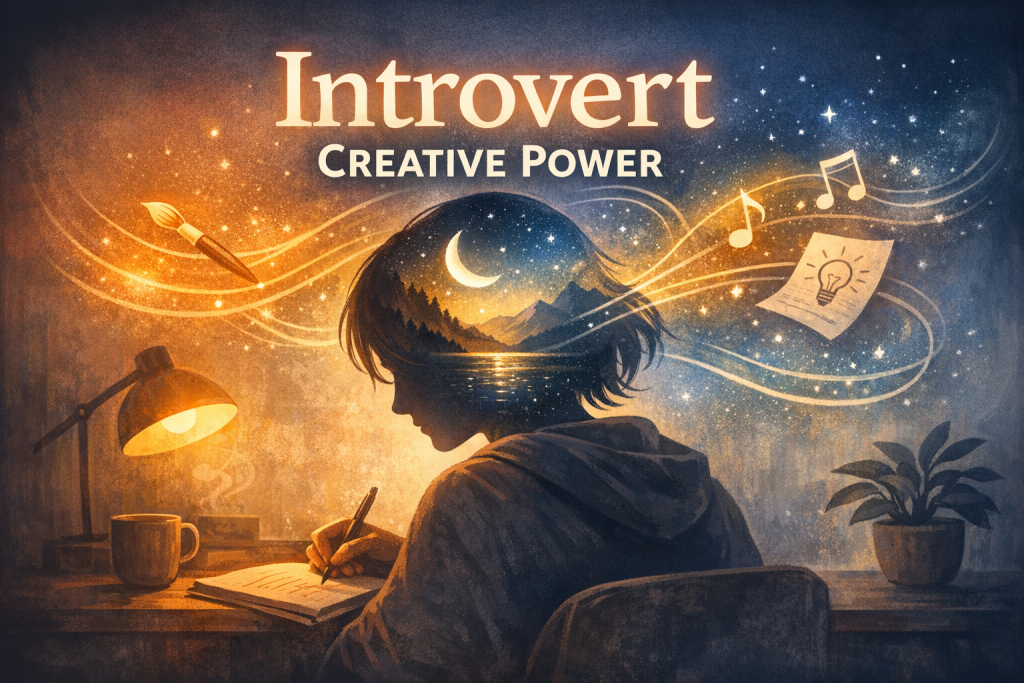
Introverts Aren’t Quiet Creatives — They’re Deep Creatives
Most conversations about creativity still assume that the “ideal” creative is loud, visible, constantly networking, endlessly producing, and always “on.”
But that model has never reflected the reality of how many introverted creators actually work.
In practice, introverts tend to produce some of the most emotionally resonant, thoughtful, and durable creative work — not despite their introversion, but because of it.
The challenge isn’t capability.
It’s environment.
When introverts build systems that honor their energy, their pace, and their way of thinking, their creative output becomes not just consistent, but powerful.
Depth Is an Introvert’s Creative Advantage
Introverts naturally gravitate toward depth over noise.
They think before they create. They observe before they speak. They process before they publish.
This depth shows up in ways that matter:
- work that feels emotionally grounded
- ideas that have been fully considered
- creative choices that feel intentional rather than reactive
- a voice that resonates because it’s honest, not performative
In a world that rewards speed, depth becomes a differentiator.
Why Introverts Burn Out in Traditional Creative Environments
Most creative systems are built around extroverted norms:
- constant visibility
- rapid output
- high social engagement
- pressure to “show up” everywhere
For introverts, these expectations create friction. Not because they’re incapable, but because the system ignores how their energy works.
When introverts try to operate like extroverts, they don’t just get tired — they lose access to their strengths: clarity, emotional intelligence, focus, and thoughtful execution.
The solution isn’t to “push harder.”
It’s to build a workflow that aligns with how introverts naturally thrive.
Three Systems That Help Introverts Create Their Best Work
1. Energy‑Aligned Workflow
Instead of forcing consistency through pressure, introverts thrive with consistency through pacing.
Short, focused creative sessions.
Clear boundaries around social energy.
Recovery built into the process.
This isn’t “working less.”
It’s working sustainably.
2. Low‑Noise Creative Structure
Introverts do their best work when cognitive load is low.
That means:
- fewer open loops
- fewer competing priorities
- fewer chaotic expectations
A simple, humane structure doesn’t limit creativity — it protects it.
3. Visibility Without Exhaustion
Introverts don’t need to become extroverts to share their work.
They need systems that let them show up with intention:
- thoughtful posts instead of constant posting
- meaningful conversations instead of endless networking
- depth‑driven content instead of algorithmic pressure
Visibility becomes sustainable when it’s aligned with identity.
Introverts Don’t Need to Change — Their Systems Do
When introverts stop trying to create like extroverts, something shifts:
- their confidence stabilizes
- their creative voice strengthens
- their output becomes more consistent
- their work feels more like them
The goal isn’t to be louder.
It’s to be truer.
Introverts aren’t quiet creatives — they’re deep creatives.
And when their systems honor that depth, their creative power becomes unmistakable.