

The Time‑Saving Myth: Why Efficiency Isn’t Enough (And What Actually Works)
By Neil J Milliner
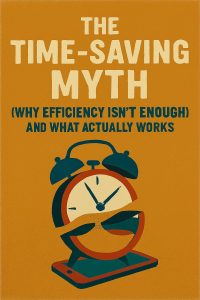
A grounded, compassionate reframing of productivity for people who are tired of optimizing their lives and still feeling behind.
1. Book Summary
The Time‑Saving Myth dismantles the belief that efficiency is the solution to overwhelm. It shows how the constant push to “save time” traps people in cycles of pressure, guilt, and unrealistic expectations—because the problem was never time in the first place.
Instead of offering hacks or tighter schedules, the book introduces a new model built on energy, attention, emotional bandwidth, and identity. It helps readers understand why they feel behind, what actually moves life forward, and how to build systems that feel humane, sustainable, and aligned.
This is productivity for people who want their lives back.
2. Back Cover Description
You’ve optimized.
You’ve streamlined.
You’ve color‑coded your calendar.
And you’re still exhausted.
Maybe the problem isn’t you.
Maybe it’s the myth.
In The Time‑Saving Myth: Why Efficiency Isn’t Enough (And What Actually Works), Neil J Milliner exposes the hidden trap behind modern productivity culture: the belief that if you could just save enough time, everything would finally feel manageable.
But time isn’t the issue.
Your energy, attention, and emotional capacity are.
Through humor, clarity, and deeply human insight, this book helps you:
- escape the efficiency trap
- shift from time management to energy and identity management
- build habits that work even when you’re tired
- reduce time anxiety and the pressure to “keep up”
- create a workflow that supports your humanity—not just your output
This is not a book about doing more in less time.
It’s a book about doing what matters in a way that feels sustainable, grounded, and real.
3. Key Themes
- The efficiency trap — why saving time never solves the real problem
- Energy‑based productivity — working with your body and brain, not against them
- Identity‑level change — shifting from “I should” to “I am someone who…”
- Time anxiety — the emotional weight of feeling behind
- Humane systems — routines that support your life instead of consuming it
4. Who This Book Is For
- Creatives, professionals, and parents overwhelmed by modern life
- People who’ve tried every productivity system and still feel behind
- Readers who want emotionally intelligent, shame‑free guidance
- Anyone craving a calmer, more sustainable relationship with time
- Humans who want to feel like themselves again
5. Book Details
- Title: The Time‑Saving Myth: Why Efficiency Isn’t Enough (And What Actually Works)
- Author: Neil J Milliner
- Genre: Personal Growth / Productivity / Psychology
- Series: Standalone (or part of a future “Humane Productivity” collection)
- Formats: Paperback, eBook
- ISBN: (Add when ready)
- Amazon Link: (Add your preferred link here)
- Universal Book Link: https://books2read.com/The-Time-Saving-Myth-Why-Efficiency-Isnt-Enough-And-What-Actually-Works