

Perfection Paralysis: Breaking Free from the Chains of Unrealistic Standards
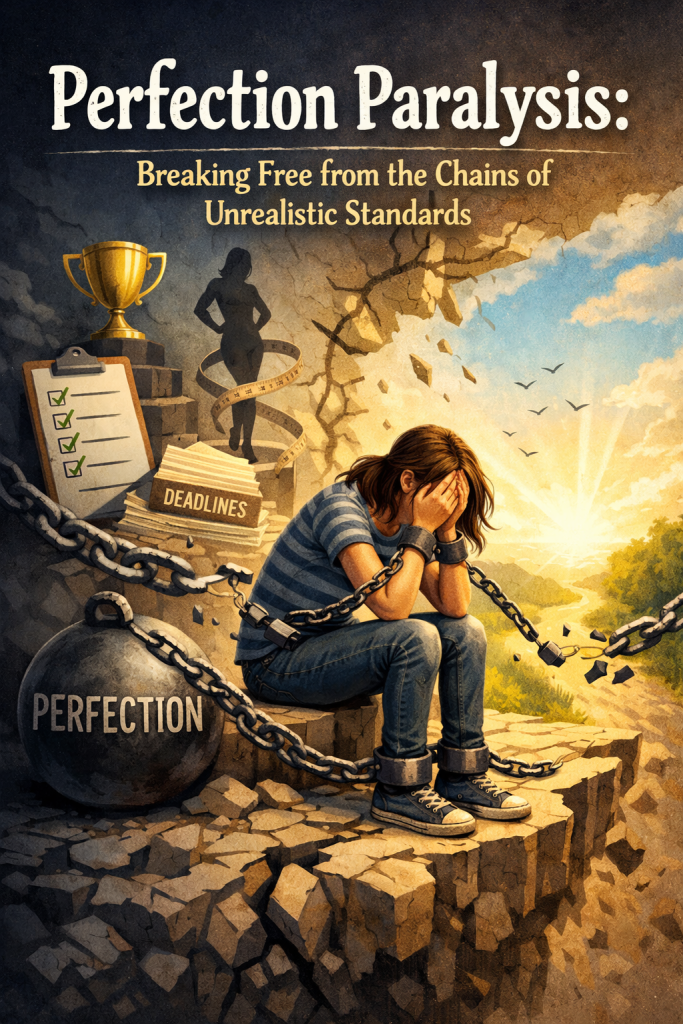
Perfectionism becomes especially difficult to untangle because it feels like a strength—high standards, ambition, attention to detail—yet underneath, it quietly erodes confidence, creativity, and emotional well‑being.
Perfection Paralysis: Breaking Free from the Chains of Unrealistic Standards
Understanding Why Perfectionism Feels Safe—and Why It Isn’t
Perfectionism often develops from a mix of internal and external forces. Social expectations, personal insecurities, and a desire for control can all shape the belief that flawlessness is the only acceptable outcome. Over time, this belief becomes a rigid internal rule—one that demands more than any human can consistently deliver.
This mindset creates:
- Unrealistic standards that no one could meet every time
- All‑or‑nothing thinking, where anything less than perfect feels like failure
- Chronic self‑criticism, even when achievements are objectively strong
Perfectionism keeps people locked in a loop where effort never feels good enough, and mistakes feel catastrophic rather than human. It narrows life instead of expanding it.
How Perfectionism Takes Hold
Perfectionism rarely appears overnight. It forms gradually, shaped by experiences that teach you it’s safer to be flawless than to be vulnerable.
Common influences include:
- Growing up in environments where praise was tied to achievement
- Internalizing cultural messages about success, productivity, or appearance
- Experiencing criticism or rejection that made mistakes feel dangerous
- Using achievement as a way to feel worthy or in control
Over time, perfectionism becomes a coping strategy—a way to avoid discomfort, protect your identity, or maintain a sense of safety.
But what begins as protection eventually becomes a prison.
The Emotional Drivers Behind Perfectionism
Beneath perfectionistic behavior, two emotional forces tend to sit at the core.
Fear of Failure or Rejection
If mistakes feel dangerous—emotionally, socially, or professionally—your mind tries to avoid them at all costs. Perfectionism becomes a shield:
- “If I do everything perfectly, no one can criticize me.”
- “If I never fail, I’ll never feel ashamed.”
- “If I get it right the first time, I won’t disappoint anyone.”
This fear makes perfectionism feel necessary, even when it’s exhausting.
Fragile Self‑Esteem
When self‑worth is tied to performance, perfection becomes the only way to feel “enough.” Any flaw feels like a threat to your identity.
This creates a cycle where:
- Success brings temporary relief
- Mistakes trigger shame or self‑doubt
- The pressure to perform increases
These fears make perfectionism feel protective, even though it ultimately creates more stress and self‑criticism.
The Cost to Mental Health and Well‑Being
Perfectionism isn’t just a personality quirk—it has real consequences. Over time, it affects how you think, feel, and behave.
Common impacts include:
- Anxiety and chronic stress from constant pressure
- Procrastination, driven by fear of not doing something “right”
- Burnout, especially in high‑performance environments
- Difficulty enjoying accomplishments, because nothing feels good enough
- Avoidance of new opportunities, to avoid the risk of imperfection
Instead of helping you succeed, perfectionism often keeps you stuck—frozen between fear and impossibly high expectations.
Shifting Toward a Healthier Mindset
Breaking free from perfectionism requires a mindset shift that embraces imperfection as part of being human. These shifts don’t happen overnight, but they create space for growth, creativity, and emotional balance.
Practice Self‑Compassion
Treat yourself with the same understanding you’d offer someone you care about. Compassion softens the harsh inner critic and builds resilience.
Accept Mistakes as Learning
Errors aren’t evidence of inadequacy—they’re part of growth. Every skill, talent, or achievement you admire in others was built through trial and error.
Challenge Perfectionistic Thoughts
Notice when your mind jumps to extremes:
- “If it’s not perfect, it’s worthless.”
- “I should be doing more.”
- “Everyone else has it together.”
Gently reframe these thoughts into something more balanced and realistic.
These small shifts loosen the grip of all‑or‑nothing thinking.
Tools That Support Change
Several approaches can help rewire perfectionistic patterns and create a more grounded, flexible way of living.
- Cognitive‑behavioral strategies to question rigid beliefs and replace them with more balanced ones
- Mindfulness practices to reduce rumination and increase emotional resilience
- Realistic goal‑setting that prioritizes progress over flawless outcomes
- Healthy boundaries that protect time, energy, and well‑being
- Journaling or reflective practices to track patterns and celebrate small wins
These tools help you build a healthier relationship with effort, success, and self‑worth.
Choosing Progress Over Perfection
Letting go of perfection doesn’t mean lowering your standards—it means redefining success in a way that supports your mental health. Progress becomes more important than flawlessness. Curiosity becomes more valuable than control. Effort becomes something to celebrate, not scrutinize.
Small steps toward self‑acceptance, realistic expectations, and emotional balance lead to greater fulfillment than perfection ever could.
Perfectionism may have protected you once, but it doesn’t have to define your future. As you reflect on your own patterns, which part of perfectionism—fear of failure, high standards, or self‑criticism—feels most present for you right now?
Further Reading:
Resources to help you go deeper
- learn more in How to EQ Your Feelings
- dive deeper with The Musician’s Tech Toolbox
- explore Producer’s Guide to Avoiding Human Contact