

The Key to Consistency: Overcoming Motivation Drops in Big Projects
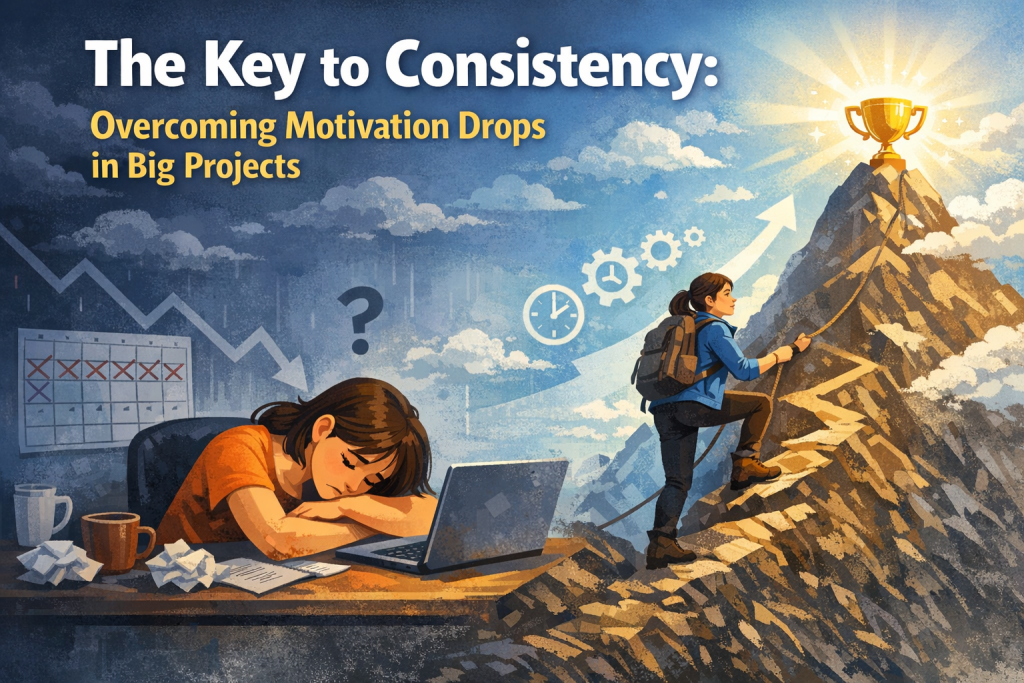
A big project asks for more than talent, more than enthusiasm, and more than a strong start. It asks for endurance. It asks for rhythm. It asks for a relationship with your own motivation that is realistic, compassionate, and strategic. The heart of consistency isn’t about staying endlessly inspired—it’s about understanding how motivation actually behaves and building a system that carries you through the inevitable dips.
The Key to Consistency: Overcoming Motivation Drops in Big Projects
Why Long‑Term Work Requires More Than Inspiration
Every big project—writing a book, building a business, launching a creative series, completing a degree, renovating a home—begins with a spark. That early spark feels electric. You can see the finished result in your mind. You feel energized, focused, and ready to commit. But as the days stretch into weeks and the weeks stretch into months, something shifts. The spark dims. The excitement fades. The work becomes heavier, slower, more complex.
This is the moment where most projects stall. Not because the creator lacks talent or discipline, but because they misunderstand what consistency actually requires.
Motivation is not a constant. It rises and falls. It surges and recedes. It behaves more like weather than a personality trait. Treating it as something you must “have” in order to work is a recipe for frustration. Treating it as something that comes and goes—and designing your system around that truth—is the key to finishing what you start.
Consistency is not powered by one big burst of inspiration. It’s powered by habits, clarity, and small sparks that keep the fire going even when your energy dips.
Why Motivation Fades During Big Projects
The early phase of a project is fueled by novelty. Your brain loves novelty. It lights up the reward centers, floods you with dopamine, and makes everything feel exciting and possible. But novelty has a short shelf life. Once the project becomes familiar, the brain shifts from anticipation to effort. The work becomes less about discovery and more about execution.
This shift is predictable. It’s not a personal flaw. It’s not a sign that you’re “not meant” to do the project. It’s simply how the brain works.
Several psychological patterns contribute to the mid‑project slump:
- The complexity curve — As you progress, tasks become more detailed and less glamorous.
- The progress plateau — Early wins come quickly; later wins require more time and effort.
- The expectation gap — The reality of the work rarely matches the fantasy of the outcome.
- The emotional dip — Without novelty, the brain reduces dopamine, making the work feel heavier.
Understanding this shift helps you prepare for it. Instead of interpreting the dip as failure, you can treat it as a normal part of the creative cycle—and build systems that carry you through it.
Turning Your Project Into a Habit
Motivation is unreliable. Habit is dependable. When you turn your project into a routine, you remove the daily decision of when to work, which is often the biggest barrier. Decision fatigue is real, and it drains energy long before you even begin.
A consistent routine—whether it’s 10 minutes or two hours—creates:
- A cue that signals your brain it’s time to focus
- A sense of momentum that builds automatically
- A baseline level of progress even on low‑energy days
Small, consistent sessions compound into meaningful progress. They keep the project “warm,” preventing the cold‑start friction that makes restarting so difficult.
Why 10 Minutes Works
Ten minutes is small enough to bypass resistance but large enough to build momentum. Once you begin, you often continue. But even if you don’t, you’ve still maintained the habit. You’ve still cast a vote for your identity as someone who shows up.
Habit protects you from the volatility of motivation.
Setting Clear, Achievable Goals
Big projects feel overwhelming when they remain vague. “Write a book,” “launch a business,” or “build a course” are not tasks—they’re categories of hundreds of tasks. Without clarity, your brain doesn’t know where to begin, and overwhelm sets in.
Breaking the project into smaller steps gives you:
- Clear direction — You always know what to do next.
- Manageable steps — Each task feels doable rather than daunting.
- Frequent wins — Every completed step triggers a dopamine reward.
These small wins matter. They reinforce your progress and keep your confidence high. They also create a feedback loop: progress fuels motivation, which fuels more progress.
The Power of Milestones
Milestones give structure to the journey. They create natural checkpoints where you can pause, reflect, and celebrate. Even small milestones—finishing a chapter, outlining a section, completing a prototype—help you stay connected to the bigger picture.
When you focus on the journey instead of the finish line, you create a sustainable rhythm.
Reconnecting With Your Original Why
When motivation dips, returning to your initial spark can reignite your drive. Every project begins with a reason—an emotional anchor that made the work feel meaningful.
Ask yourself:
- What excited me about this project at the beginning?
- What impact will it have once it’s finished?
- Who will benefit from it?
- What part of me will feel fulfilled by completing it?
These questions reconnect you with the emotional core of the work. They remind you that the project isn’t just a task—it’s a contribution, a vision, a promise to yourself.
Surround Yourself With Inspiration
Inspiration is not passive. It’s something you can cultivate.
Try:
- Reading stories of people who’ve done similar work
- Creating a visual board of your project’s themes
- Talking with someone who understands your vision
- Revisiting early notes, sketches, or ideas
These small acts help you reconnect with the meaning behind the work, which strengthens intrinsic motivation.
Using Environment and Perspective to Refresh Your Energy
Sometimes the smallest shifts create the biggest breakthroughs. When your environment becomes stale, your creativity can stagnate. Changing your surroundings—even slightly—can reset your mind.
Simple shifts include:
- Working in a different environment
- Changing your tools or medium
- Adjusting your schedule to match your natural energy peaks
- Stepping outside for a reset before returning
These changes activate different neural pathways, which can unlock ideas that felt inaccessible before. A fresh perspective often restores momentum that felt lost.
The Power of Micro‑Resets
A micro‑reset is a small, intentional interruption that clears mental clutter. It might be a walk, a stretch, a cup of tea, or a few minutes of silence. These resets help you return to the work with renewed clarity.
Practicing Self‑Compassion During the Hard Days
Consistency doesn’t mean perfection. There will be days when you struggle, when the work feels heavy, when your energy is low, or when life pulls you in other directions. These days are part of the process—not evidence that you’re failing.
Self‑compassion is essential for long‑term consistency.
It allows you to:
- Treat setbacks as information, not failure
- Adjust your plan instead of abandoning it
- Return to your routine the next day without guilt
Shame shuts down motivation. Compassion restores it. When you treat yourself with understanding rather than criticism, you build resilience—the real key to finishing long projects.
The Bounce‑Back Skill
The most successful creators are not the ones who never fall off track. They’re the ones who bounce back quickly. Self‑compassion makes bouncing back easier.
Building a System That Carries You to the Finish
A big project is not finished through willpower alone. It’s finished through design. When you combine habits, clear goals, and periodic sparks of inspiration, you create a structure that supports you through the entire journey—not just the exciting beginning.
A strong system includes:
- A routine that removes decision fatigue
- Clear goals that break the project into manageable steps
- Environmental cues that support focus
- Micro‑resets that prevent burnout
- Self‑compassion that keeps you resilient
- A connection to your why that keeps the work meaningful
This system becomes your safety net. It carries you through the middle—the hardest part of any long project—and guides you to the finish.
The Real Secret to Consistency
Consistency is not about staying motivated. It’s about staying engaged. It’s about showing up in small ways, again and again, until the work is done.
A big project asks for patience, structure, and emotional honesty. It asks you to build a relationship with your own motivation that is flexible rather than rigid. As you reflect on your current project, which part feels like it needs the most support right now—the routine, the goal‑setting, or the motivation side?
Further Reading:
Resources to help you go deeper
- learn more in How to EQ Your Feelings
- dive deeper with The Musician’s Tech Toolbox
- explore Producer’s Guide to Avoiding Human Contact