

Navigating Ethical Marketing: A Beginner’s Guide for Creatives
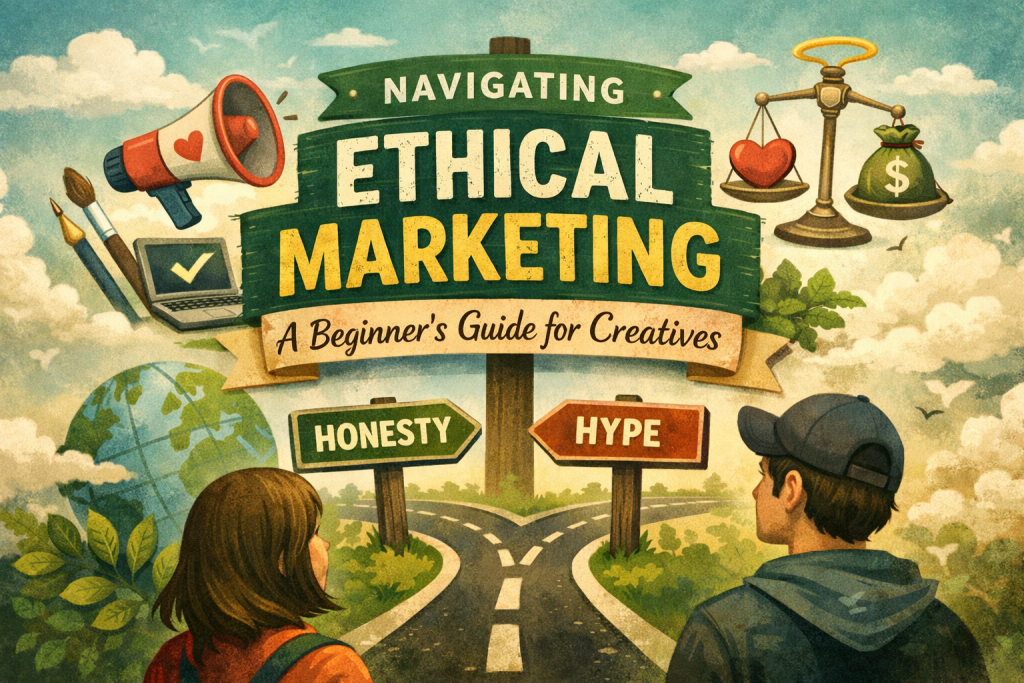
What is ethical marketing for creatives, and how do you practice it as a beginner?
Ethical marketing is one of the strongest ways for creatives to build trust, attract the right audience, and create a sustainable online presence. Instead of relying on pressure, hype, or manipulative tactics, ethical marketing focuses on clarity, honesty, and respect — the qualities that make people feel safe engaging with your work. When your messaging is transparent and your actions align with your values, your audience is far more likely to stay, support you, and recommend you. This guide breaks down what ethical marketing actually looks like for beginners and how to build a trustworthy creative presence that grows steadily over time.
Navigating Ethical Marketing: A Beginner’s Guide for Creatives. A trustworthy online presence is built on clarity, consistency, and respect for the people you’re trying to reach. Ethical marketing is not a niche practice reserved for activists or nonprofits—it’s the foundation of sustainable creative work. When your audience feels safe with you, when they sense honesty in your messaging and integrity in your decisions, they stay. They recommend you. They buy from you without hesitation. Ethical marketing is not just “the right thing to do”—it’s also one of the most effective long‑term strategies for creative professionals.
Why Ethical Marketing Matters for Creatives
Creative work is inherently personal. Whether you’re a writer, designer, musician, educator, or maker, your audience isn’t just buying a product—they’re buying trust in your vision, your voice, and your values. Ethical marketing protects that trust.
It helps you:
- Build credibility without exaggeration
- Attract the right audience instead of manipulating the wrong one
- Create long‑term loyalty rather than short‑term hype
- Stand out in a crowded digital landscape where authenticity is rare
Ethical marketing is not about being perfect. It’s about being intentional, transparent, and respectful in how you communicate and promote your work.
Authenticity as the Foundation of Ethical Marketing
Authenticity is the anchor of trust. When your marketing reflects your real values, your audience can feel it. When it doesn’t, they can feel that too.
Authenticity means:
- Being honest about what you offer and what you don’t
- Sharing your creative process without manufacturing drama or mystique
- Speaking in your natural voice rather than adopting a persona
- Letting your values guide your decisions, not trends or pressure
Authenticity doesn’t require oversharing. It simply requires alignment between who you are and how you present yourself.
Why Authenticity Works
People crave realness online. They want to know the human behind the work. When your marketing feels grounded and sincere, your audience relaxes. They stop scanning for red flags and start listening.
Transparency as a Non‑Negotiable Standard
Transparency is the practical expression of ethical marketing. It removes ambiguity, reduces confusion, and prevents misunderstandings before they happen.
Transparency includes:
- Clear pricing and payment terms
- Honest descriptions of what your product or service includes
- Disclosure of partnerships, sponsorships, or affiliate relationships
- Realistic expectations about timelines, outcomes, or results
When you’re transparent, you eliminate the guesswork that often leads to disappointment or distrust.
The Cost of Hidden Information
When creators hide details—intentionally or accidentally—audiences feel misled. Even small omissions can damage trust. Transparency ensures your audience always knows what they’re agreeing to.
Avoiding Manipulative or Misleading Tactics
Ethical marketing requires you to consider the impact of your strategies—not just the results. Many common marketing tactics rely on fear, scarcity, shame, or pressure. These tactics may work in the short term, but they erode trust over time.
Unethical tactics include:
- Exaggerating benefits or outcomes
- Creating false urgency or scarcity
- Using guilt or shame to drive purchases
- Overpromising and underdelivering
- Exploiting insecurities or vulnerabilities
Ethical marketing avoids these traps by prioritizing clarity, honesty, and respect.
What Ethical Persuasion Looks Like
Ethical persuasion is about helping people make informed decisions—not pushing them into choices they’ll regret. It’s about highlighting value, not manufacturing fear.
Respecting Consumer Privacy
Privacy is a core ethical responsibility. In a world where data is constantly collected, tracked, and sold, respecting your audience’s privacy is a powerful trust signal.
Respecting privacy means:
- Collecting only the data you truly need
- Asking for consent before adding someone to a list
- Being clear about how you use and store information
- Allowing people to opt out easily
- Staying compliant with data protection laws
Privacy is not just a legal requirement—it’s a moral one.
Why Privacy Builds Trust
When people know their information is safe with you, they’re more willing to engage, subscribe, and purchase. Privacy is a form of respect, and respect strengthens relationships.
Considering Social and Environmental Impact
Ethical marketing extends beyond messaging—it includes the choices you make behind the scenes. Every creative business has an impact, and being mindful of that impact builds integrity into your brand.
This might include:
- Choosing sustainable materials for physical products
- Supporting ethical suppliers or partners
- Reducing waste in packaging or production
- Highlighting causes you genuinely support
- Giving back to your community in meaningful ways
These choices don’t need to be grand gestures. Even small steps signal that you care about more than profit.
The Ripple Effect of Ethical Choices
When your values show up in your actions, your audience sees you as someone they can trust—not just as a marketer, but as a human being.
Creating a Simple, High‑Trust Online Presence
Ethical marketing doesn’t require complicated funnels or aggressive tactics. A simple, intentional online presence can be incredibly effective when built on trust.
A high‑trust presence includes:
- A clear message about who you are and what you offer
- A consistent voice and visual identity
- Transparent communication across all platforms
- Meaningful engagement with your audience
- Content that provides genuine value
- A track record of reliability and follow‑through
When these elements work together, your online presence becomes a place where people feel safe, informed, and respected.
Bringing It All Together
Ethical marketing is not a set of rules—it’s a mindset. It’s the commitment to show up honestly, communicate clearly, and treat your audience with dignity. When you market ethically, you build a brand that people trust, return to, and recommend.
As you think about your own creative work, which area of ethical marketing feels most important for you to strengthen right now—authenticity, transparency, privacy, or the impact of your marketing choices?
Further Reading:
Resources to help you go deeper
- grab your copy of Branding & Networking for Bands
- learn more in Build a Brand That Feels Like You
- dive deeper with E-Commerce SEO Strategies
- explore Pitch Yourself Without Cringing
- check out Indie Artist’s Monetization Manual
- grab your copy of The Musician’s Marketing Playbook
- learn more in Ultimate Musician’s Website Guide
- dive deeper with Vulnerable Creator’s Marketing Playbook