

Building Emotional Resilience: Strategies for Everyday Life
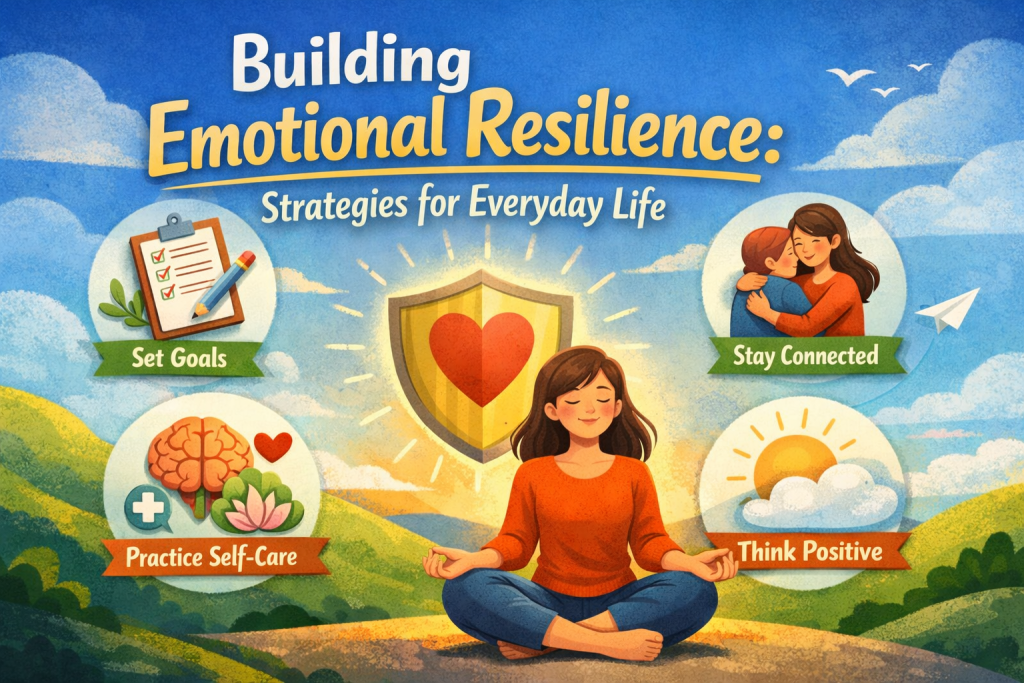
Emotional resilience grows when your habits, mindset, and support systems work together to help you stay steady in the face of stress. It isn’t about being unshakable or endlessly positive; it’s about developing the internal flexibility to meet difficulty without losing your sense of self. When these skills become part of daily life, you respond to challenges with more clarity, less reactivity, and a deeper sense of agency.
What emotional resilience actually involves
Resilience is the ability to adapt, recover, and continue functioning when life becomes unpredictable. It’s made up of several learnable capacities:
- Staying connected to your values so your choices remain grounded even when circumstances shift.
- Regulating emotions in ways that acknowledge what you feel without letting those feelings take over.
- Maintaining perspective so uncertainty doesn’t automatically become catastrophe.
- Recovering from setbacks with a sense of agency rather than defeat.
- Seeking support instead of isolating when things feel heavy.
These are skills that strengthen with practice, not traits you either have or don’t.
Strengthening resilience through consistent self‑care
Self‑care replenishes the physical and emotional resources you draw from during stressful periods. It’s most effective when it’s consistent and tailored to what genuinely restores you.
Helpful practices include:
- Restorative activities such as reading, stretching, or quiet reflection.
- Routines that support sleep, nutrition, and movement, which stabilize your baseline.
- Small daily rituals—a morning pause, a grounding breath, a short walk—that help regulate your nervous system.
These habits create a buffer that makes stress easier to navigate.
Building a support system that reinforces stability
Connection is one of the strongest predictors of resilience. Supportive relationships provide perspective, encouragement, and emotional grounding.
A strong support system often includes:
- Friends or family who listen without judgment.
- Colleagues or peers who understand the context of your challenges.
- Mentors who offer guidance and perspective.
- Professional support, such as therapists or counselors, when emotions feel overwhelming or persistent.
Reaching out is a sign of strength, not weakness, and often accelerates recovery during difficult times.
Using mindfulness and gratitude to shift your internal landscape
Mindfulness helps you stay present rather than getting swept up in what‑ifs or worst‑case scenarios. Gratitude shifts your attention toward what is steady, supportive, or meaningful.
Together, these practices help you:
- Notice emotions without being consumed by them.
- Interrupt spirals of stress or rumination.
- Strengthen your ability to return to a grounded state.
These are small, repeatable habits that build emotional flexibility over time.
Adapting to change with openness rather than resistance
Uncertainty is a constant in modern life. Resilience grows when you learn to meet change with curiosity instead of fear.
This mindset includes:
- Accepting that not everything can be controlled.
- Adjusting expectations when circumstances shift.
- Allowing discomfort without assuming it means failure.
- Recognizing that growth often emerges from disruption.
Adaptability doesn’t require liking change—it simply means staying steady enough to navigate it.
Integrating resilience into everyday life
Resilience becomes strongest when it’s woven into daily routines rather than reserved for crises. Small practices create a baseline of emotional steadiness:
- Checking in with yourself throughout the day.
- Setting boundaries that protect your energy.
- Pausing before reacting when emotions run high.
- Taking a moment to breathe or reset when stress spikes.
Over time, these habits make it easier to respond thoughtfully rather than react impulsively.
Emotional resilience is something you build gradually through small, consistent choices that support your well‑being. As you think about your own life right now, which area feels like it would support your resilience most effectively—strengthening your self‑care, deepening your support system, practicing mindfulness, or improving your adaptability to change?