

Creating a Productive Home Workspace: Tips for Focus and Flow
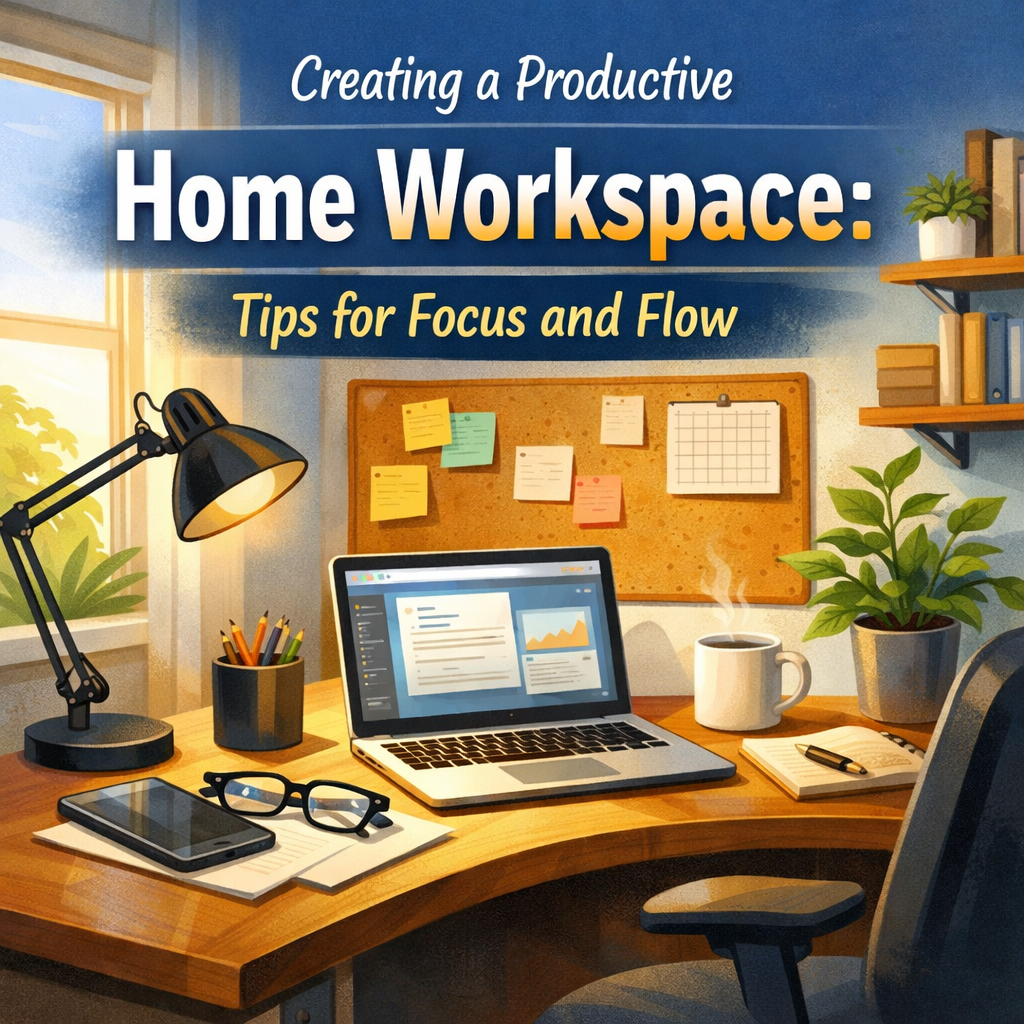
A productive home workspace works best when the physical environment, your body, and your daily rhythms all reinforce the same message: this is where focus happens.
How Your Environment Shapes Focus and Flow
A home workspace isn’t just a desk—it’s a cognitive landscape. Your brain relies on environmental cues to decide whether it should focus, relax, multitask, or drift. When your space is intentional, your mind follows suit. When it’s chaotic or ambiguous, your attention scatters.
A productive workspace blends four elements:
- Location that signals focus
- Ergonomics that protect energy
- Organization that reduces mental noise
- Routines that anchor your day
When these align, deep work becomes easier and more sustainable.
Choosing a Location That Supports Focus
Where you work influences how you work. A well‑chosen location reduces cognitive load and helps your brain shift into “work mode” more quickly.
Key factors include:
- Quiet and low‑traffic areas to minimize interruptions
- Natural light to boost alertness and mood
- A consistent workspace so your brain forms a reliable association with focus
- A door or divider to create psychological boundaries between home and work
Even in small spaces, choosing a dedicated corner can dramatically improve concentration.
Using Ergonomics to Protect Energy
Ergonomics isn’t about luxury—it’s about stamina. When your body is supported, your mind stays sharper for longer.
Helpful adjustments include:
- A supportive chair that keeps your spine aligned
- A desk at the right height to reduce shoulder and wrist strain
- A standing desk or balance ball chair to vary posture
- Monitor height adjustments to prevent neck fatigue
Physical discomfort drains mental energy. Ergonomics preserves it.
Decluttering to Reduce Mental Noise
Visual clutter competes for your attention. Even when you’re not consciously noticing it, your brain is processing it.
Decluttering helps by:
- Reducing decision fatigue
- Making tools and materials easier to find
- Creating a sense of clarity and readiness
- Preventing the slow buildup of “micro‑stressors”
Simple organizers, shelves, and a clean desk surface can transform how quickly you settle into work.
Personalizing for Creativity and Calm
A workspace should feel emotionally supportive, not sterile. Personal touches help you feel grounded and inspired.
Consider adding:
- Plants for mood and air quality
- Artwork or color palettes that spark creativity
- Meaningful objects that remind you of your values
- Quotes or visual cues that reinforce focus
These elements create a sense of ownership and make the space somewhere you want to spend time.
Managing Digital Distractions
In a home environment, digital boundaries matter as much as physical ones. Without them, your attention is constantly pulled away from deep work.
Effective strategies include:
- Silencing non‑essential notifications
- Using focus modes or website blockers
- Keeping your phone out of reach during work blocks
- Creating separate browser profiles for work and personal use
When your devices stop interrupting you, your brain can stay in deeper, more satisfying cycles of concentration.
Establishing a Routine That Anchors Your Day
A workspace is only half the equation. The other half is the rhythm you bring to it.
Supportive routines include:
- Consistent start times to reduce the mental effort of beginning
- Intentional breaks to prevent burnout
- End‑of‑day rituals to signal closure and transition back to home mode
- Micro‑rituals like making tea, stretching, or reviewing your plan before starting
Routines create psychological stability and make focus feel automatic rather than forced.
Creating a Workspace That Reflects Your Best Work
Your workspace is a mirror of your mindset. When it’s intentional, organized, and aligned with your needs, it becomes a powerful tool for focus and flow. Small adjustments—better lighting, a decluttered desk, a supportive chair—can transform how you feel and perform throughout the day.
As you think about your own setup, which area feels like it has the most potential to improve your focus right now: the location, the ergonomics, the organization, or the digital boundaries?