

Embracing Structure: Balancing Creativity and Organization
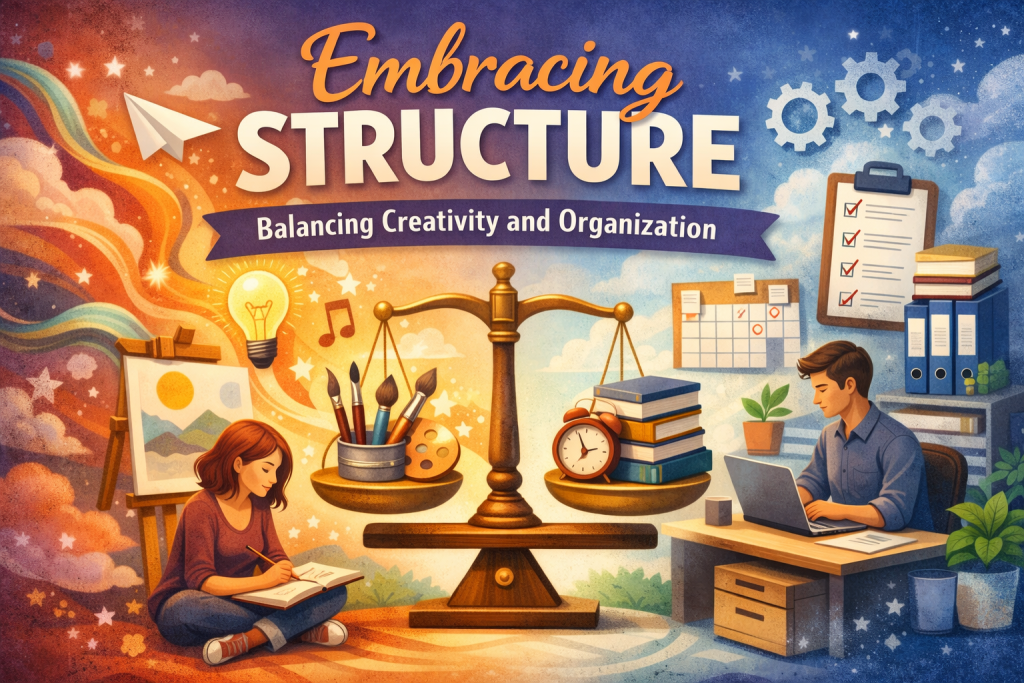
A creative life becomes far more sustainable when you stop treating structure and creativity as opposites and start seeing them as partners.
Embracing Structure: Balancing Creativity and Organization
How to Build Systems That Support—Not Stifle—Your Creative Flow
Creativity thrives on freedom, exploration, and spontaneity. Structure thrives on clarity, predictability, and order. At first glance, these two forces seem incompatible. One invites play; the other demands discipline. One expands; the other contains. It’s no wonder so many creatives feel torn between wanting to follow inspiration wherever it leads and needing systems that help them finish what they start.
But the tension between creativity and structure isn’t a flaw—it’s a natural part of the creative process. And when you learn how to balance the two, you unlock a workflow that is both imaginative and sustainable.
Why Creativity and Structure Feel at Odds
Creative work often emerges from curiosity, experimentation, and the willingness to explore the unknown. Structure, on the other hand, is built on predictability and control. When these needs collide, frustration follows.
Many creatives experience:
- Structure as a cage that limits imagination
- Creativity as chaos without a container to hold it
- Overwhelm when ideas pile up with no system to organize them
- Inconsistency when inspiration fades and there’s no routine to fall back on
This tension is normal—and solvable. The key is understanding that structure isn’t the enemy of creativity. It’s the scaffolding that allows creativity to grow.
The Misconception That Structure Kills Creativity
Many creatives avoid structure because they associate it with rigidity, rules, and restriction. But structure, when used intentionally, becomes a creative ally.
Structure provides:
- A clear direction for your ideas
- A way to finish what you start
- A container that reduces overwhelm
- A rhythm that helps you access flow more easily
Think of structure as the frame around a painting. It doesn’t limit the art—it supports it.
Why Structure Actually Enhances Creativity
When your mind isn’t busy trying to remember tasks, organize ideas, or manage chaos, it has more space for imagination. Structure reduces cognitive load, which increases creative capacity.
Understanding Your Creative Style
Every creative person has a different relationship with structure. Some thrive with detailed plans; others need flexibility and open space. Understanding your natural style helps you choose the right tools.
Questions to explore:
- Do you prefer loose guidelines or detailed plans?
- Do deadlines motivate you or create pressure?
- Do you generate ideas quickly but struggle to finish?
- Do you need visual systems, written lists, or intuitive flow?
Your answers shape the kind of structure that will actually support you—not overwhelm you.
Creative Styles and Their Needs
- The Visionary — needs flexible frameworks and big‑picture planning
- The Builder — thrives with step‑by‑step systems and clear milestones
- The Explorer — benefits from open‑ended sessions and creative sprints
- The Synthesizer — needs tools that organize ideas into patterns
There is no “right” style—only the one that works for you.
Strategies That Blend Creativity and Structure
A balanced system uses structure to guide creativity without suffocating it. These approaches help you stay grounded while still leaving room for exploration.
Experiment With Organizational Methods
Try different systems to see what aligns with your energy:
- Time‑blocking
- Creative sprints
- Kanban boards
- Themed workdays
- Weekly planning sessions
Experimentation helps you discover what feels natural rather than forced.
Break Large Projects Into Smaller Tasks
Big ideas can feel overwhelming. Breaking them into smaller steps:
- Reduces resistance
- Builds momentum
- Makes progress visible
Small wins fuel creative confidence.
Set Realistic Goals
Clear, achievable milestones keep you focused without killing inspiration. Goals should stretch you—but not break you.
Create Flexible Frameworks
Rigid systems collapse under pressure. Flexible systems bend with your energy, schedule, and creative flow.
Think:
- “Work on chapter” instead of “Finish chapter”
- “Explore color palettes” instead of “Finalize design”
- “Draft ideas” instead of “Write perfect copy”
Flexibility keeps creativity alive.
The Power of Collaboration
Creative work doesn’t have to be solitary. Collaborators can help you balance structure and creativity by offering strengths you may not naturally have.
Collaborators can:
- Provide structure when you’re deep in creative flow
- Offer fresh ideas when you feel boxed in
- Help you stay accountable to your goals
- Bring clarity to your process
Sometimes the right partner becomes the missing piece in your creative system.
Embracing Structure Without Losing Your Vision
Structure doesn’t require you to compromise your artistic identity. Instead, it helps you:
- Protect your creative energy
- Finish the projects you care about
- Bring your ideas into the world
- Build a sustainable creative practice
When creativity and structure work together, you gain both freedom and follow‑through.
The Real Goal: Harmony, Not Control
You don’t need to force creativity into a rigid system. You just need enough structure to support your ideas—and enough freedom to let them breathe.
Finding your personal balance is an ongoing process, but once you understand how your creativity responds to different forms of structure, you can design a system that supports your best work. Which part of your creative process feels most in need of structure right now?