I Want to Make Music, But I Haven’t Got the Talent
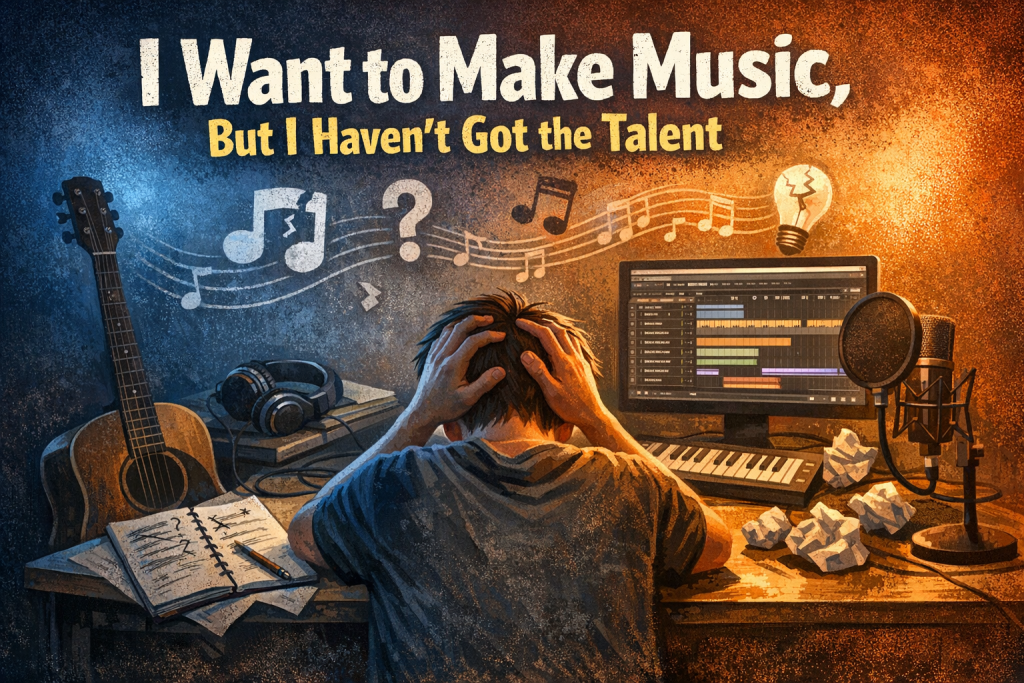
I Want to Make Music, But I Haven’t Got the Talent
The desire to create music is powerful — and universal. Yet one belief stops countless people before they even begin:
“I want to make music, but I haven’t got the talent.”
If that’s you, you’re not alone. The good news? Talent is not the deciding factor in whether you can make music. In fact, many musicians you admire didn’t start out “talented” — they became skilled through curiosity, persistence, and passion.
Here’s why a lack of perceived talent should never stop you from pursuing your musical dreams.
1. Talent Is Overrated — Persistence Matters More
Talent is often treated as something you either have or don’t. But in reality, music is a learned skill. What matters far more than natural ability is your willingness to practice, experiment, and grow.
Practice Builds Skill
Playing an instrument, learning a DAW, understanding rhythm or harmony — these are all skills you can develop over time.
Mistakes Are Part of the Process
Every musician makes mistakes. The difference between those who succeed and those who quit is simple: They keep going.
2. Start Small and Build Confidence
You don’t need to write a masterpiece on day one. Start with small, manageable steps.
Learn the Basics
Explore beginner‑friendly tutorials, courses, and communities. There’s more free education available today than ever before.
Create Short Loops or Beats
Instead of trying to finish a full song, start with:
- a four‑bar loop
- a simple beat
- a short melody
Small wins build confidence.
Imitate Before You Innovate
Copying your favorite songs is one of the fastest ways to learn structure, rhythm, and arrangement. Your unique style will emerge naturally over time.
3. Use Technology to Your Advantage
You no longer need to be a virtuoso to make music. Modern tools make music creation accessible to everyone.
Digital Audio Workstations (DAWs)
Programs like Ableton Live, FL Studio, Logic Pro, and GarageBand give you everything you need to compose, arrange, and produce music — even as a beginner.
Samples and Loops
Drag‑and‑drop loops can help you build tracks quickly while you learn the fundamentals.
AI and Generative Tools
AI‑powered melody, chord, and rhythm generators can spark ideas and help you overcome creative blocks.
Technology isn’t cheating — it’s a tool, just like a guitar or piano.
4. Focus on What You Love
Passion is the fuel that keeps you going, even when things feel challenging.
Follow Your Curiosity
Work on genres, sounds, and artists that inspire you.
Experiment and Play
Music is supposed to be fun. Give yourself permission to explore without pressure.
Join a Community
Surround yourself with other beginners and creators. Feedback, encouragement, and shared learning make the journey easier and more enjoyable.
5. Redefine Success
Success doesn’t have to mean fame or perfection. It can be:
- finishing your first beat
- writing a melody you love
- sharing a track with a friend
- expressing yourself creatively
Every step forward is a win.
Conclusion
The belief that you need innate talent to make music is a myth. Anyone — truly anyone — can learn to create music with the right mindset, tools, and persistence.
Start small. Stay curious. Embrace the learning process. Over time, you’ll discover that making music isn’t about talent — it’s about passion, creativity, and the joy of creating something uniquely your own.
Your musical journey can start today. All you have to do is take the first step.