

Live Streaming Hacks: Troubleshooting Livestream Issues
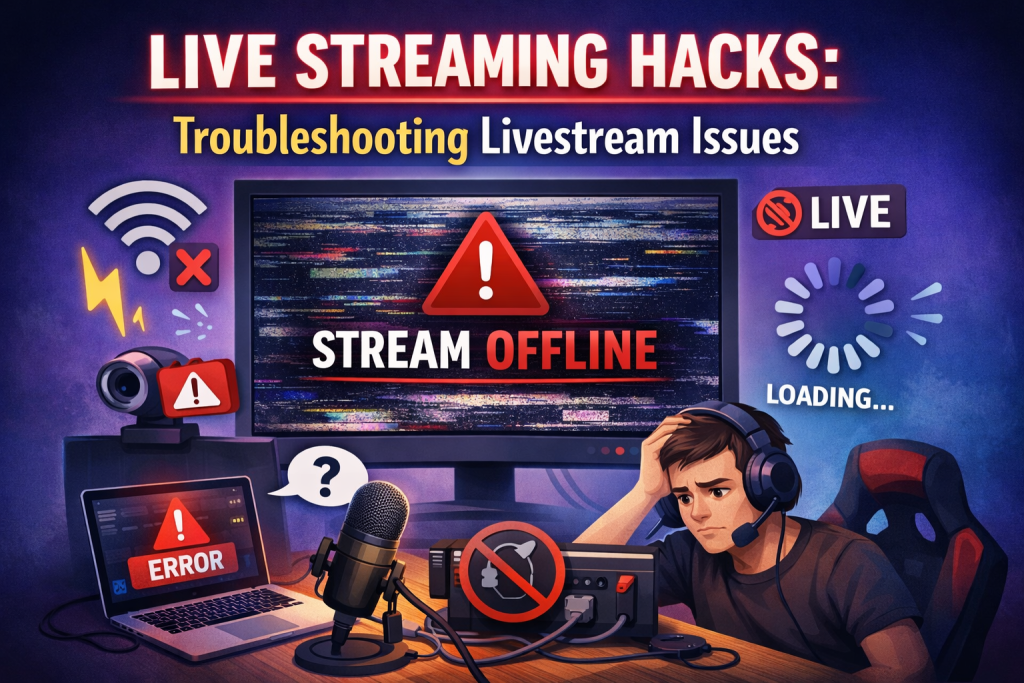
Live Streaming Hacks: Troubleshooting Livestream Issues
Live streaming has become a powerful tool for musicians, creators, businesses, and anyone looking to connect with their audience in real time. But even the most exciting livestream can fall apart if technical issues get in the way. Buffering, audio glitches, and sudden disconnects can frustrate both you and your viewers. The good news is that with the right preparation and troubleshooting strategies, you can minimize disruptions and deliver a smooth, professional livestream. Here are essential hacks to keep your stream running flawlessly.
1. Prepare Your Equipment and Setup
A successful livestream starts long before you hit “Go Live.”
Check Your Internet Connection
A stable connection is the backbone of any livestream.
- Aim for 5 Mbps upload speed for standard definition
- 10 Mbps or higher for HD
- Use a wired Ethernet connection instead of Wi‑Fi whenever possible
Test Your Equipment
Before going live, test:
- Camera clarity
- Microphone quality
- Cables and connections
- Lighting and framing
Update Software and Firmware
Keep your streaming software, camera firmware, and audio drivers up to date. Updates often include bug fixes and performance improvements.
2. Optimize Audio Quality
Poor audio is one of the fastest ways to lose viewers.
Use an External Microphone
Built‑in mics rarely deliver professional sound. Consider:
- USB microphones
- Lavalier mics
- Condenser microphones
Eliminate Background Noise
Stream from a quiet environment. If noise is unavoidable, use:
- Noise‑cancelling software
- Microphones with noise‑reduction features
Monitor Audio Levels
Use headphones to monitor your audio in real time and catch issues like clipping or distortion.
3. Ensure Stable Video Quality
Video glitches can distract viewers and hurt your stream’s professionalism.
Adjust Bitrate Settings
If you experience lag or buffering, lower your bitrate to reduce bandwidth strain.
Choose the Right Resolution
Streaming in 720p is often a good balance between quality and stability if your connection is limited.
Use a Backup Camera
Have a secondary camera ready in case your primary one fails.
4. Optimize Your Streaming Software
Your streaming software is the command center of your livestream.
Use a Reliable Platform
Test different platforms like OBS or Streamlabs to see which works best with your hardware.
Set Up Scenes in Advance
Prepare all scenes—camera angles, overlays, slides—before going live to avoid mistakes.
Enable Stream Delay
A short delay (5–10 seconds) gives you a buffer to fix issues before viewers see them.
5. Manage Your Resources
Streaming is resource‑intensive. Keep your system running smoothly by managing your computer’s workload.
Close Unnecessary Applications
Shut down unused programs and browser tabs to free up processing power.
Monitor CPU and Memory Usage
If usage is consistently high, lower your stream quality or close additional apps to prevent overheating or freezing.
6. Prepare for Technical Difficulties
Even with preparation, issues can still arise. Have a plan ready.
Have a Backup Plan
Examples include:
- A mobile hotspot for internet failures
- Quick‑restart instructions for your streaming software
- A backup audio or video source
Create a Technical Checklist
Before going live, check:
- Internet connection
- Camera and microphone
- Streaming software
- Lighting
- Cables and power sources
Communicate with Your Audience
If something goes wrong, be transparent. Viewers appreciate honesty and patience.
7. Test Everything Before Going Live
A thorough test run can prevent most livestream disasters.
Run a Private Test Stream
Test your entire setup without an audience to identify issues.
Check for Latency
If you interact with viewers in real time, ensure your latency is low enough for smooth communication.
Simulate Real Conditions
Use the same equipment, internet connection, and software settings you’ll use during the actual stream.
8. Consider a Dedicated Streaming Setup
If livestreaming is a regular part of your workflow, investing in dedicated gear can dramatically improve stability.
Use a Streaming PC
A separate computer for streaming reduces strain on your main device.
Invest in a Capture Card
Capture cards provide a stable, high‑quality feed from cameras or consoles.
Upgrade Your Internet Plan
If your current plan struggles with livestreaming, consider upgrading to higher upload speeds.
Conclusion
Live streaming is an incredible way to connect with your audience in real time, but technical issues can quickly derail even the best‑planned broadcast. By preparing your equipment, optimizing your setup, and having a plan for potential problems, you can minimize disruptions and deliver a seamless livestream experience. The key is preparation—test, troubleshoot, and optimize before going live. With these hacks, you’ll be well on your way to glitch‑free streaming and a more professional online presence.