

Music Video Storyboarding: Solving Visual Narrative Challenges
Music Video Storyboarding: Solving Visual Narrative Challenges
In the world of music videos, visuals play an equally important role as the music itself. But creating compelling visuals isn’t just about picking up a camera and shooting; it starts with a solid plan. That’s where storyboarding comes in. Storyboarding is the art of planning out each scene, shot, and visual element of a music video, ensuring that the final product is cohesive, engaging, and in sync with the music.
However, storyboarding comes with its own set of challenges — especially when translating abstract ideas into a clear visual narrative. This article explores the importance of storyboarding in music videos and offers practical solutions to common visual narrative challenges.
Understanding the Basics of Storyboarding
What Is a Storyboard?
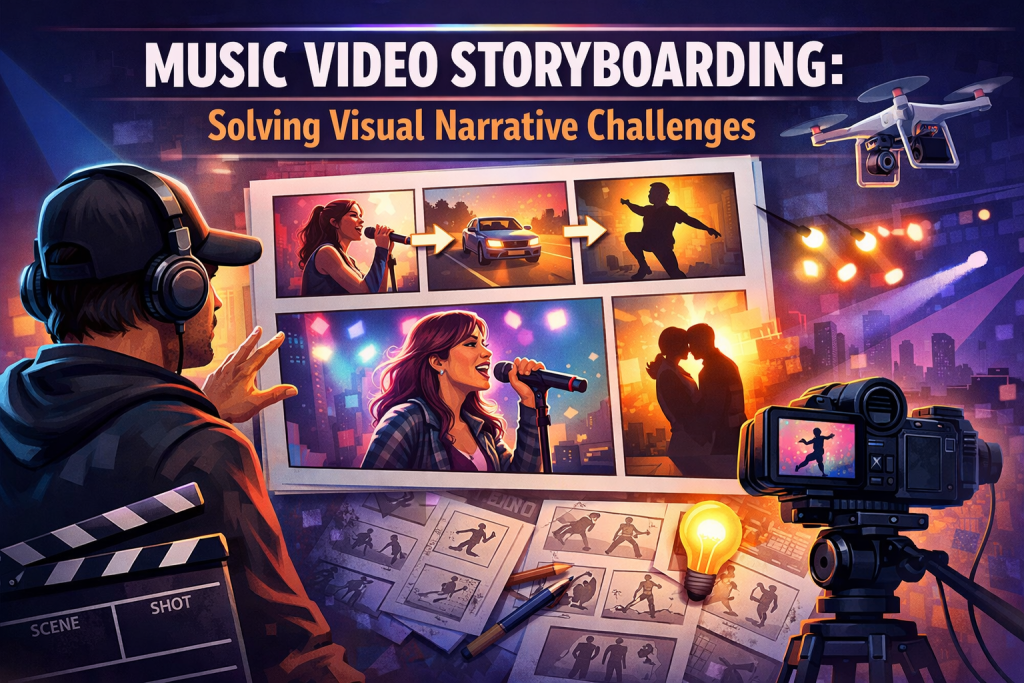
A storyboard is a visual representation of how a music video will unfold, shot by shot. It resembles a comic strip, with each frame illustrating a moment in the video. These frames include details such as camera angles, movements, transitions, and key visual elements. The storyboard serves as a guide for the entire production team, helping everyone visualize the final product before filming begins.
Key Elements of an Effective Storyboard
Visualizing Scenes
Storyboarding begins with breaking the song into sections and determining how each part will be represented visually. This step ensures that every moment on screen connects meaningfully with the music.
Detailing Camera Angles and Movements
A strong storyboard includes clear notes on camera behavior:
- Will the camera be static or moving?
- Should the shot be wide, medium, or close‑up?
- Are there pans, zooms, or tracking shots?
These decisions shape the viewer’s emotional experience.
Integrating the Music and Lyrics
The visuals must align with the rhythm, tone, and message of the song. Whether the video interprets the lyrics literally or symbolically, the storyboard should reflect how the visuals enhance the music’s emotional impact.
Identifying Common Visual Narrative Challenges
Challenge 1: Translating Abstract Concepts into Visuals
Music videos often explore emotions, themes, or ideas that aren’t easily depicted. Turning these abstract concepts into concrete visuals requires creativity and a deep understanding of the song’s message.
Challenge 2: Ensuring Cohesiveness in the Storyline
A music video must maintain a consistent tone, style, and flow. Without careful planning, the narrative can feel disjointed. Storyboarding helps map out a clear beginning, middle, and end.
Challenge 3: Balancing Artistic Vision with Practical Constraints
Budgetary Limitations
Ambitious ideas may require expensive locations, props, or effects. Storyboarding helps identify where creative compromises can be made without losing the essence of the vision.
Time Constraints
Tight deadlines may require simplifying or removing certain shots. A storyboard allows the team to prioritize what’s essential.
Challenge 4: Capturing Audience Emotion and Attention
The visuals must not only complement the music but also evoke emotion and hold the viewer’s attention. Storyboarding helps ensure that each shot contributes to the emotional arc.
Step-by-Step Guide to Effective Music Video Storyboarding
Step 1: Analyze the Song’s Lyrics and Theme
Start by understanding the song’s message, mood, and emotional tone. This analysis forms the foundation for all visual decisions.
Step 2: Brainstorm Visual Ideas
Explore different ways to represent the song visually. Decide whether the video will follow a literal interpretation, a symbolic approach, or a blend of both.
Collaborating with the Creative Team
Directors, cinematographers, and other creatives often contribute ideas. Collaboration ensures a unified vision.
Step 3: Sketch the Storyboard Frames
Each frame should represent a specific moment, including camera angles, movements, and transitions.
Hand‑Drawn vs. Digital Storyboards
- Hand‑drawn: Quick, personal, flexible
- Digital tools: Precise, editable, often include templates and assets
Step 4: Review and Refine
Storyboarding is iterative. Review the initial draft, identify gaps, and refine the visuals until the narrative feels cohesive and compelling.
Step 5: Finalize for Production
Once refined, the storyboard becomes the blueprint for filming. It should be clear, detailed, and ready for the production team to follow.
Tools and Techniques for Storyboarding
Popular Storyboarding Software
- Adobe Storyboard
- Storyboarder
- Toon Boom Storyboard Pro
These tools offer features ranging from simple sketching to advanced animation and collaboration.
Traditional Storyboarding Techniques
Pencil and Paper
Ideal for quick sketches and artists who prefer a tactile approach.
Digital Tools
Great for teams needing flexibility, revisions, and professional presentation.
Conclusion
Recap of Storyboarding Importance
Storyboarding is essential for music video production. It ensures that the final product is visually engaging, cohesive, and aligned with the music.
Final Thoughts on Overcoming Visual Narrative Challenges
While challenges like abstract concepts, budget constraints, and emotional storytelling can be daunting, storyboarding provides the structure needed to overcome them. With thoughtful planning and creativity, you can craft a music video that tells a compelling story and resonates with viewers.
FAQs
What is the most challenging part of music video storyboarding?
Translating abstract concepts and emotions into clear, engaging visuals.
How long does it take to storyboard a music video?
Depending on complexity, anywhere from a few days to several weeks.
Can I create a storyboard without professional software?
Yes. Pencil and paper or free digital tools work perfectly well.
How detailed should a music video storyboard be?
Detailed enough to guide the production team through each shot, but not so complex that it slows down the process.
What skills are needed for effective storyboarding?
Creativity, visual storytelling, attention to detail, and the ability to translate ideas into visual form.