

Navigating Roadblocks: How to Overcome Feeling Stuck in Your Career or Creative Path
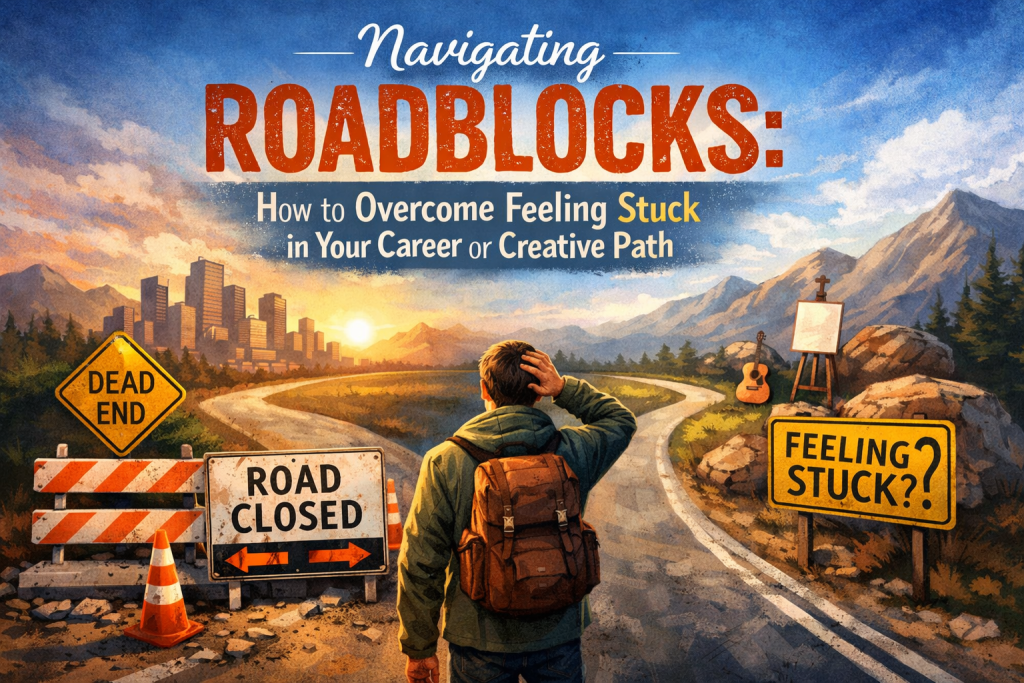
Feeling stuck in your career or creative path is rarely a dead end—it’s a signal. When you expand that signal into a full, thoughtful exploration, it becomes clear that “stuckness” is not a personal flaw but a natural part of long-term growth.
Navigating Roadblocks: How to Overcome Feeling Stuck in Your Career or Creative Path
Feeling stuck is one of the most frustrating experiences in any long-term career or creative journey. It can show up as stagnation, burnout, boredom, or the sense that you’re not reaching your potential. Sometimes it feels like you’re moving in circles. Other times it feels like you’re not moving at all.
But feeling stuck isn’t a sign that you’ve failed. It’s a sign that something needs attention, adjustment, or renewal. It’s your mind’s way of saying, “Something here isn’t working anymore—let’s look closer.” When you learn to interpret that signal instead of resisting it, you unlock the ability to move forward with intention and clarity.
Why Feeling Stuck Happens
Stuckness doesn’t appear out of nowhere. It’s usually the result of internal or external pressures that have been building over time. Understanding these pressures helps you respond with insight rather than frustration.
Common reasons include:
- Burnout — exhaustion that drains motivation, creativity, and clarity
- Fear of failure — hesitation that keeps you from taking risks or trying new things
- Lack of fulfillment — doing work that no longer aligns with your values or identity
- Loss of direction — unclear goals, shifting priorities, or too many competing options
These moments aren’t signs of weakness. They’re invitations to pause, reassess, and realign. Feeling stuck is often the first step toward meaningful change.
Identifying the Root Cause
You can’t move forward until you understand what’s holding you in place. Pinpointing the root cause turns vague frustration into something you can work with.
Ask yourself:
- What part of my work drains me the most?
- What part energizes me—even a little?
- Am I avoiding something because I’m afraid of failing?
- Have my values or priorities changed?
- Am I overwhelmed, under-challenged, or simply exhausted?
Each answer reveals a different path forward. Burnout requires rest. Fear requires courage and support. Lack of fulfillment requires exploration. Loss of direction requires clarity.
Once you understand the “why,” the “what next” becomes much easier to see.
Setting Clear, Achievable Goals
A rut feels worse when you don’t know what you’re aiming for. Without direction, everything feels heavy and uncertain. Clear goals create momentum by giving your mind something to move toward.
To regain clarity:
- Define what progress looks like. What would “better” feel like?
- Break big goals into smaller steps. Small wins rebuild confidence.
- Create a simple action plan. Even a rough roadmap reduces overwhelm.
Goals don’t have to be perfect. They just need to be specific enough to guide your next step.
Seeking Outside Perspective
When you’re stuck, your own thoughts can become an echo chamber. Fresh eyes can reveal possibilities you can’t see on your own.
Supportive people can help you:
- Spot strengths you’ve overlooked
- Identify blind spots
- Reframe challenges
- Suggest new paths or approaches
- Validate your feelings without judgment
Sometimes one conversation is enough to shift everything. Mentors, colleagues, friends, or loved ones can all offer clarity you didn’t know you needed.
Prioritizing Rest and Self‑Care
Burnout often disguises itself as lack of passion or lack of ability. When you’re exhausted, everything feels harder, slower, and heavier. Rest is not a luxury—it’s a requirement for creative and professional clarity.
To reset your energy:
- Take breaks without guilt
- Step away from your work to reset your mind
- Reconnect with activities that energize you
- Give yourself permission to pause
A rested mind is more creative, more resilient, and more capable of problem‑solving. Sometimes the fastest way forward is to stop pushing for a moment.
Embracing New Experiences and Risks
Growth rarely happens inside your comfort zone. When you feel stuck, it’s often because you’ve outgrown your current environment, habits, or identity. Trying something new—big or small—can reignite momentum.
Consider:
- Experimenting with new skills
- Exploring different environments
- Meeting new people
- Saying yes to opportunities that stretch you
- Allowing yourself to be a beginner again
Risk is often the doorway to renewed purpose. You don’t need to leap—you just need to step.
Moving Forward With Confidence
Feeling stuck is temporary, not permanent. It’s a moment of transition, not a verdict on your potential. With clarity, support, rest, and a willingness to try new things, you can move through this phase and into a chapter that feels more aligned and fulfilling.
You don’t have to have everything figured out. You just need to take the next honest step.
What part of your current situation feels like it might be the key to unlocking your next step?