

Overcoming Creative Burnout: Tips to Reignite Your Creativity Without a Lengthy Hiatus
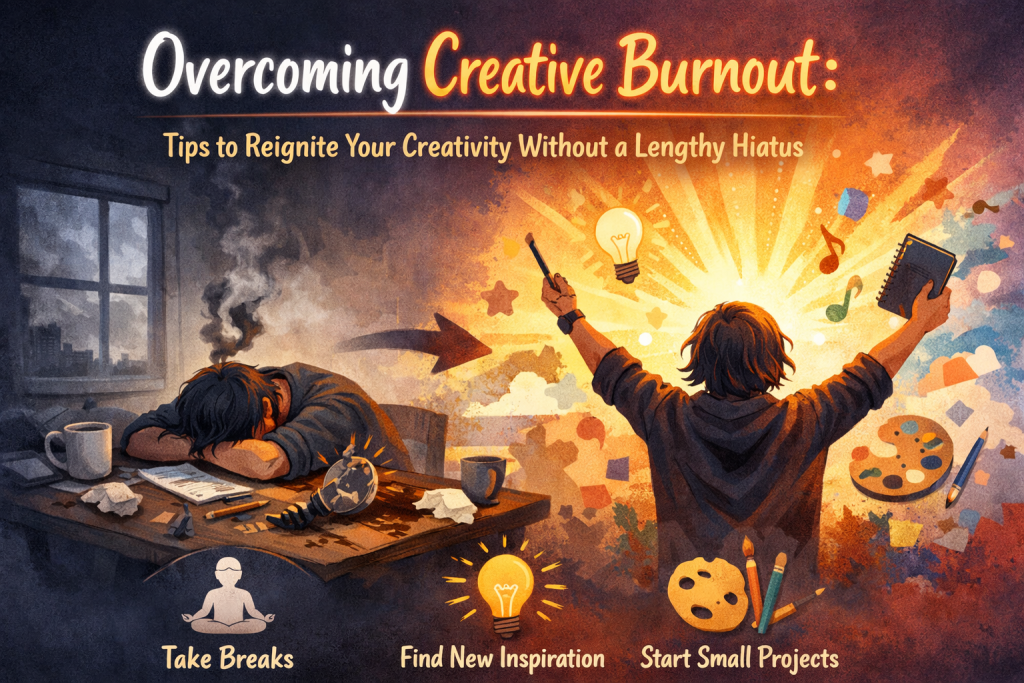
Creative burnout is rarely a sign that your creativity has disappeared. It’s almost always a sign that your system is overloaded—emotionally, cognitively, or physically—and needs recalibration rather than retreat. When you break recovery into small, intentional shifts, you can reignite your creative energy without stepping away for weeks or abandoning the work you care about.
Why Creative Burnout Happens
Burnout emerges when your creative output consistently exceeds your internal resources. It’s a mismatch between demand and capacity, and it often builds slowly.
Common contributors include:
- Repetition without novelty, which dulls curiosity
- Pressure to produce rather than explore
- Lack of rest or mental spaciousness
- Emotional fatigue or perfectionism
- Working in isolation without fresh input
Understanding the specific cause helps you choose the right recovery strategy instead of pushing through the fog or assuming you’ve “lost it.”
Changing Your Routine to Spark Novelty
Creativity thrives on variation. When your routine becomes predictable, your brain stops receiving the stimulation it needs to generate new ideas.
Small shifts can reignite your imagination:
- Working in a different environment
- Changing your tools or medium
- Adjusting your schedule to match natural energy peaks
Novelty activates new neural pathways, which can unlock ideas that felt inaccessible when everything stayed the same.
Using Short, Frequent Breaks to Prevent Overload
Burnout often accumulates quietly. Short breaks interrupt the buildup of mental fatigue and help you return to your work with more clarity.
Helpful micro‑pauses include:
- Stepping away every 25–45 minutes
- Stretching or hydrating
- Taking a brief walk
- Letting your mind wander without screens
These resets protect your attention and make it easier to re‑enter flow.
Rebuilding Your Energy Through Self‑Care
Creative output depends on physical and emotional reserves. When those reserves are depleted, inspiration feels distant—even if the desire to create is still there.
Supportive practices include:
- Prioritizing sleep and hydration
- Moving your body in ways that feel good
- Engaging in non‑creative activities that restore you
- Creating boundaries around work time and rest time
Self‑care isn’t separate from creativity; it’s the fuel that powers it.
Seeking Inspiration to Refill the Well
Creativity needs input to generate output. When your internal well runs dry, external inspiration replenishes it.
Ways to refill your creative reservoir:
- Reading outside your usual genres
- Visiting galleries or museums
- Listening to music that shifts your mood
- Exploring nature or unfamiliar environments
Inspiration doesn’t always spark immediately, but it enriches the soil your ideas grow from.
Collaborating to Break Isolation
Working alone can intensify burnout because you’re carrying all the pressure yourself. Collaboration introduces new energy and perspective.
It can offer:
- Fresh ideas
- Shared responsibility
- Creative chemistry
- A sense of play rather than pressure
Even a single conversation with another creative can unlock momentum.
Moving Forward With Renewed Creative Energy
Burnout doesn’t mean you’ve lost your creativity—it means your system needs recalibration. By adjusting your routine, taking restorative breaks, caring for your well‑being, seeking inspiration, and connecting with others, you can rebuild your creative spark without stepping away for long periods.
Which of these shifts feels like it would give you the quickest sense of relief in your current creative season?