

Overcoming Self‑Doubt: Clearing the Path to Success
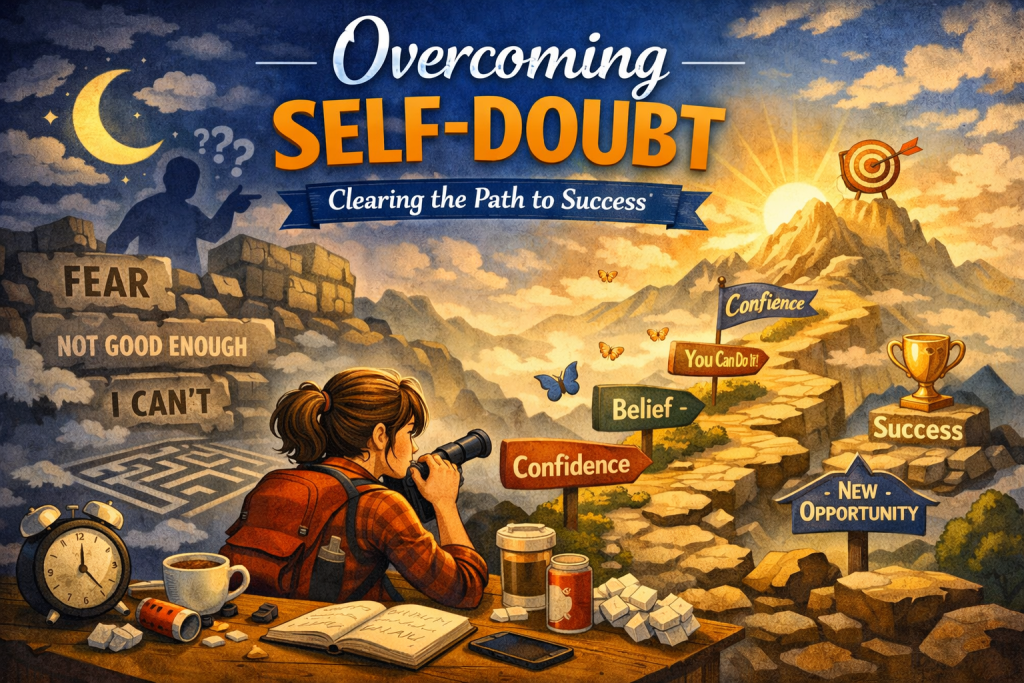
Overcoming self‑doubt becomes much easier when you understand what it actually is: not a verdict on your abilities, but a momentary emotional fog that distorts how you see yourself.
Overcoming Self‑Doubt: Clearing the Path to Success
Self‑doubt is one of the most persistent and universal barriers on the path to success. It doesn’t matter how talented, experienced, or passionate you are—at some point, you will question whether you’re capable, worthy, or “ready enough” to pursue the things you want. For some people, this doubt shows up as hesitation. For others, it becomes a full‑blown internal narrative that whispers, “Who do you think you are?”
But here’s the truth: self‑doubt is a feeling, not a fact. It’s a psychological response shaped by past experiences, internalized criticism, and fear of the unknown. And while it can feel overwhelming, it’s also something you can learn to understand, navigate, and ultimately transform.
This post explores why self‑doubt shows up, how it affects your progress, and what you can do to loosen its grip so you can move forward with confidence and clarity.
What Self‑Doubt Really Is—and Why It Shows Up
Self‑doubt isn’t a sign of weakness. In fact, it often appears when you’re stretching into new territory or attempting something meaningful. It’s your brain’s way of trying to protect you from risk, embarrassment, or failure. But the protective instinct can become overactive, especially if you’ve experienced:
- Past failures that left emotional residue
- Critical environments where mistakes were punished
- Comparisons that made you feel behind or inadequate
- Perfectionism that sets impossible standards
- Uncertainty about the next step or outcome
When these factors combine, your mind starts generating stories that sound like truth but are actually fear in disguise. You begin to question your abilities, your worth, and your right to take up space in the world.
The key is learning to recognize these stories for what they are: mental habits, not objective reality.
The Hidden Costs of Self‑Doubt
Self‑doubt doesn’t just make you feel bad—it actively interferes with your ability to grow. It can:
- Slow your progress by making you second‑guess every decision
- Limit your opportunities because you avoid taking risks
- Reduce your creativity by making you afraid to experiment
- Drain your energy through constant overthinking
- Erode your confidence over time
Left unchecked, self‑doubt becomes a self‑fulfilling prophecy. You hesitate, so you don’t take action. You don’t take action, so you don’t see results. You don’t see results, so you assume you’re not capable. And the cycle continues.
Breaking that cycle starts with awareness.
Challenging the Thoughts That Hold You Back
Self‑doubt thrives in the shadows. It grows strongest when you accept your thoughts as truth without examining them. But the moment you shine a light on those thoughts, they begin to lose their power.
When you catch yourself thinking, “I’m not good enough,” or “I’ll probably fail,” pause and ask yourself:
- Is there real evidence for this belief?
Most self‑doubt is based on assumptions, not facts. Look for actual proof—not fears, not memories of unrelated failures, not imagined scenarios. - Am I assuming the worst without reason?
The brain loves to catastrophize. But imagining the worst doesn’t make it more likely—it just makes you more afraid. - Would I say this to someone I care about?
If the answer is no, then the thought is probably unfair, unkind, or distorted.
These questions interrupt the automatic loop of negative thinking and help you step back into a more grounded perspective.
How to Reframe Doubt in Real Time
When a self‑doubting thought appears, try reframing it:
- Instead of “I can’t do this,” try “I can learn as I go.”
- Instead of “I’m not ready,” try “I’m ready enough to begin.”
- Instead of “Others are better than me,” try “Everyone starts somewhere.”
Reframing isn’t about pretending everything is perfect. It’s about choosing thoughts that support your growth instead of sabotaging it.
Practicing Self‑Compassion
Self‑doubt often grows in environments where self‑criticism is the default. Many people believe that being hard on themselves will make them perform better, stay motivated, or avoid mistakes. But research consistently shows the opposite: self‑compassion leads to greater resilience, motivation, and long‑term success.
Self‑compassion means treating yourself with the same kindness, patience, and understanding you would offer a friend. It reminds you that:
- Mistakes are part of learning.
No one grows without stumbling. Every skill you admire in others was built through trial and error. - Setbacks don’t define your worth.
A failed attempt doesn’t mean you’re a failure. It means you’re trying. - Growth takes time, patience, and gentleness.
You can’t rush your way into mastery. You can only show up consistently.
When you respond to your own struggles with compassion instead of criticism, you create an internal environment where confidence can grow.
Simple Ways to Practice Self‑Compassion Daily
- Speak to yourself in a warm, encouraging tone.
- Acknowledge your effort, not just your outcomes.
- Allow yourself to rest without guilt.
- Celebrate small wins, even if they seem insignificant.
- Replace “should” statements with “could” statements.
These small shifts accumulate over time, creating a foundation of emotional safety that supports your growth.
Surrounding Yourself With Support
No one overcomes self‑doubt alone. The people around you shape how you see yourself, often more than you realize. Supportive relationships act as mirrors that reflect your strengths back to you when you can’t see them clearly.
Look for people who:
- Believe in your potential even when you’re unsure
- Encourage your efforts instead of focusing only on results
- Offer honest but supportive feedback
- Celebrate your progress without comparison
- Model confidence and resilience in their own lives
These relationships help quiet your inner critic and reinforce your strengths. They remind you that you’re capable, resourceful, and worthy of success.
Creating a Supportive Environment
Support doesn’t always have to come from people you know personally. You can also build a supportive environment by:
- Reading books that inspire confidence
- Following creators who normalize imperfection
- Joining communities where growth is celebrated
- Working with mentors or coaches
- Consuming content that uplifts rather than discourages
Your environment is a powerful influence. Curate it intentionally.
Building Confidence Through Action
Confidence doesn’t appear magically. It grows through action—especially small, consistent actions that prove to your brain that you are capable.
When you take even one tiny step forward, you create evidence that contradicts your self‑doubt. Over time, these small steps accumulate into a powerful internal narrative: “I can do this.”
Why Small Steps Matter
Your brain loves familiarity. Big leaps trigger fear, but small steps feel manageable. They help you:
- Build momentum
- Reduce overwhelm
- Create positive feedback loops
- Strengthen your belief in your abilities
Small steps are not a sign of weakness—they’re a strategy for sustainable growth.
Examples of Small Steps That Build Confidence
- Writing for five minutes instead of an hour
- Sending one email instead of tackling your entire inbox
- Practicing a skill for ten minutes a day
- Sharing one piece of your work with a trusted friend
- Trying one new thing each week
Each step becomes a vote for the person you’re becoming.
Moving Forward With Confidence
Overcoming self‑doubt isn’t about eliminating fear or becoming perfectly self‑assured. It’s about learning to move forward even when doubt is present. It’s about recognizing that your feelings don’t define your potential. And it’s about choosing growth over comfort, again and again.
When you challenge negative thoughts, practice self‑compassion, and surround yourself with supportive people, you loosen the grip of self‑doubt. You begin to see yourself more clearly. You take more risks. You trust your abilities. And you move toward your goals with renewed strength, clarity, and resilience.
Success isn’t reserved for people who never doubt themselves. It’s built by people who feel the doubt—and take the next step anyway.