
Tackling Writer’s Block: Creative Songwriting Techniques
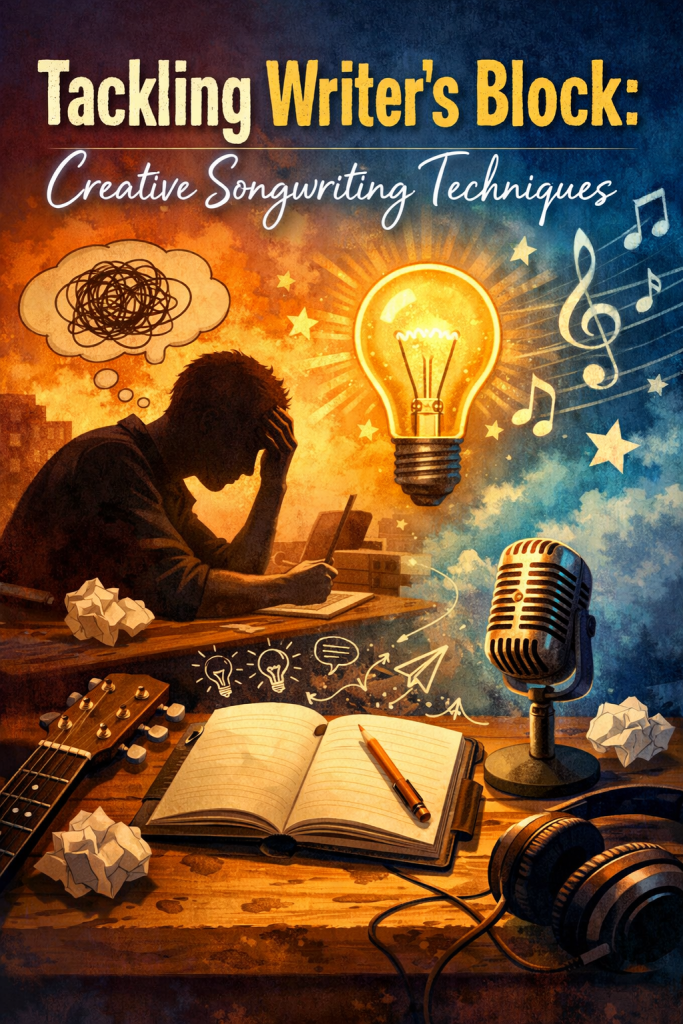
Tackling Writer’s Block: Creative Songwriting Techniques
Writer’s block is something every songwriter encounters sooner or later. Whether you’re staring at a blank page or struggling to finish a half‑written chorus, feeling creatively stuck can be discouraging. But writer’s block doesn’t mean you’re out of ideas — it simply means your creative process needs a reset.
Here are powerful, practical songwriting techniques to help you break through writer’s block and get your inspiration flowing again.
1. Change Your Environment
A shift in scenery can spark a shift in creativity. If you always write in the same place, your mind may fall into the same patterns.
Try:
- Writing outdoors: Parks, beaches, cafés — new sights and sounds stimulate new ideas.
- Rearranging your workspace: Even small changes can refresh your perspective.
- Traveling: New cultures, landscapes, and experiences can ignite creativity in unexpected ways.
Sometimes your environment needs to change before your ideas can.
2. Start With a Different Element
If you always begin with lyrics, switch things up. Starting from a different angle can unlock new creative pathways.
Try:
- Melody first: Hum or play a melody and let it guide the lyrics.
- Chord progression: Experiment with new chords to evoke different emotions.
- Rhythm or groove: A beat or drum pattern can inspire the entire song’s direction.
Changing your entry point changes your creative outcome.
3. Use Writing Prompts
Writing prompts give you a starting point when your mind feels blank.
Try:
- Random words or phrases: Use a word generator or flip open a book. Build a song around whatever you find.
- Character perspective: Write from someone else’s point of view — real or fictional.
- Personal experiences: Explore moments you haven’t written about yet. Even small memories can spark powerful songs.
Prompts push you into new creative territory.
4. Collaborate With Others
Collaboration injects fresh energy into your process and helps break creative stagnation.
Try:
- Co‑writing: Bounce ideas with another songwriter.
- Songwriting groups: Share ideas, get feedback, and stay accountable.
- Remote collaboration: Exchange lyrics, melodies, or demos online.
Two creative minds can unlock ideas neither would find alone.
5. Experiment With New Instruments or Technology
New tools lead to new ideas.
Try:
- Learning a new instrument: Even basic skills can inspire different musical choices.
- Using a different DAW: A new workflow can spark new creative habits.
- Exploring effects, synths, or loop pedals: Unique sounds often lead to unique songs.
Innovation thrives when you step outside your comfort zone.
6. Set Creative Constraints
Limitations can actually boost creativity by forcing you to think differently.
Try:
- Time limits: Write as much as you can in 15–30 minutes.
- Instrument limits: Use only one instrument or write a percussion‑only song.
- Theme or concept: Give yourself a specific topic to explore.
Constraints create focus — and focus fuels creativity.
7. Revise and Rework Old Material
Your past ideas can become the foundation for your next breakthrough.
Try:
- Rewriting an old song: Change the melody, lyrics, or structure.
- Combining fragments: Merge unfinished ideas into one cohesive piece.
- Revisiting old notebooks or voice memos: What didn’t work before might inspire you now.
Your creative history is a treasure chest — open it.
8. Take a Break
Sometimes the best way to move forward is to step away.
Try:
- Resting and recharging: Do something enjoyable and non‑musical.
- Meditation or mindfulness: Clear mental clutter to make room for new ideas.
- Listening to music: Explore new genres or revisit old favorites to spark inspiration.
A rested mind is a creative mind.
Conclusion
Writer’s block is a natural part of the songwriting journey — not a sign that you’re out of ideas. By changing your environment, experimenting with new tools, collaborating, revisiting old material, or simply taking a break, you can break through the block and rediscover your creative flow.
Stay patient. Stay curious. Keep writing. Your next great song is closer than you think.