The Art of Choosing the Right Digital Product to Sell
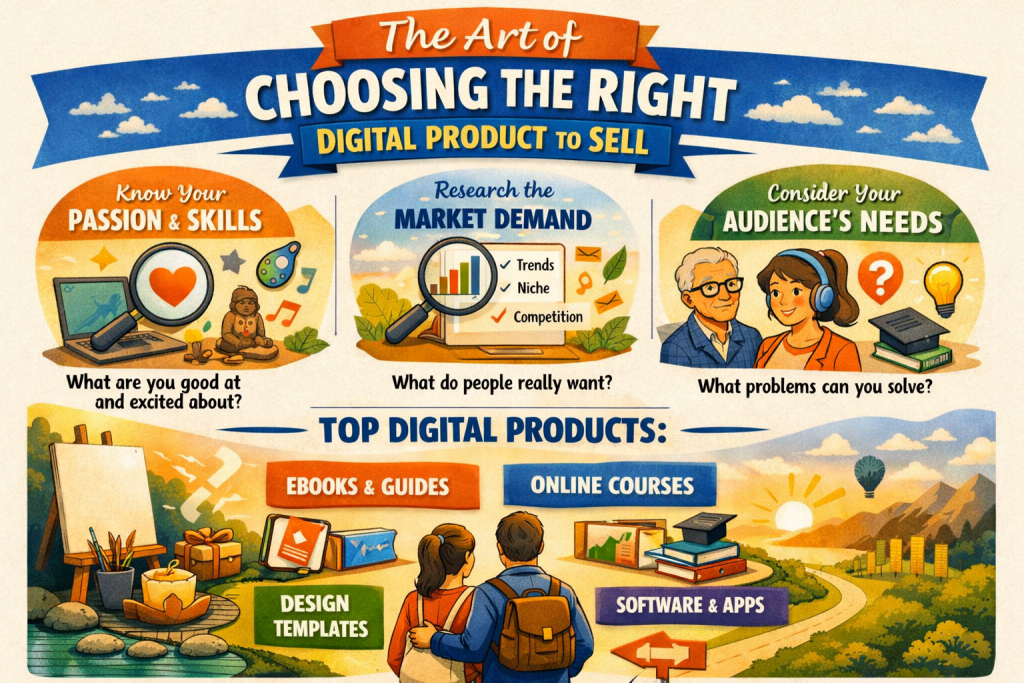
A strong digital product isn’t chosen by accident—it emerges from a thoughtful blend of audience insight, personal strengths, market awareness, and long‑term strategy.
The Art of Choosing the Right Digital Product to Sell
How to Align Your Skills, Audience, and Market for Long‑Term Success
Choosing the right digital product can feel overwhelming, especially when the online marketplace is full of options—micro‑guides, templates, toolkits, courses, memberships, printables, and more. The truth is, there’s no single “best” product. There’s only the product that best fits your audience, your expertise, and your long‑term goals.
A successful digital product isn’t just profitable—it’s sustainable. It supports your creative energy, aligns with your strengths, and solves a real problem for the people you want to serve. When you understand how these pieces fit together, choosing becomes far easier and far more strategic.
Understanding Your Audience
Every successful digital product begins with a clear understanding of who it’s for. Your audience determines the problem you solve, the format you choose, and the language you use.
Strong audience insight comes from noticing:
- The questions they ask repeatedly
- The frustrations they express
- The goals they’re trying to reach
- The gaps in the current market
- The content they engage with most
Your audience shapes:
- The problems your product solves
- The format it should take
- The tone, depth, and style of your content
Surveys, conversations, comments, and simple pattern‑spotting help you validate whether your idea will resonate. When you understand your audience deeply, your product becomes a natural extension of their needs.
Aligning With Your Expertise and Interests
Your digital product should sit at the intersection of what you know and what you enjoy. This alignment matters because it determines how sustainable the creation process will feel.
When your product reflects your strengths:
- You create faster and with more confidence
- Your marketing feels natural rather than forced
- Your product carries the authority and depth buyers expect
- You build long‑term credibility in your niche
A product that drains you won’t last. A product that energizes you becomes the foundation of a thriving ecosystem.
Ask yourself:
- What topics do people already come to me for?
- What skills feel effortless or enjoyable to use?
- What could I teach, design, or build without burning out?
Your expertise is your competitive advantage—lean into it.
Evaluating Market Demand
A great idea still needs a market. Understanding demand helps you determine whether your product fills a real need and whether people are willing to pay for it.
Look at:
- Existing products in your niche — What’s already selling?
- What they do well — What resonates with buyers?
- Where they fall short — What’s missing or underserved?
- Opportunities to differentiate — Format, depth, style, audience segment
Competition isn’t a bad sign—it often means the market is healthy. Your goal is not to reinvent the wheel but to offer a version that reflects your unique perspective and serves your audience better.
Ways to Validate Demand
- Search marketplaces (Etsy, Gumroad, Amazon, Udemy)
- Analyze reviews to see what people love or dislike
- Test ideas through social posts or email polls
- Offer a small beta version to gauge interest
Demand turns a good idea into a viable product.
Considering Scalability
A strong digital product grows with your business rather than limiting it. Scalability determines how much time and energy you’ll need to maintain or expand your offer.
A scalable product allows you to:
- Sell more without increasing your workload
- Expand into bundles, upgrades, or complementary products
- Automate delivery and onboarding
- Build a product ecosystem that compounds over time
Think beyond the first sale. Ask:
- Can this product evolve into a series?
- Can it be repurposed into other formats?
- Can it support future offers or funnels?
Scalability ensures your product becomes an asset—not a burden.
Assessing Profitability
Profitability is more than price—it’s the relationship between effort, cost, and long‑term return. A product that takes months to build but sells slowly may not be worth the investment. A product that takes a weekend to create but sells consistently can be a game‑changer.
Consider:
- Creation time — How long will it take to build?
- Maintenance — Will it require updates or ongoing support?
- Marketing costs — Will you need ads, affiliates, or partnerships?
- Revenue potential — Can it generate recurring or passive income?
A profitable product supports your financial goals without draining your time or energy.
Choosing With Confidence
When you combine audience insight, personal expertise, market demand, scalability, and profitability, you create a clear decision‑making framework. This approach helps you choose a digital product that is not only viable but sustainable and aligned with your long‑term vision.
A strong digital product:
- Solves a real problem
- Aligns with your strengths
- Fits your audience’s needs
- Has room to grow
- Supports your business ecosystem
Choosing becomes less about guessing and more about alignment.
As you think about your next step, which type of digital product—micro‑guide, template, toolkit, or something more creative—feels most aligned with your strengths right now?