

The Psychology Behind Self‑Sabotage and Strategies to Overcome It
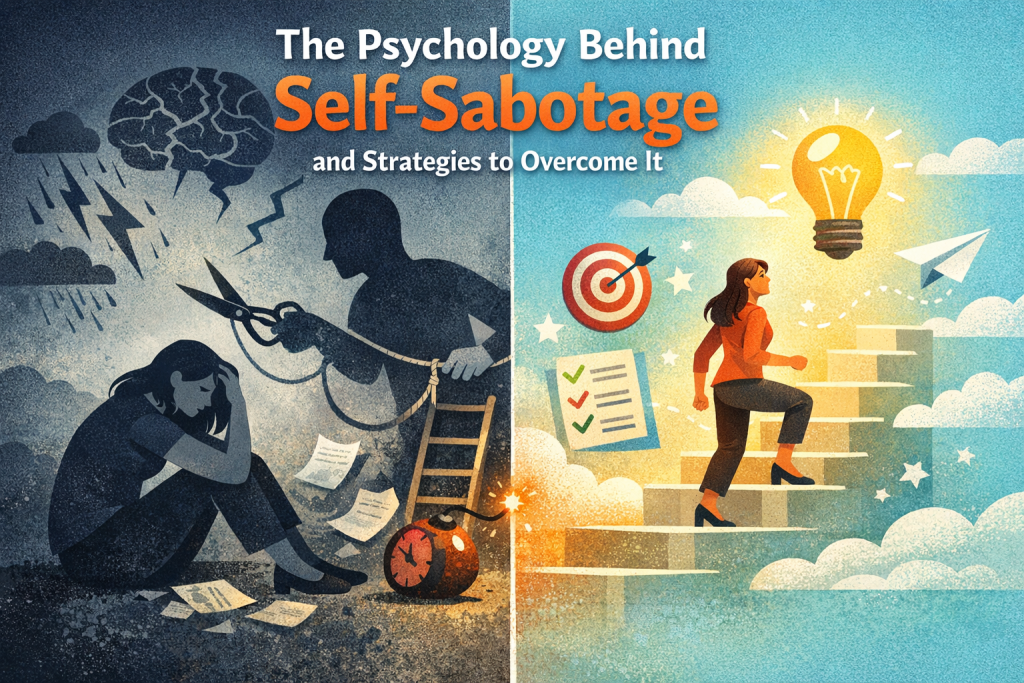
Self‑sabotage becomes much easier to understand—and overcome—when you treat it not as a personal flaw, but as a learned protective pattern your mind uses to keep you safe.
The Psychology Behind Self‑Sabotage and Strategies to Overcome It
Why We Undermine Our Own Success—and How to Break the Cycle
Self‑sabotage is surprisingly common, and it often operates beneath the surface. It shows up as procrastination, avoidance, perfectionism, self‑doubt, or habits that quietly undermine your goals. These behaviors aren’t signs of weakness—they’re protective strategies your mind learned long ago. When you understand the emotional logic behind them, you can begin to shift the patterns that keep you stuck.
Self‑sabotage is not a character flaw. It’s a coping mechanism. And like any coping mechanism, it can be unlearned.
Why Self‑Sabotage Happens
Self‑sabotage usually emerges when your goals collide with old fears, outdated beliefs, or unresolved emotional wounds. You may want success, progress, or change—but another part of you feels threatened by it.
Two core drivers tend to fuel the cycle:
- Fear of failure — If trying your best and failing feels too painful, your mind may create “safe” obstacles so the failure isn’t fully your fault. Procrastination, distraction, or over‑planning become shields against disappointment.
- Low self‑esteem — When you don’t fully believe in your abilities or worth, success can feel uncomfortable or undeserved. Your actions may unconsciously align with your insecurities, pulling you back toward familiar territory.
These patterns are often rooted in early experiences—critical environments, perfectionistic expectations, or moments where vulnerability led to pain. Understanding these emotional roots is the first step toward change.
Becoming Aware of the Patterns
Self‑sabotage thrives in autopilot mode. When you’re not paying attention, old habits take over. Awareness interrupts the cycle.
Start noticing:
- When you delay tasks that matter
- When you choose short‑term comfort over long‑term goals
- When negative self‑talk takes over
- When you avoid opportunities you actually want
- When you set unrealistic expectations and then feel defeated
Awareness gives you the power to choose differently. It turns unconscious patterns into conscious decisions.
Common Signs You’re Self‑Sabotaging
- You start strong but rarely finish projects
- You overthink simple tasks
- You avoid feedback or opportunities
- You feel “not ready” no matter how much you prepare
- You set goals that are impossible to meet
- You feel guilty when things go well
These patterns aren’t random—they’re protective. But they’re also changeable.
Challenging the Beliefs Behind the Behavior
Once you recognize the patterns, you can begin to question the beliefs driving them. Self‑sabotage is often fueled by internal narratives that feel true but aren’t.
Try replacing:
- “I’ll fail anyway” with “I can learn as I go.”
- “I’m not good enough” with “I’m allowed to grow.”
- “I always mess things up” with “I’m building new habits.”
- “I shouldn’t try unless I can do it perfectly” with “Progress matters more than perfection.”
Shifting your internal dialogue builds confidence and reduces the urge to self‑protect through sabotage.
Why Reframing Works
Your brain believes what you repeat. When you challenge old beliefs, you create new neural pathways—ones that support growth instead of fear.
Using Small, Realistic Steps to Build Momentum
Big goals can trigger fear and avoidance. They feel overwhelming, high‑stakes, or impossible. Breaking them into manageable steps makes progress feel achievable.
Try:
- Setting clear, realistic goals
- Breaking them into small actions you can complete today
- Celebrating progress instead of waiting for perfection
- Tracking small wins to build confidence
Small steps weaken the old patterns by proving—again and again—that you are capable.
The Power of Micro‑Progress
Every small action becomes evidence that contradicts your self‑doubt. Over time, this evidence reshapes your identity.
Surrounding Yourself With Support
Supportive people help you see your strengths more clearly and interrupt self‑doubt. They offer perspective when your inner critic gets loud.
Seek out people who:
- Encourage your growth
- Offer honest but supportive feedback
- Remind you of your strengths
- Help you stay accountable
- Believe in your potential
Mentors, colleagues, friends, or loved ones can all play a role. Sometimes one conversation is enough to shift everything.
Why Support Matters
Self‑sabotage thrives in isolation. Support interrupts the cycle by offering clarity, encouragement, and emotional grounding.
Practicing Self‑Compassion and Forgiveness
Self‑sabotage often comes from old wounds—moments where you felt judged, rejected, or not enough. Compassion helps you heal them.
Practice:
- Treating yourself with the same kindness you’d offer a friend
- Forgiving yourself for past mistakes
- Allowing yourself to be imperfect while still moving forward
- Speaking to yourself gently when you struggle
Compassion creates the emotional safety needed for growth. When you stop punishing yourself, you stop needing sabotage as protection.
The Emotional Shift
Self‑compassion reduces fear, increases resilience, and makes it easier to take healthy risks.
Moving Toward a More Empowered Life
Self‑sabotage doesn’t define you—it’s a pattern you can unlearn. By understanding the fears behind it, challenging limiting beliefs, taking small steps, and surrounding yourself with support, you can break the cycle and move toward a more fulfilling, aligned life.
You don’t need to eliminate fear or doubt to move forward. You just need to take the next honest step.
Which part of the self‑sabotage cycle feels most familiar to you right now—the fear, the self‑doubt, or the difficulty taking action?