

Uncovering the Hidden Structure Behind Every Great Story
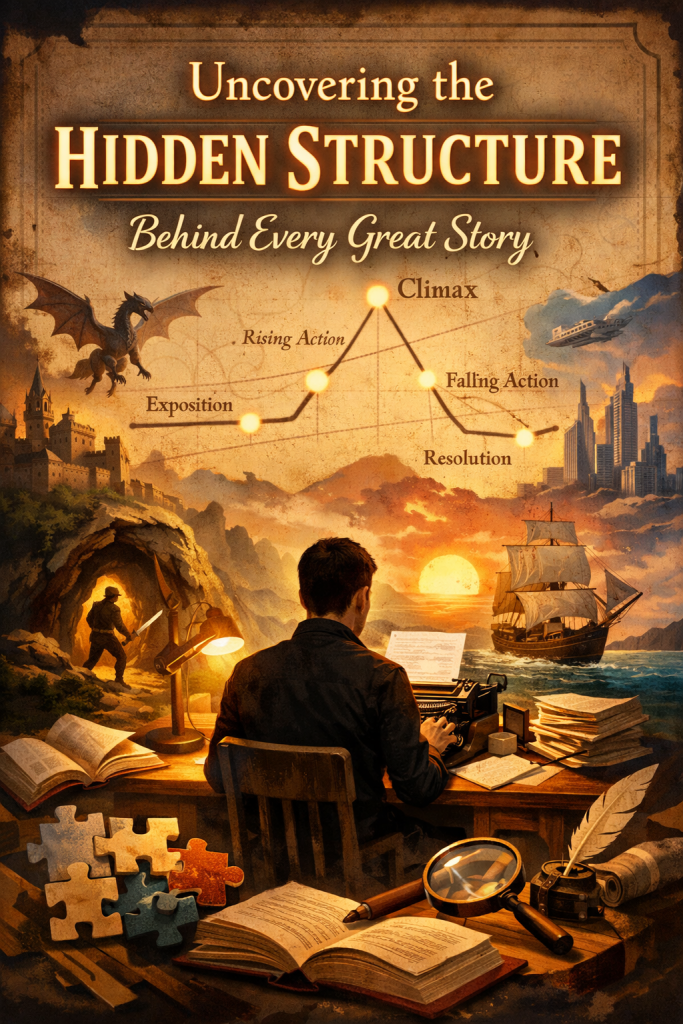
A great story feels effortless on the surface, but beneath it lies a carefully engineered framework that shapes momentum, emotion, and meaning. Whether a narrative follows the three‑act structure, the hero’s journey, or a hybrid of the two, these models endure because they mirror how humans naturally process change, conflict, and transformation. They give storytellers a way to organize events, escalate tension, and guide characters through arcs that feel both surprising and inevitable.
The Foundations of Story Structure
Story structure exists to create coherence. It helps readers understand where they are in the narrative, what’s at stake, and why events matter. Across cultures and eras, stories tend to follow a similar rhythm: a beginning that establishes the world, a middle that complicates it, and an end that resolves the central tension. This pattern appears in everything from ancient myths to modern films, and its consistency is part of why it works so well.
Two frameworks dominate contemporary storytelling:
- The three‑act structure, which divides a story into setup, confrontation, and resolution.
- The hero’s journey, a cyclical model in which a protagonist leaves the familiar world, faces trials, transforms, and returns changed. Novlr Reedsy
Both frameworks offer a roadmap, not a cage. They help writers maintain pacing, deepen character arcs, and build toward emotionally satisfying payoffs.
The Three‑Act Structure as a Narrative Backbone
The three‑act structure is one of the most adaptable frameworks because it mirrors how humans experience challenges in real life.
Act I: Establishing the World
This opening section introduces the protagonist, their everyday environment, and the central tension that will disrupt their life. The inciting incident—an event that forces change—propels the story into motion.
Act II: Rising Action and Escalation
The middle act is where conflict intensifies. The protagonist encounters obstacles, allies, and antagonists. Stakes rise, failures accumulate, and the character is pushed toward transformation. This act often contains a midpoint shift that reframes the story or raises the emotional cost.
Act III: Climax and Resolution
The final act delivers the story’s emotional peak. The protagonist confronts the central conflict, makes a decisive choice, and experiences the consequences. Loose ends are tied up, and the character emerges changed—whether triumphant, humbled, or something in between.
This structure is flexible enough to support any genre, from romance to thriller to literary fiction.
The Hero’s Journey as a Model of Transformation
The hero’s journey, popularized by Joseph Campbell and later refined by Christopher Vogler, breaks the arc of transformation into twelve recognizable stages. lizverity.com StoryFlint
Ordinary World
The protagonist begins in a familiar environment, unaware of the transformation ahead.
Call to Adventure
A challenge or opportunity disrupts the status quo.
Refusal of the Call
Fear, doubt, or obligation causes hesitation.
Meeting the Mentor
A guide provides wisdom, tools, or encouragement.
Crossing the Threshold
The protagonist commits to the journey and enters an unfamiliar world.
Tests, Allies, and Enemies
Challenges reveal strengths, weaknesses, and relationships.
Approach to the Inmost Cave
The hero prepares for a major confrontation.
Ordeal
A crisis forces the protagonist to face their deepest fear or greatest challenge.
Reward
The hero gains insight, power, or a symbolic treasure.
The Road Back
Consequences unfold as the hero returns toward the ordinary world.
Resurrection
A final test demands full transformation.
Return with the Elixir
The protagonist brings new wisdom or change back to their community.
This structure resonates because it reflects universal patterns of growth and struggle.
Why These Structures Work Across Cultures
Story structures endure because they align with how people make sense of change. They provide:
- Predictability, which creates comfort and coherence.
- Surprise, which keeps attention sharp.
- Emotional logic, which helps audiences connect with characters.
- Thematic depth, allowing stories to explore identity, morality, and transformation.
Even when a story breaks the rules, it often does so intentionally—playing against expectations that these structures have established.
How Structure Supports Character and Theme
Structure is not just about plot; it shapes character development and thematic resonance.
- Character arcs gain clarity when aligned with structural beats.
- Themes emerge naturally when the protagonist’s internal journey mirrors the external conflict.
- Plot twists feel earned when they arise from established patterns.
- Pacing becomes easier to manage when each act or stage has a clear purpose.
Structure gives writers a way to balance tension, emotion, and meaning without losing momentum.
Using Structure Without Feeling Constrained
Many writers worry that structure will make their stories formulaic. In practice, structure is more like rhythm in music: a pattern that supports creativity rather than limiting it.
Ways to use structure flexibly:
- Treat it as a diagnostic tool when a story feels stuck.
- Rearrange or combine beats to suit your genre.
- Focus on emotional beats rather than rigid plot points.
- Let character motivation drive how each stage unfolds.
The goal is not to follow a template but to create a narrative that feels intentional and emotionally coherent.
Bringing It All Together
The hidden structure behind every great story is what allows narratives to feel both surprising and inevitable. Whether you lean toward the three‑act model, the hero’s journey, or a hybrid of the two, understanding these frameworks gives you the tools to craft stories with momentum, depth, and resonance. They help you shape character arcs, manage pacing, and build toward moments that stay with readers long after the final page.
As you think about your own storytelling, which structure feels most aligned with the kind of stories you want to tell—the clean arc of the three‑act model or the transformational cycle of the hero’s journey?