

Understanding Eco-Anxiety: A Guide to Coping with Environmental Concerns
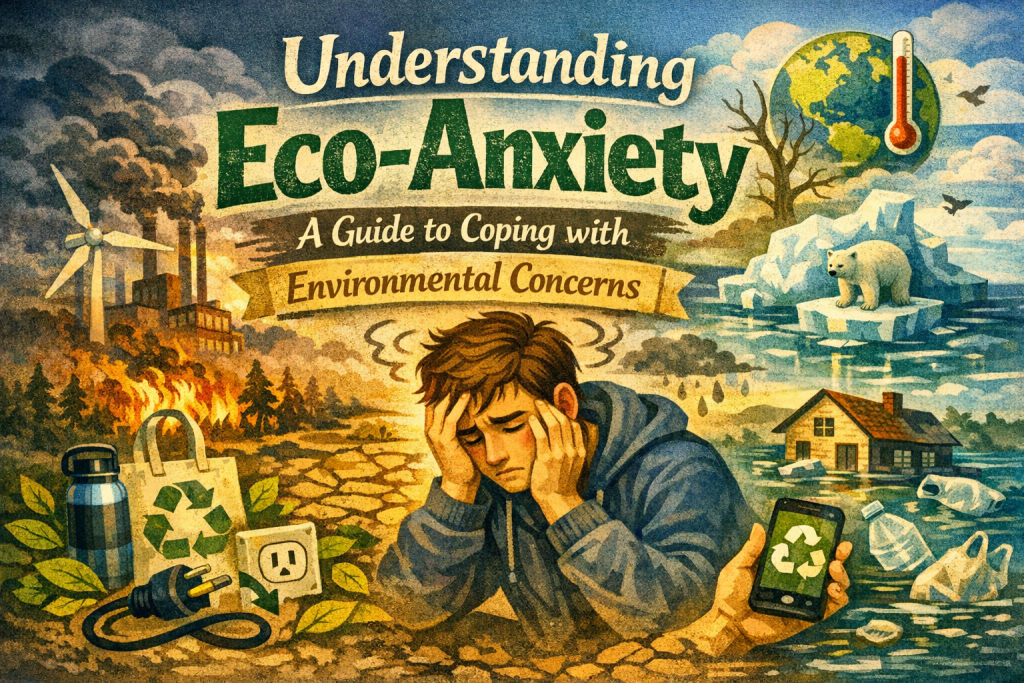
Eco‑anxiety is a valid emotional response to environmental change, and when it begins to affect sleep, daily functioning, or overall well‑being, it’s important to involve a qualified mental‑health professional who can help you explore these feelings safely. What follows is a deep look at how eco‑anxiety works, why it shows up, and the kinds of strategies people often use to cope with it in grounded, sustainable ways.
What eco‑anxiety is and why it emerges
Eco‑anxiety describes the worry, fear, or sadness that arises when thinking about climate change, biodiversity loss, pollution, or the long‑term future of the planet. These issues are large, complex, and often feel beyond any one person’s control, which can create a sense of emotional overload.
Common reactions include:
- Emotional responses such as sadness, anger, guilt, or hopelessness
- Cognitive patterns like rumination, catastrophizing, or difficulty focusing
- Physical symptoms including tension, headaches, insomnia, or fatigue
These reactions are not signs of personal weakness. They are understandable responses to real global challenges that affect many people.
How eco‑anxiety affects daily life
Eco‑anxiety can influence mental and physical well‑being in ways that gradually accumulate. People often describe:
- Heightened stress that makes it harder to concentrate or relax
- A sense of helplessness that reduces motivation
- Emotional exhaustion from constant exposure to alarming news
- Difficulty sleeping or persistent worry about the future
When these symptoms become persistent or overwhelming, a mental‑health professional can help you understand what’s happening and develop strategies tailored to your needs.
Why connection reduces the emotional burden
Eco‑anxiety often intensifies when people feel alone with their concerns. Sharing the emotional load with others can create a sense of solidarity and reduce the feeling of carrying everything by yourself.
Helpful forms of connection include:
- Joining local environmental groups or community initiatives
- Talking openly with friends or family about your feelings
- Participating in activism or volunteer projects that align with your values
Connection transforms isolation into shared purpose, which can make the emotional weight easier to carry.
Turning concern into meaningful action
Taking action—at any scale—can help restore a sense of agency. Action doesn’t erase anxiety, but it can redirect it into purpose and momentum.
Examples of manageable steps include:
- Reducing waste or energy use in ways that feel realistic
- Supporting sustainable businesses or local environmental efforts
- Learning about solutions rather than only focusing on problems
- Advocating for change in your community or workplace
Small, consistent actions often feel more sustainable than dramatic lifestyle changes and can help you reconnect with a sense of influence.
Self‑care practices that support emotional balance
Eco‑anxiety often improves when people create space for grounding, rest, and emotional regulation. These practices don’t minimize the seriousness of environmental issues—they help you stay resilient while engaging with them.
Supportive approaches include:
- Spending time in nature to reconnect with what you’re trying to protect
- Practicing mindfulness or meditation to reduce rumination
- Limiting exposure to distressing news when it becomes overwhelming
- Engaging in hobbies or creative outlets that replenish energy
These practices help regulate the nervous system and create emotional breathing room.
When to seek additional support
If eco‑anxiety is causing persistent distress, interfering with sleep, or making daily life harder, it’s important to reach out to a mental‑health professional. They can help you explore these feelings safely and develop coping strategies that fit your situation. Talking with someone you trust—whether a therapist, friend, or family member—can also provide grounding and perspective.
Eco‑anxiety is a shared human response to a changing world, and you don’t have to navigate it alone. As you reflect on your own experience, which part of eco‑anxiety feels most present for you right now—the emotional weight, the sense of helplessness, or the physical stress it creates?