

Unlocking Creative Confidence: A Beginner’s Roadmap
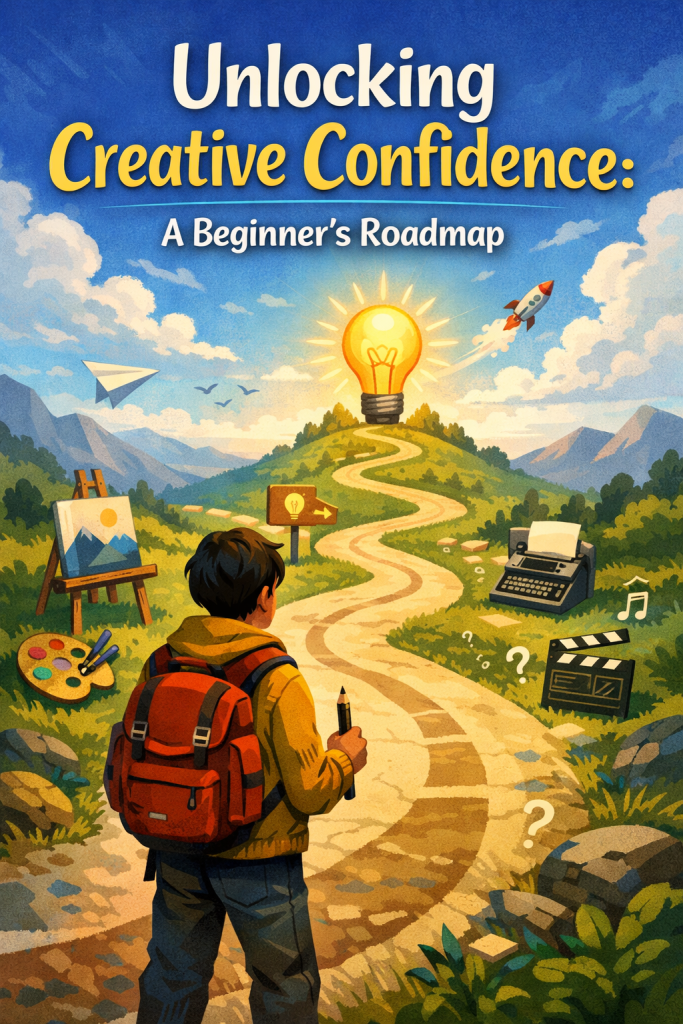
Creative confidence grows when you stop treating creativity as something mysterious and start treating it as a skill shaped by experience, reflection, and steady practice. Research on creative development shows that confidence increases when people take small creative risks, observe their own progress, and receive encouragement from others. Psychology Today A beginner’s roadmap works best when it blends mindset shifts with practical habits, because confidence is built from both how you think and how you consistently show up.
Embracing Experimentation as the Foundation
Experimentation removes the pressure to “get it right” and replaces it with curiosity. Early creative efforts often feel fragile, and fear of being “bad” can stop beginners before they start. A low‑stakes, exploratory mindset helps you bypass perfectionism and build resilience through repeated attempts. Creative training programs emphasize that guided mastery—taking small risks and gradually increasing difficulty—reduces fear and builds capability over time. katiekaspari.com
When you treat each attempt as information rather than judgment, failure becomes part of the process instead of a threat to your identity.
Expanding Your Perspective Through Curiosity
Curiosity broadens your creative vocabulary by giving your mind more raw material to work with. New experiences—whether small detours, new media, or deliberate exploration—help you make connections you wouldn’t otherwise see. Creative confidence research highlights that observing others and exposing yourself to diverse inputs strengthens your ability to generate ideas. Psychology Today
Curiosity also interrupts self‑judgment by shifting your focus from performance to discovery, making creative work feel lighter and more playful.
Building Skill Through Regular Practice
Confidence grows from evidence, and practice is how you generate that evidence. A consistent creative routine strengthens technique and builds trust in your own follow‑through. Even short daily sessions accumulate into meaningful progress. Many beginner‑focused creative roadmaps emphasize the power of a structured 30‑ to 90‑day practice window, where small daily actions compound into noticeable skill and momentum. malletlab.com
Over time, you begin to see patterns in your work, recognize your strengths, and understand where you want to grow next.
Using Feedback to Accelerate Growth
Thoughtful feedback helps you see your work from angles you can’t access alone. Sharing with trusted peers, mentors, or communities gives you insight into what’s working, what’s unclear, and what’s uniquely yours. Creative confidence frameworks consistently show that encouragement and constructive critique are key drivers of growth, especially for beginners. IDEO
Feedback becomes a tool for refinement rather than a source of fear, helping you separate critique of the work from critique of the self.
Reinforcing Progress by Celebrating Wins
Celebrating small wins strengthens your internal sense of capability. Each acknowledgment becomes a marker of growth and a reminder that you’re moving forward. Psychology‑based guidance on creative confidence emphasizes that noticing your own progress is one of the most powerful tools for sustaining motivation. Psychology Today
This reinforcement is especially important early on, when self‑doubt can easily overshadow the progress you’re making.
How These Steps Work Together
Each part of the roadmap supports the others. Experimentation reduces fear, curiosity expands possibility, practice builds skill, feedback sharpens direction, and celebration strengthens motivation. Together, they create a cycle where confidence grows naturally from experience rather than pressure.
A creative practice becomes sustainable when these elements reinforce one another, turning creativity from an occasional spark into a dependable part of your life.
As you think about your own creative path, which part of this roadmap feels like the most meaningful place to focus your energy next?