
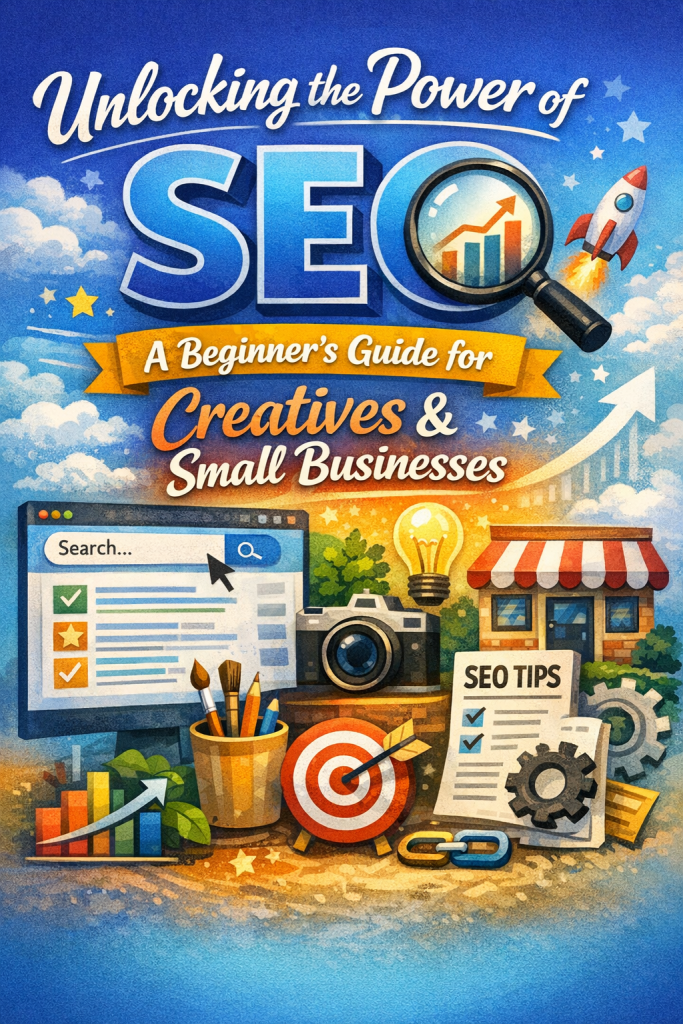
Unlocking the Power of SEO: A Beginner’s Guide for Creatives and Small Businesses
Why SEO Matters for Creatives and Small Businesses
Search engines are the primary way people discover new work, services, and ideas online. For creatives and small businesses, SEO (search engine optimization) turns your website from a digital brochure into a discoverable destination—so people who are already looking for what you offer can find you without paid ads. Organic search drives high‑intent visitors, builds long‑term visibility, and compounds over time as your content and authority grow. Semrush Backlinko
The Four Pillars You Need to Understand
SEO is a system made of interlocking parts. Focus on these four pillars first:
- Keywords — the words and phrases people type into search engines. Ahrefs
- On‑page optimization — how your pages communicate topic and value to both users and search engines. sixberrysolutions.com
- Off‑page signals (links and mentions) — endorsements from other sites that increase your credibility. cubecreative.design Backlinko
- Technical SEO — site speed, mobile friendliness, crawlability, and indexability that let search engines access and evaluate your content. wellweb.marketing
Treat these as a stack: keywords guide content; on‑page and technical work make that content visible and usable; links and social signals help search engines trust it.
Start with Audience‑First Keyword Research
Why it matters. Keywords connect your content to real user intent. If you write about topics nobody searches for, your pages won’t attract organic traffic no matter how polished they are. Ahrefs
A simple, practical process
- Define the page goal — Is this page meant to inform, sell, or capture emails? Your goal shapes the keyword intent. Ahrefs
- Seed ideas from your audience — List the phrases your customers use in conversations, DMs, or reviews. Real language beats marketing jargon. Ahrefs
- Use free tools to expand and filter — Google Autocomplete, Google Trends, and a basic keyword tool (many have free tiers) reveal related queries and seasonality. Ahrefs
- Prioritize by intent and achievability — Favor relevant long‑tail phrases (specific, lower competition) that match the page goal over broad, highly competitive head terms. Ahrefs
Example for a creative: instead of targeting “portrait photography,” aim for “natural light family portrait tips” if you want tutorial traffic that converts to bookings.
On‑Page Optimization: Make Each Page Clear and Useful
On‑page SEO is where most beginners get the biggest wins. It’s about clarity: telling search engines and humans exactly what the page is about and why it helps.
Checklist for every page (apply to product pages, blog posts, portfolio entries):
- Title tag — concise, includes primary keyword near the front. sixberrysolutions.com
- Meta description — compelling summary that encourages clicks (not a ranking factor but affects CTR). sixberrysolutions.com
- Headings (H1, H2, H3) — structure content so readers and crawlers can scan. Use keywords naturally. sixberrysolutions.com
- First 100 words — make the topic and value obvious early. sixberrysolutions.com
- Internal links — connect related pages to distribute authority and help users explore. sixberrysolutions.com
- Images optimized — descriptive filenames, alt text, and reasonable file sizes for speed. sixberrysolutions.com
- Clear CTA — what should the visitor do next? Book, subscribe, download, or read more.
Small creators often overlook internal linking and meta tags—fixing those is low effort with high impact. sixberrysolutions.com
Technical SEO Essentials (Keep It Simple)
Technical issues block everything else. If search engines can’t crawl or your pages load slowly, content won’t rank regardless of quality. Focus on these essentials first:
- Mobile‑first design — most searches are mobile; ensure layouts and fonts work on phones. wellweb.marketing
- Page speed — compress images, use browser caching, and avoid heavy scripts. Faster pages improve rankings and conversions. wellweb.marketing
- Secure site (HTTPS) — a basic trust signal. wellweb.marketing
- XML sitemap and robots.txt — tell search engines which pages to index. wellweb.marketing
- Fix crawl errors — use Google Search Console to find and resolve 404s or blocked pages. wellweb.marketing
You don’t need to be a developer to act on many of these—site builders and plugins handle much of the heavy lifting—but check them regularly. wellweb.marketing
Link Building That Fits Small Budgets
Links remain a core trust signal. For small sites, focus on relevance and relationships rather than chasing volume. Practical strategies:
- Ask people you know — partners, suppliers, local organizations, and collaborators often link to you if asked. cubecreative.design
- Create linkable assets — short, useful resources (how‑tos, templates, case studies) that others naturally reference. Backlinko
- Guest contributions and collaborations — write for niche blogs, podcasts, or newsletters in exchange for a link. cubecreative.design Backlinko
- Local citations and directories — for physical businesses, ensure consistent listings (name, address, phone) across directories. cubecreative.design
- Earn links through outreach — find articles that could benefit from your resource and suggest it as an addition. Be helpful, not spammy. Semrush
Quality beats quantity: a few relevant, authoritative links will move the needle more than dozens of low‑value ones. Backlinko
Content Strategy for Creatives: Showcase, Teach, and Tell Stories
Creatives have a natural advantage: visuals, process, and story. Use content to demonstrate expertise and attract the right audience.
Three content pillars that work well
- Showcase — portfolio pages, case studies, and galleries that answer “Can they do this?”
- Teach — tutorials, behind‑the‑scenes posts, and process videos that answer “How do I do this?” (great for long‑tail search).
- Tell stories — client stories, project narratives, and origin posts that build emotional connection and trust.
Consistency matters more than volume. A steady cadence of useful posts—optimized for relevant keywords—builds authority and gives other sites something to link to. Backlinko
Measuring Progress: Metrics That Matter
SEO is long term. Track these metrics to know what’s working:
- Organic traffic — visitors from search engines.
- Keyword rankings — positions for your target phrases.
- Click‑through rate (CTR) from search results — improve titles and meta descriptions if low.
- Bounce rate and time on page — signals of content relevance and quality.
- Conversions — bookings, signups, or sales attributed to organic traffic.
Use Google Analytics and Google Search Console as your baseline tools; they’re free and provide the most actionable data for beginners. Semrush wellweb.marketing
Common Mistakes and Quick Wins
Mistakes to avoid
- Targeting broad keywords you can’t realistically rank for. Ahrefs
- Ignoring mobile and speed issues. wellweb.marketing
- Publishing content without a clear user intent or CTA. sixberrysolutions.com
- Chasing low‑quality links or buying backlinks (risky and often counterproductive). Backlinko
Quick wins you can implement this week
- Add descriptive alt text to your top 10 images. sixberrysolutions.com
- Fix one broken internal link and add one internal link from a high‑traffic page to a newer page. sixberrysolutions.com
- Optimize one title tag and meta description for a page that already gets impressions but low clicks. sixberrysolutions.com
- Claim and complete your Google Business Profile if you serve local customers. Semrush
A Practical 90‑Day SEO Roadmap for Busy Creatives
Days 1–14: Foundation
- Run a basic site audit (Search Console, speed test). wellweb.marketing
- Identify 5–10 target long‑tail keywords tied to real pages. Ahrefs
Days 15–45: On‑page and Content
- Optimize meta tags and headings for priority pages. sixberrysolutions.com
- Publish one helpful, keyword‑aligned piece (tutorial, case study, or FAQ). Backlinko
Days 46–75: Technical and Links
- Fix mobile and speed issues; submit sitemap. wellweb.marketing
- Reach out to 5 relevant sites with a helpful resource or guest idea. cubecreative.design Backlinko
Days 76–90: Measure and Iterate
- Review analytics, refine keywords, and plan the next content pieces based on what performed best. Semrush
This rhythm balances action with learning—small, consistent steps that compound into meaningful visibility.
Final Notes: SEO Is a Creative Practice Too
SEO isn’t a checklist you finish once; it’s a creative discipline that rewards curiosity, empathy, and iteration. For creatives and small businesses, the advantage comes from combining authentic storytelling with practical optimization: make pages that help real people, then make those pages easy for search engines to find and trust. Backlinko Ahrefs
Which of these areas—keywords, on‑page content, technical fixes, or link building—would you like a short, prioritized action plan for next?