

Sustainable Kitchen Tips: How to Build a Low Waste Kitchen Without Buying Anything New
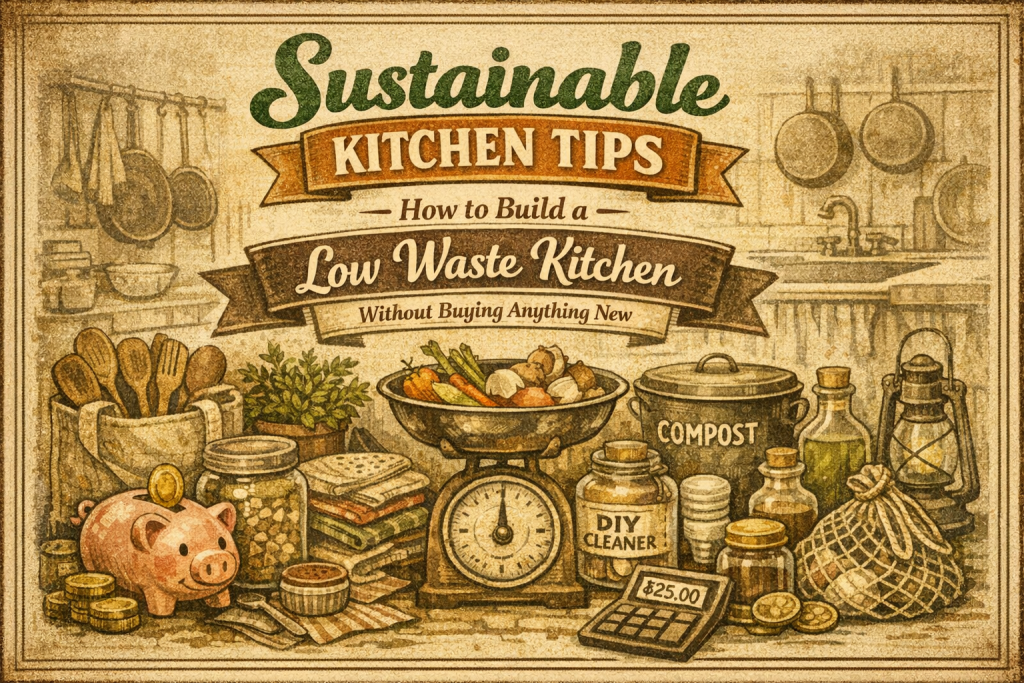
A low‑waste kitchen built without buying anything new is really a mindset shift: from consumption to creativity, from “I need more” to “I already have enough,” from a linear system to a circular one. When you treat your kitchen as a resourceful ecosystem rather than a place that constantly needs upgrading, you reduce environmental impact, save money, and create a calmer, more intentional cooking space.
Rethinking the Kitchen as a Closed‑Loop System
Most people think of sustainability as something you buy—new containers, new gadgets, new “eco‑friendly” products. But the most sustainable kitchen is the one that uses what already exists. A low‑waste kitchen is built on the idea that everything has value, everything has potential, and everything can be used more than once.
This shift in perspective does three important things:
- Reduces the pressure to purchase new “solutions”
- Encourages creativity and resourcefulness
- Helps you see your kitchen as a system rather than a collection of items
When you stop assuming you need more, you start noticing how much you already have.
Taking Inventory to Uncover Hidden Resources
Most kitchens contain far more useful items than we realize. Drawers, cabinets, and shelves often hide tools that can be repurposed, reused, or reimagined. Taking inventory is the first step toward building a low‑waste kitchen without spending a cent.
What an Inventory Reveals
- Glass jars that can become storage containers for grains, spices, leftovers, or homemade dressings.
- Old towels or T‑shirts that can be cut into cleaning cloths or napkins.
- Mismatched containers that are perfect for meal prep or freezing.
- Baking sheets or pans that double as trays, organizers, or drying racks.
- Forgotten tools—like peelers, graters, or strainers—that eliminate the need for new gadgets.
This process reframes your kitchen as a place of abundance rather than scarcity.
Why Inventory Matters
When you know what you have, you stop buying duplicates. You also start seeing the potential in everyday objects, which is the foundation of a low‑waste lifestyle.
Reducing Single‑Use Items Through Reuse and Substitution
You don’t need to buy new “sustainable” products to reduce waste. In fact, the most sustainable option is almost always the one you already own. Many low‑waste swaps can be created from everyday household items.
Practical Substitutions You Can Make Today
- Cloth napkins made from old T‑shirts or fabric scraps.
- Glass jars replacing plastic containers for storage, freezing, or pantry organization.
- Old food containers reused for leftovers, snacks, or bulk shopping.
- A plate as a lid for bowls, pots, or microwave reheating.
- Reusable bags made from old pillowcases or tote bags you already own.
These substitutions reduce waste without requiring new purchases or specialized gear.
Why Reuse Beats Buying “Eco‑Friendly”
Many eco‑products are still products—they require resources to make, ship, and package. Reuse eliminates that footprint entirely.
Preventing Food Waste Through Planning and Creativity
Food waste is one of the biggest contributors to kitchen waste—and one of the easiest to reduce. Preventing food waste saves money, reduces landfill emissions, and makes your kitchen more efficient.
Simple Habits That Make a Big Difference
- Plan meals around what you already have instead of starting with a recipe.
- Store produce properly to extend freshness—greens in damp cloths, herbs in jars of water, carrots in airtight containers.
- Use leftovers creatively by turning them into soups, stir‑fries, grain bowls, or omelets.
- Freeze scraps like onion skins, carrot tops, and herb stems for broth.
- Batch‑cook perishables before they spoil—roast vegetables, cook grains, or make sauces.
These habits turn your kitchen into a place of intentional use rather than accidental waste.
The Emotional Shift
Preventing food waste isn’t just practical—it builds a sense of respect for ingredients and the effort that brought them to your kitchen.
Composting to Close the Loop
Even with careful planning, some food scraps are inevitable. Composting turns those scraps into nutrient‑rich material rather than sending them to the landfill, where they produce methane.
Composting Options Without Buying Anything New
- Home composting using a simple bin, bucket, or outdoor pile.
- Community compost drop‑offs available in many towns and farmers markets.
- Freezing scraps until you can deliver them to a composting site.
Composting closes the loop by returning nutrients to the soil instead of wasting them.
Why Composting Matters
It transforms waste into value and reinforces the idea that nothing in your kitchen is truly “trash.”
Choosing Low‑Waste Packaging Without Buying New Tools
Packaging choices have a huge impact on kitchen waste. Without buying anything new, you can still make meaningful shifts in how you shop.
Low‑Waste Shopping Habits
- Choose produce without plastic—loose fruits and vegetables instead of pre‑packaged ones.
- Select items packaged in glass or metal that can be reused indefinitely.
- Buy pantry staples in bulk using containers you already own.
- Avoid individually wrapped items when possible.
- Choose concentrated or minimal‑packaging products like bar soap or bulk spices.
These small decisions accumulate into a significant reduction in waste.
The Power of Habit
Once you start noticing packaging, you naturally begin choosing options that support your low‑waste goals.
How These Habits Work Together
A low‑waste kitchen isn’t built through a single change—it’s the combination of repurposing, reducing single‑use items, preventing food waste, composting, and choosing better packaging. Together, these habits create a kitchen that is:
- More efficient because everything has a purpose.
- More affordable because you buy less and waste less.
- More environmentally friendly because you reduce your footprint.
- More intentional because you engage with your kitchen consciously.
Over time, this approach becomes second nature. Your kitchen becomes a model of sustainable living without requiring new purchases or complicated systems.
The Deeper Impact of a Low‑Waste Kitchen
Beyond the practical benefits, a low‑waste kitchen cultivates a mindset of sufficiency, creativity, and care. It teaches you to:
- Value what you already have
- Reduce impulse buying
- Appreciate the lifecycle of food
- Make thoughtful choices
- Create systems that support your values
This mindset often spreads beyond the kitchen into other areas of life—cleaning, clothing, shopping, and even time management.
A low‑waste kitchen built from what you already own is not just a sustainability practice—it’s a lifestyle shift toward simplicity, resourcefulness, and mindful living. As you think about your own kitchen, which area feels like it would make the biggest difference right now—repurposing what you have, reducing single‑use items, preventing food waste, or shifting your packaging choices?
- dive deeper with The Musician’s Marketing Playbook
- check out Vulnerable Creator’s Marketing Playbook
- grab your copy of Pitch Yourself Without Cringing
- explore Build a Brand That Feels Like You