

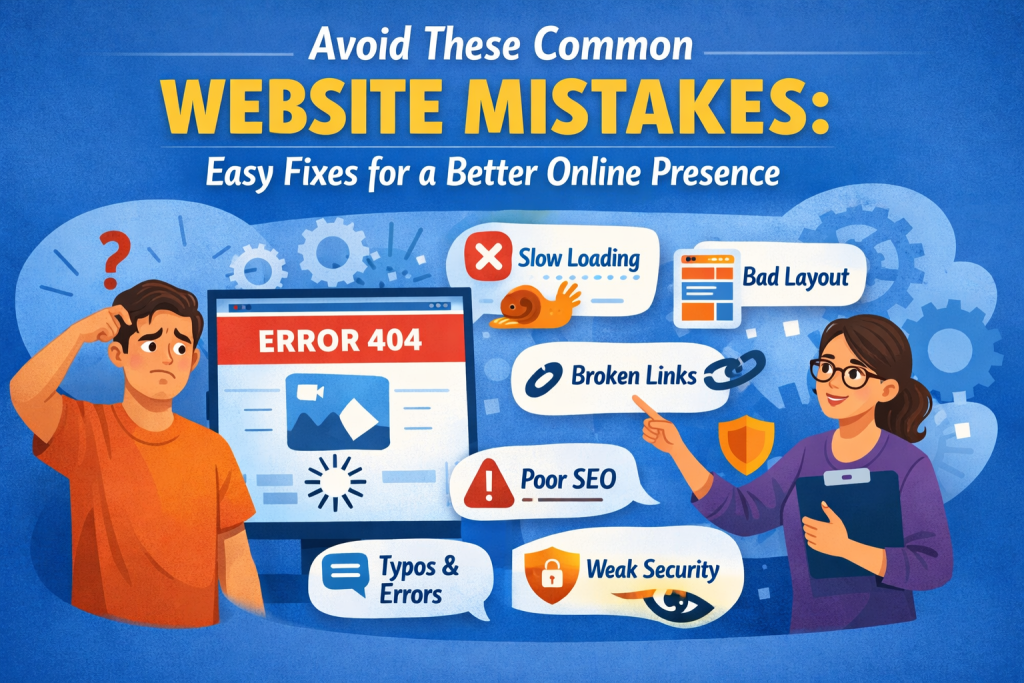
Avoid These Common Website Mistakes: Easy Fixes for a Better Online Presence
Building a marketing funnel without ads is about designing a clear, value‑first path that turns strangers into subscribers, subscribers into buyers, and buyers into repeat customers—without paying for attention. Organic funnels rely on content, conversion‑focused pages, and thoughtful email nurturing. When those elements work together, the funnel becomes a self‑sustaining system that grows through trust and usefulness rather than budget.
Avoid These Common Website Mistakes: Easy Fixes for a Better Online Presence
Why an organic funnel can outperform paid funnels
Organic funnels win when you want depth over volume. Paid ads buy attention; organic funnels earn trust. Content that solves real problems attracts people who are already searching for solutions, and email lets you nurture those relationships at scale. Over time, the assets you build—helpful posts, lead magnets, and an engaged list—compound in value and reduce dependence on fluctuating ad costs. pamlauzon.com marcomtrends.com
The four stages of a no‑ads funnel
A simple, repeatable funnel has four stages: Attract → Capture → Nurture → Convert & Retain. Each stage has a clear goal and a small set of tactics that work together.
- Attract — bring the right people to your site with useful content.
- Capture — convert visitors into contacts with a focused lead magnet and landing page.
- Nurture — use an email sequence to build trust and demonstrate value.
- Convert & Retain — present an offer that solves a clear problem and keep customers coming back.
Design each stage around a single user need and one measurable outcome (e.g., subscribe, click, purchase).
Attract: Content that draws the right people
Organic funnels begin with content that answers a specific question or solves a real pain point. The goal is not to be everywhere; it’s to be useful where your audience already looks.
- Top‑of‑funnel content — educational blog posts, short videos, social posts that teach one thing clearly. These pieces should be discoverable (SEO, social search) and shareable.
- Mid‑funnel content — deeper guides, case studies, or tutorials that show how your approach works in practice. These build credibility and readiness to buy.
- Distribution — publish on your site, repurpose for social, and syndicate where your audience spends time. Organic reach is slow but durable; consistent, helpful content compounds. pamlauzon.com PortoTheme
Practical content ideas
- A short tutorial that solves a common problem in 5–7 steps.
- A case study showing before/after results with concrete metrics.
- A checklist or template that saves time—ideal as a lead magnet.
SEO and discovery Target long‑tail phrases that match user intent (e.g., “how to prepare a wedding photography shot list” rather than “photography”). Long‑tail content attracts visitors who are closer to taking action and is easier to rank for as a small creator. marcomtrends.com
Capture: Turn visitors into contacts with low friction
Your website is the bridge between discovery and relationship. Capture is about making the next step obvious and valuable.
- Lead magnet — offer a single, focused resource that solves a narrow problem (checklist, template, short course). The magnet should be directly relevant to the content that brought the visitor.
- Landing page — one clear headline, a short list of benefits, a visual, and a single call to action. Remove navigation and distractions.
- Opt‑in form — ask for the minimum (usually name and email). Use a clear privacy note and a promise of what subscribers will receive.
- Micro‑commitments — use low‑stakes actions (download, watch a short video) to build momentum before asking for a purchase. pamlauzon.com
Landing page checklist
- Headline — states the outcome.
- Subheadline — clarifies who it’s for.
- Bullets — 3–5 benefits or what’s inside.
- Social proof — one short testimonial or metric.
- Single CTA — “Get the checklist” or “Download now.”
Keep the page focused: every element should push toward the single conversion goal.
Nurture: Email sequences that build trust and readiness
Email is the engine of a no‑ads funnel. A well‑structured sequence educates, demonstrates value, and reduces friction toward a purchase.
A simple 6‑email nurture sequence
- Welcome & deliver — immediate delivery of the lead magnet and a short note about what to expect.
- Value follow‑up — expand on one tip from the magnet with a quick example.
- Social proof — share a short case study or testimonial that shows results.
- Deeper help — a longer tutorial or resource that addresses a common obstacle.
- Soft offer — introduce a low‑risk product or consultation with a clear benefit.
- Reminder + scarcity — final nudge for the offer with a deadline or limited spots.
Each email should be short, helpful, and focused on a single idea. Avoid heavy selling early; the goal is to build permission to present an offer.
Segmentation and behavior Segment subscribers by behavior (opened, clicked, downloaded) and tailor follow‑ups. People who click a pricing page get a different sequence than those who only opened the welcome email. Behavioral segmentation increases relevance and conversion without extra ad spend.
Content cadence Start with daily or every‑other‑day emails for the first week, then move to weekly value emails. Consistency keeps your brand top of mind without overwhelming subscribers.
Convert & Retain: Offers that feel like the natural next step
Conversion happens when the offer solves a clear, urgent problem and the path to buy is frictionless.
Offer design principles
- Specific outcome — promise a clear result, not vague benefits.
- Low friction — simple checkout, clear pricing, and transparent terms.
- Risk reduction — money‑back guarantees, trial periods, or small starter packages.
- Social proof — short testimonials, before/after examples, or user stories.
Post‑purchase retention
- Onboarding sequence — immediate emails that help customers get value quickly.
- Support and community — invite buyers into a private group or Q&A session.
- Upsell with care — offer complementary products only after customers see success.
Retention turns one‑time buyers into repeat customers and advocates—fuel for organic growth through referrals and word‑of‑mouth. Showit
Measurement: Metrics that tell you what to fix
A funnel is a system; measure each stage so you can find and fix bottlenecks.
- Traffic → leads — landing page conversion rate. If low, improve the offer or page clarity.
- Leads → engaged — email open and click‑through rates. If low, improve subject lines and early value.
- Engaged → buyers — lead‑to‑customer conversion. If low, test offer clarity, pricing, and risk reduction.
- Customer retention — repeat purchase rate and churn. If low, improve onboarding and product value.
Track these metrics weekly and prioritize the stage with the largest drop‑off. Small improvements at the weakest link compound into big gains.
Quick tests and optimizations that move the needle
- Headline swap — test two headlines on your landing page for 1–2 weeks.
- One‑sentence value test — rewrite your lead magnet description to focus on the outcome, not features.
- Email subject line A/B — test urgency vs. curiosity on the welcome email.
- CTA color and placement — move the CTA above the fold and test a contrasting color.
Run one test at a time, for a meaningful sample size, and iterate based on results.
A 90‑day roadmap for launching a no‑ads funnel
Days 1–14: Foundation
- Choose one audience and one problem to solve.
- Create a single lead magnet tied to that problem.
- Build a focused landing page and set up email automation.
Days 15–45: Content & Capture
- Publish 3–5 pieces of top‑of‑funnel content that point to the landing page.
- Promote content organically (social, communities, collaborations).
- Optimize the landing page based on early conversion data. pamlauzon.com
Days 46–75: Nurture & Convert
- Launch the 6‑email nurture sequence.
- Offer a low‑risk product or consultation to the nurtured list.
- Collect testimonials and refine the offer.
Days 76–90: Measure & Scale
- Review metrics, double down on the best content, and expand distribution (guest posts, partnerships).
- Add one retention mechanism (onboarding series or community).
This cadence balances creation, testing, and iteration—key to organic growth without ads.
Common pitfalls and how to avoid them
- Trying to be everywhere — focus on one channel and one audience first.
- Lead magnet mismatch — ensure the magnet directly solves the problem your content promises.
- Overcomplicating the funnel — start simple: one landing page, one sequence, one offer.
- Ignoring follow‑up — most conversions happen after multiple touches; nurture consistently.
Avoid complexity early; clarity and consistency beat cleverness.
Organic funnels are slower to start but more durable over time. They reward creators who focus on solving real problems, building trust through helpful content, and guiding people through a clear, low‑friction path to purchase. Which part of your current funnel would you like a short, prioritized action plan for next—content ideas, a landing page checklist, or an email sequence template?
- grab your copy of Why People Ghost You
- check out I’m Married, Now What?
- dive deeper with How to Train Your Human