
Can I Produce Music If I Cannot Read Music Notation?
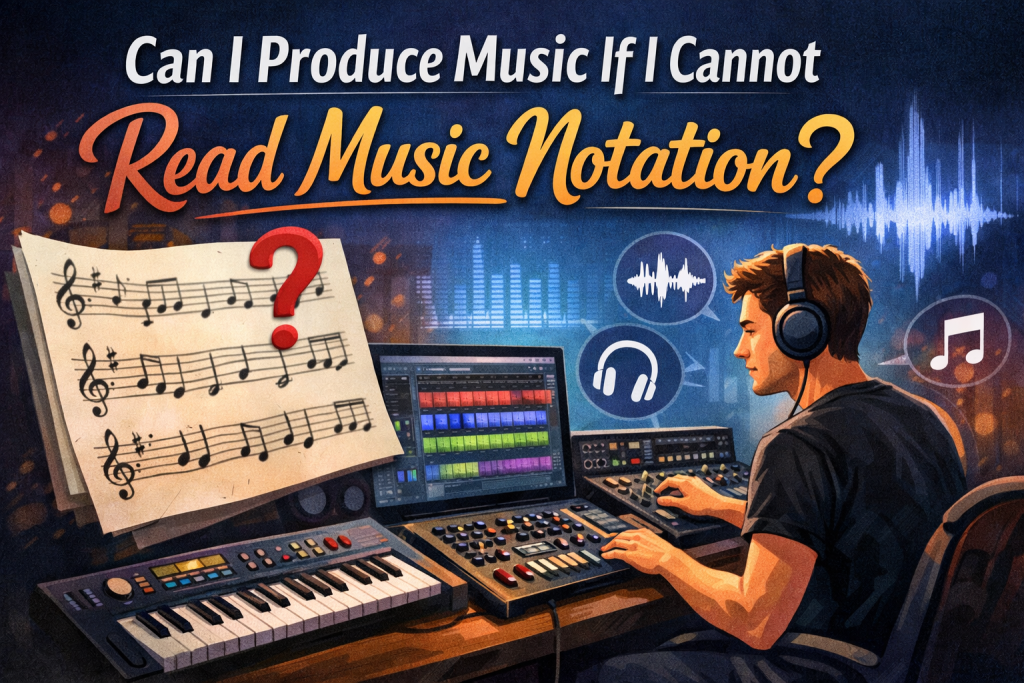
Can I Produce Music If I Cannot Read Music Notation?
Music production has evolved significantly over the years, and understanding its foundations can further enhance your creativity. Many producers start their journey by exploring different genres and styles, which can lead to unique sounds and artistic expressions. Embrace experimentation with various musical elements to find what resonates with you. Additionally, connecting with a community of fellow producers can provide valuable insights and encouragement.
As you dive deeper into music production, consider setting specific goals for your projects. These could range from completing a certain number of tracks each month to mastering specific production techniques. Having clear objectives can help maintain your motivation and focus.
Moreover, the rise of online tutorials and forums has made it easier than ever to learn music production without formal training. You can find countless video tutorials, blogs, and courses that cater to all skill levels, providing step-by-step guidance on everything from basic beat-making to advanced mixing techniques.
Additionally, many platforms now offer interactive learning experiences, where you can receive feedback on your work from experienced producers. This can greatly accelerate your learning curve and help you refine your sound.
Networking is another key aspect of music production. Attend local music events, workshops, or online webinars to meet like-minded individuals. Collaborating with other musicians can not only enhance your skills but also expose you to new ideas and techniques that you can incorporate into your work.
Consider exploring different genres that interest you, as this can spark new ideas and inspire creativity. Each genre has its own unique characteristics, and understanding these can enhance your versatility as a producer.
It’s also essential to stay updated on the latest trends in music production. The industry is constantly evolving, and keeping abreast of new technologies, genres, and production techniques will ensure that your work remains fresh and relevant.
One of the most common questions aspiring producers ask is: “Can I produce music if I cannot read music notation?”
In addition to DAWs, familiarize yourself with various audio plugins that can expand your sonic possibilities. There are countless free and paid options available, suitable for any style of music. Experimenting with different sounds and effects will help you develop your unique sound signature.
The short answer is absolutely yes. In today’s digital music landscape, reading traditional sheet music is not a requirement for creating professional, high‑quality tracks. Modern tools, technology, and intuitive workflows have made music production more accessible than ever.
Here’s why you can still become an amazing music producer — even without reading notation.
1. Music Production Tools Have Evolved
Technology has completely transformed how music is created. You no longer need to read sheet music to compose or arrange songs.
Digital Audio Workstations (DAWs)
Programs like FL Studio, Ableton Live, Logic Pro, and GarageBand allow you to:
- draw notes visually on a piano roll
- adjust pitch, timing, and velocity with your mouse
- build melodies, harmonies, and rhythms without notation
The entire process is visual, intuitive, and beginner‑friendly.
MIDI Controllers
MIDI keyboards and pad controllers let you:
- play notes directly into your DAW
- record melodies and chords by ear
- edit everything afterward with no notation required
Loops and Samples
Many producers build full tracks using:
- drum loops
- melodic samples
- vocal chops
- sound packs
This approach bypasses notation entirely and focuses on creativity.
2. Learning by Ear
Some of the world’s best producers rely on their ears, not sheet music.
Play by Ear
If you can:
When using loops and samples, consider customizing them to fit your style. You can alter their pitch, tempo, or effects to create something truly original. This empowers you to maintain creative control over your projects while utilizing available resources.
Moreover, developing a strong intuition for music production involves listening to various music styles actively. Dissecting songs that inspire you can help you understand what makes them effective, from arrangement to production techniques.
- recognize melodies
- pick out chords
- feel rhythm intuitively
…you already have the foundation for music production.
Audio Editing
DAWs let you:
- cut
- stretch
- pitch‑shift
- layer
- manipulate audio
—all based on how it sounds, not how it looks on a staff.
A strong musical ear is often more valuable than reading notation.
3. Music Theory Without Notation
You can learn music theory visually and practically — no sheet music required.
Chord Progressions
Many DAWs include:
- chord generators
- scale helpers
- visual chord charts
These tools help you build harmonies without reading notation.
Online Tutorials
Countless courses teach theory through:
- shapes
- patterns
- ear training
- hands‑on examples
Additionally, consider investing time in learning basic mixing and mastering techniques. Understanding how to balance levels, apply EQ, and properly compress your tracks can significantly improve the overall quality of your music, making it sound more professional.
In conclusion, whether you’re starting from scratch or refining your skills, remember that the essence of music production lies in your creativity and how you express yourself. Keep the focus on developing your unique sound and enjoying the journey — the end goal is to create music that resonates with both you and your audience.
Ultimately, as you progress, you might find that learning to read music notation could complement your production skills, but it is by no means a prerequisite for success. Emphasizing your strengths, staying curious, and continuously evolving will set you on the path to becoming an exceptional music producer.
Theory becomes a tool, not a barrier.
4. Collaboration and Outsourcing
If notation is ever needed, you can collaborate with others who have that skill.
Session Musicians
Hire musicians to:
- play complex parts
- record live instruments
- interpret written music
Online Collaboration
Platforms connect you with:
- composers
- instrumentalists
- arrangers
You can focus on your strengths — beat‑making, sound design, mixing — while others handle notation‑heavy tasks.
5. Successful Producers Who Don’t Read Music
Many iconic musicians and producers built legendary careers without reading notation.
Examples include:
- Paul McCartney
- Kanye West
- Quincy Jones (famously relied more on ear and instinct)
Remember, the journey of a music producer is an ongoing adventure filled with creativity and self-discovery. Your unique approach and perspective are what will ultimately define your sound and artistic identity.
Their success proves that creativity, passion, and intuition matter far more than reading sheet music.
6. Embrace Your Unique Process
Every producer creates differently. If notation isn’t part of your workflow, that’s perfectly fine.
Trust Your Instincts
If it sounds good, it is good.
Keep Learning
You can always learn notation later if you choose — but it’s not required to start producing today.
Conclusion
Ultimately, the question remains: Can I Produce Music If I Cannot Read Music Notation? The answer is a resounding yes! You do not need to read music notation to become a successful music producer. Modern tools, intuitive workflows, and a strong musical ear can take you just as far — if not further — than traditional notation skills.
You do not need to read music notation to become a successful music producer. Modern tools, intuitive workflows, and a strong musical ear can take you just as far — if not further — than traditional notation skills.
Focus on what inspires you. Use the tools available to you. Create music in the way that feels natural.
Music is about emotion, expression, and connection — and there are countless ways to achieve that without ever reading a sheet of music.
Lastly, it’s important to celebrate your progress and achievements, no matter how small. Each completed project is a step forward in your journey as a music producer, and acknowledging your growth will keep you motivated.
As you embark on your music production journey, remember that creativity comes in many forms. Focus on what inspires you, leverage the tools available, and create music in a way that feels natural to you.
For those looking to expand their knowledge further, consider exploring various resources and communities dedicated to music production. Engaging with others in the field can provide valuable insights and foster growth in your artistic journey.
In summary, music is about emotion, expression, and connection — and there are countless ways to achieve that without ever reading a sheet of music. Your journey as a producer is uniquely yours, and embracing your path will lead to remarkable creations.
Through persistence, passion, and an open mind, you can navigate the world of music production and become the artist you’ve always dreamed of being. So, dive in, create, and enjoy the process of making music.
As you continue to explore and create, keep asking yourself: Can I Produce Music If I Cannot Read Music Notation? The answer is always yes, as long as you have the passion and determination to bring your musical ideas to life.
Further Reading:
Resources to help you go deeper
- dive deeper with The Musician’s Marketing Playbook
- check out Vulnerable Creator’s Marketing Playbook
- grab your copy of Pitch Yourself Without Cringing
- explore Build a Brand That Feels Like You