

Top 5 Essential Tips for Achieving Professional Vocal Recordings at Home
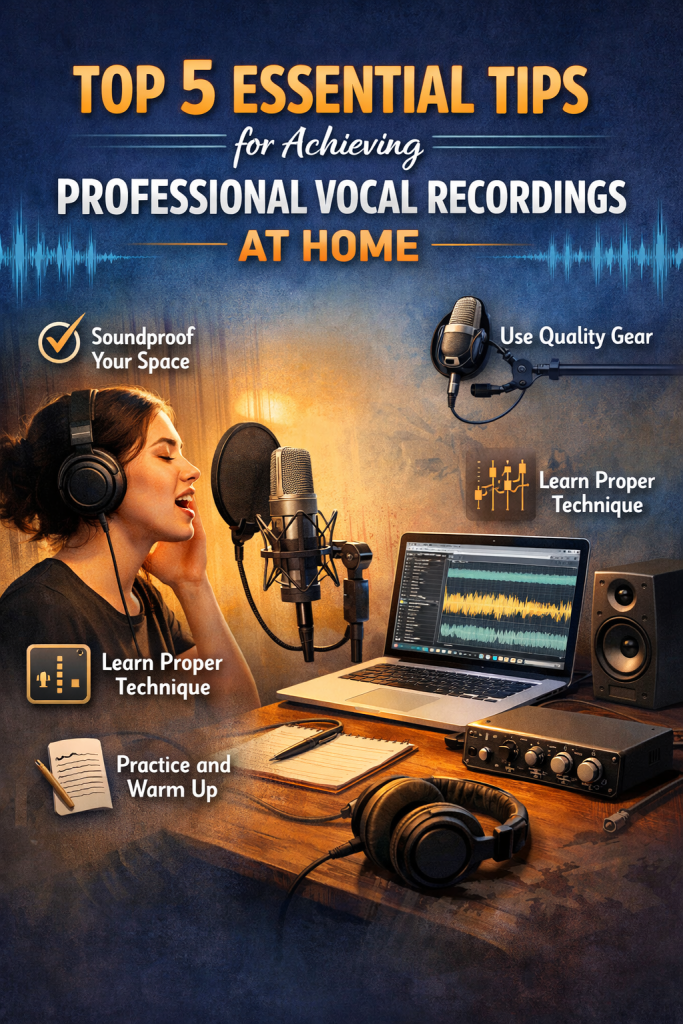
Top 5 Essential Tips for Achieving Professional Vocal Recordings at Home
Recording vocals at home has never been more accessible, but achieving professional‑quality results still requires intention and technique. Even in a small home studio with minimal gear, you can capture clean, polished vocals by focusing on the fundamentals. Below are five essential tips to help you elevate your vocal recordings and get mix‑ready results from your home setup.
With the rise of home studios, many aspiring artists have turned to self-recording. Understanding how to effectively achieve professional vocal recordings at home is crucial for anyone looking to create high-quality music. Let’s dive deeper into the essential techniques that can make your recordings sound polished and professional.
1. Create a Suitable Recording Environment
Consider your room when setting up your recording space. If you’re in a noisy neighborhood or your home is prone to sounds like traffic or children playing, soundproofing measures become even more important. Heavy curtains, carpets, and strategic furniture placement can help absorb sounds. Experimenting with different setups in your space can reveal surprising differences in sound quality.
Your recording environment has a huge impact on vocal clarity. Room reflections, background noise, and echo can degrade your recording before it even reaches your DAW. A controlled, quiet space is the foundation of a professional vocal sound.
How to Improve Your Recording Space
- Use acoustic treatment: Foam panels, bass traps, or thick blankets help absorb reflections.
- Record in a small, quiet room: A walk‑in closet filled with clothes can act as a natural vocal booth.
- Use a reflection filter: Portable vocal booths or reflection filters reduce room sound and isolate the mic.
2. Choose the Right Microphone and Positioning
The microphone you choose — and how you position it — dramatically affects the tone and detail of your vocal recording. Condenser microphones are the go‑to choice for vocals due to their sensitivity and clarity.
Research and experiment with different mic types if possible. Dynamic microphones can also be useful in noisy environments due to their directionality. Understanding these different types can give you an edge when selecting the right equipment for your needs.
Further, adjusting your mic height based on the vocalist’s unique sound can yield different tonal qualities. This small adjustment can often make a significant difference in capturing the best vocal performance.
Key Tips for Microphone Selection and Placement
- Use a quality condenser microphone for detailed, expressive vocal capture.
- Position the mic 6–12 inches from the singer’s mouth for a balanced tone.
- Use a pop filter to maintain distance and reduce plosives.
- Angle the mic slightly off‑axis to reduce harshness and sibilance.
3. Control Plosives and Sibilance
Plosives (“P” and “B” sounds) and sibilance (“S” sounds) can ruin an otherwise great take. These issues are common in home recordings but easy to manage with the right tools.
How to Avoid Plosives and Sibilance
- Use a pop filter to block bursts of air.
- Record slightly off‑axis to reduce both plosives and harsh “S” sounds.
- Use a de‑esser in post‑production to tame remaining sibilance.
Using a combination of techniques, such as side-chain compression, can help manage sibilance during post-production, allowing smoother transitions between vocal phrases.
4. Monitor and Adjust Input Levels
Proper gain staging ensures your recording is clean, dynamic, and free from distortion. Too much gain causes clipping; too little introduces noise.
How to Set Proper Input Levels
- Aim for peaks between –6 dB and –3 dB to maintain headroom.
- Avoid hitting 0 dB, which causes clipping and distortion.
- Monitor in real time using headphones to catch issues early.
5. Use Vocal Compression and EQ Wisely
Even a great raw vocal benefits from subtle processing. Compression and EQ help your vocal sit naturally in the mix without sounding over‑processed.
Taking the time to listen critically while adjusting your levels can help in identifying potential issues before they become problematic in the final mix.
How to Apply Compression and EQ for Vocals
- Compression: Use a ratio around 3:1 or 4:1 and adjust the threshold so only the loudest peaks are compressed.
- EQ:
- Roll off below 80–100 Hz to remove rumble.
- Boost 2–5 kHz for clarity and presence.
- Cut harshness in the 6–10 kHz range if needed.
- Use subtle effects: Light reverb or delay adds depth without overwhelming the vocal.
Final Thoughts
Professional‑sounding vocal recordings at home are absolutely achievable with the right techniques. By optimizing your recording environment, choosing the right microphone placement, controlling unwanted noises, managing input levels, and applying thoughtful post‑processing, you can capture clean, polished vocals that shine in any mix. With practice and attention to detail, your home recordings will sound more professional and more consistent every time.
Remember that vocal processing should enhance, not overpower. Utilizing automation during your mixing can ensure that the vocal remains consistent throughout the track while allowing for dynamic changes when necessary.
As you refine your technique, always keep in mind the importance of practicing regularly. Each session will teach you something new about your voice and the technology you utilize. Continuous learning and adaptation are key to mastering the art of professional vocal recordings at home.
Finally, seek out feedback from peers or online communities. Sharing your work and receiving constructive criticism can provide insights you might overlook, helping elevate your future projects.
Further Reading:
Resources to help you go deeper
- dive deeper with The Musician’s Marketing Playbook
- check out Vulnerable Creator’s Marketing Playbook
- grab your copy of Pitch Yourself Without Cringing
- explore Build a Brand That Feels Like You