

Efficient Project Management: Implementing The One Page System
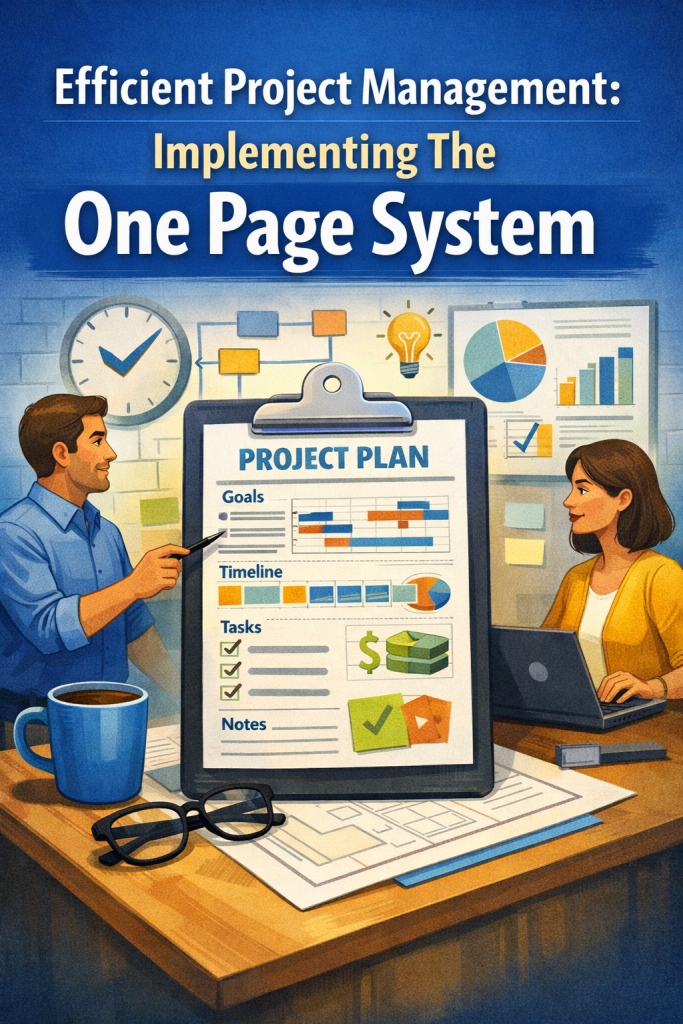
A one‑page project management system works because it compresses complexity into clarity. When every active project, priority, risk, and next step lives on a single surface, your brain no longer wastes energy juggling details or switching between dashboards. Instead of reacting to whatever feels urgent, you make decisions from a calm, informed, high‑level view.
Why a One‑Page System Reduces Overwhelm
Most project management tools fail not because they’re bad, but because they’re too big. They scatter information across tabs, boards, lists, and sub‑tasks. The more places your brain must look, the more cognitive load you carry. A one‑page system solves this by centralizing everything.
A single page creates:
- Cognitive relief because nothing is hidden or buried.
- Instant pattern recognition—you can see bottlenecks, clusters, and risks at a glance.
- Faster prioritization because the whole landscape is visible.
- Clearer communication with stakeholders or collaborators.
- Reduced decision fatigue because the next step is always visible.
This simplicity is especially powerful when you’re managing multiple projects with overlapping timelines. Instead of feeling scattered, you feel anchored.
How a One‑Page View Changes the Way You Work
A one‑page system shifts you from reactive to proactive. Instead of responding to whatever pings your inbox or Slack, you make decisions based on the full picture.
This shift creates several benefits:
- You stop losing track of projects because nothing slips into the background.
- You catch risks early because you can see where deadlines cluster or dependencies collide.
- You maintain momentum because every project has a visible next action.
- You reduce stress because you’re no longer relying on memory.
The one‑page system becomes your single source of truth—a grounding point you return to daily.
What to Include on Your One‑Page Template
A strong one‑page template balances detail with brevity. Too much information and the page becomes cluttered. Too little and you lose clarity. The goal is to capture the essentials of each project in a way that’s instantly scannable.
Key elements include:
- Project name — the anchor for quick identification.
- Owner or stakeholders — who is responsible or involved.
- Deadline or timeline — including major milestones.
- Current status — a brief, honest snapshot.
- Next action — the single most important step to move it forward.
- Risks or blockers — anything that could delay progress.
- Resources — budget, staffing, tools, or approvals required.
Each project gets one row or one small block. The goal is not to document everything—it’s to surface what matters.
Designing the Page for Instant Readability
A one‑page system works best when your brain can interpret it in seconds. Visual cues turn the page into a dashboard rather than a wall of text.
Useful cues include:
- Green/yellow/red indicators for project health.
- Bold or highlighted deadlines approaching within a week.
- Icons or symbols to mark risks, dependencies, or approvals.
- Shaded sections for high‑priority projects.
- Grouping projects by category, team, or timeline.
These cues reduce interpretation time and help you spot issues before they escalate.
Keeping the Page Alive Through Daily Updates
A one‑page system only works if it stays current. The update process should be quick—five minutes at the start or end of each day.
Daily updates help you:
- Know exactly what needs attention.
- Adjust priorities as new information emerges.
- Avoid last‑minute scrambles.
- Maintain a sense of control across all projects.
This rhythm turns the page into a living tool rather than a static document.
Weekly Reviews to Keep the System Sharp
As your workload evolves, your one‑page system should evolve with it. A weekly review ensures the page stays aligned with your real workflow.
During your review, you can:
- Remove outdated fields or add new ones.
- Reorganize projects based on urgency or category.
- Update statuses and next actions.
- Identify patterns—recurring risks, slow‑moving projects, or overloaded timelines.
- Refine the layout for clarity.
The goal is not to create the perfect template once—it’s to maintain a template that stays useful.
How the One‑Page System Transforms Project Management
When everything lives on one page, you gain a level of clarity that’s hard to achieve with traditional tools. You can see bottlenecks, anticipate risks, and make decisions faster. You also reduce stress because you’re no longer relying on memory or scattered notes.
The one‑page system becomes:
- A grounding point
- A decision‑making tool
- A communication aid
- A prioritization engine
- A stress reducer
It’s simple, but it’s powerful—because clarity is powerful.
As you think about implementing or refining your own one‑page system, which part feels like it would make the biggest difference right now: the template structure, the visual cues, the update rhythm, or the way you prioritize projects within the page?