

Finding Calm in Chaos: Strategies to Stay Grounded When Life Feels Chaotic
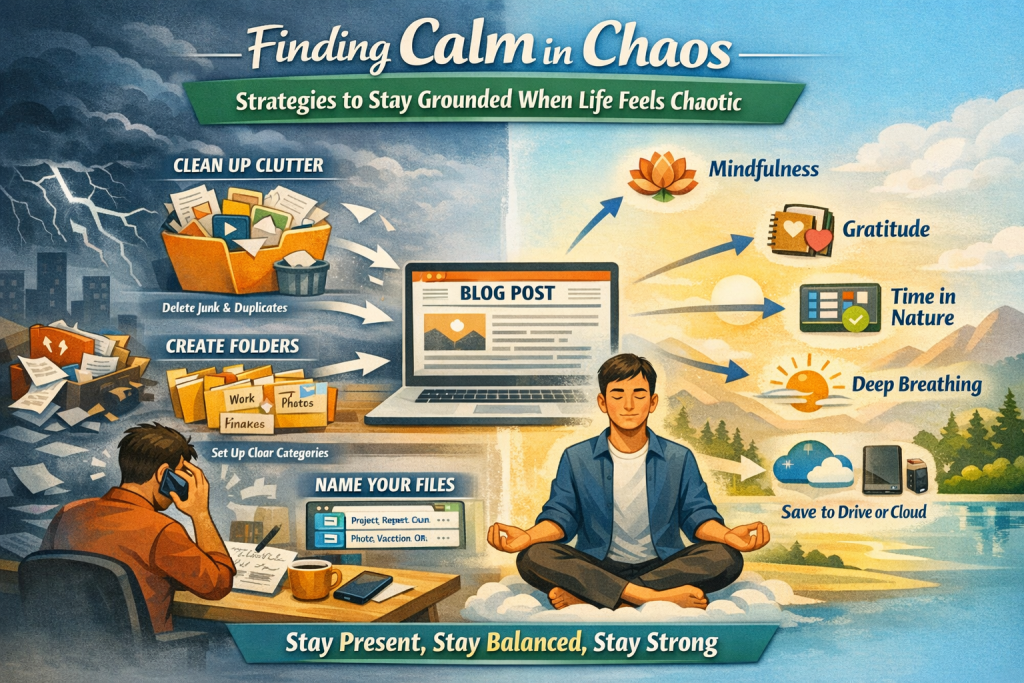
Chaos becomes harder to navigate when your mind is scattered, your routines dissolve, or your body feels stuck in a stress response. Grounding practices work because they give you small, repeatable anchors—places where your nervous system can settle, your thoughts can slow, and your sense of agency can return. When life feels unpredictable, these anchors create pockets of stability you can rely on.
Mindfulness as a stabilizing force
Mindfulness interrupts the mental spiral that chaos often triggers. When your attention is pulled into the future or overwhelmed by what‑ifs, your body reacts as if danger is present. Bringing your awareness back to the current moment shifts your nervous system out of urgency and into regulation.
Mindfulness practices that help include:
- Slow, intentional breathing that lengthens your exhale
- Body scans that reconnect you with physical sensation
- Quiet observation—watching your thoughts without engaging them
- Short pauses throughout the day to reset your attention
These practices don’t remove the chaos around you. They strengthen your ability to meet it with clarity rather than reactivity.
Nature as a grounding environment
Nature regulates the body in ways that are both subtle and profound. Sensory cues—fresh air, natural light, the sound of water or wind—signal safety and calm to your nervous system.
Time outdoors helps you:
- Reset your stress response
- Feel more connected and less overwhelmed
- Shift perspective when life feels too big
- Reclaim a sense of spaciousness
Even brief moments outside—a walk around the block, sitting near a window, touching a plant—can create a noticeable shift in your internal state.
Routine as a source of stability
When everything feels unpredictable, routine becomes a form of self‑support. A simple daily structure gives your mind something steady to hold onto.
Supportive routines help you:
- Reduce decision fatigue
- Create predictability in an unpredictable time
- Anchor your day with familiar rhythms
- Maintain a sense of agency
These routines don’t need to be rigid. Even small, consistent rituals—morning tea, a midday stretch, an evening wind‑down—can create a sense of continuity.
Self‑care as a grounding practice
Self‑care replenishes the physical and emotional resources you draw from during stressful periods. When life feels chaotic, your system burns through energy faster, making replenishment essential rather than optional.
Grounding self‑care includes:
- Adequate sleep to stabilize mood and cognition
- Nourishing meals that support energy and clarity
- Movement that helps release tension
- Activities that bring comfort, joy, or quiet
Self‑care isn’t indulgence—it’s maintenance for your resilience.
Support as a grounding connection
Chaos feels heavier when you carry it alone. Reaching out to others provides emotional grounding, perspective, and reassurance.
Support can come from:
- Friends or family who listen without judgment
- Communities or groups that understand your experience
- Mentors or colleagues who offer guidance
- Therapists or counselors who help you navigate stress
Connection is one of the most powerful antidotes to overwhelm because it reminds you that you don’t have to hold everything by yourself.
Bringing these strategies together
Grounding isn’t a single action—it’s a collection of small practices that help you return to yourself. When you combine mindfulness, nature, routine, self‑care, and support, you create a personal toolkit that helps you stay centered even when life is unpredictable. Over time, these practices build emotional resilience, making it easier to navigate chaos without losing your sense of stability.
As you think about your own life right now, which grounding anchor feels like it would make the biggest difference for you—mindfulness, nature, routine, self‑care, or support?