

How to Record Music at Home Without Disturbing Neighbors
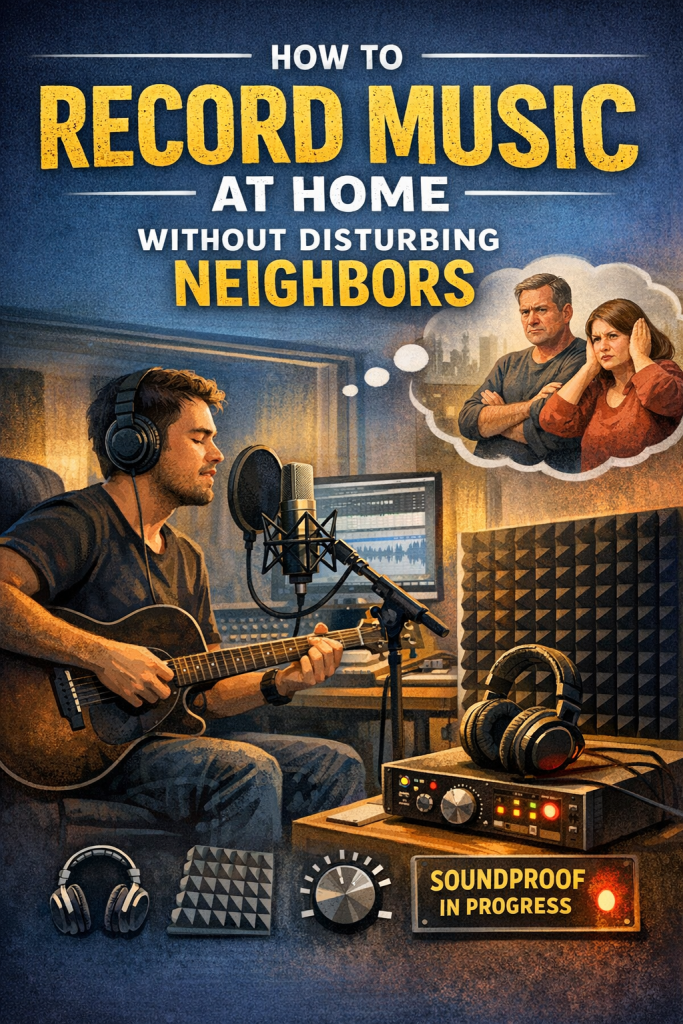
How to Record Music at Home Without Disturbing Neighbors
How can you record music at home without disturbing neighbors?
Recording music at home doesn’t have to mean bothering your neighbors — with the right approach, you can capture clean, professional audio while keeping noise levels under control. Whether you live in an apartment, townhouse, or shared building, simple strategies like smart mic technique, low‑volume performance habits, basic soundproofing, and thoughtful scheduling can make a huge difference. This guide walks you through how to record confidently at home without disturbing anyone around you, so you can protect your creativity and your relationships at the same time.
Recording music at home is one of the most empowering parts of being a modern musician. You get to create on your own schedule, in your own space, with your own tools. But if you live in an apartment, townhouse, or shared building, there’s one challenge that can overshadow the joy of home recording: noise.
No one wants to be “that neighbor.” And no musician wants to feel creatively restricted.
The good news? With the right combination of soundproofing, timing, communication, and smart recording techniques, you can record music at home without disturbing anyone around you. You can protect your creativity and your relationships — and build a space that feels like a true sanctuary for your art.
This guide walks you through how to do exactly that.
🎚️ Understanding How Sound Travels
Before you start soundproofing, it helps to understand what you’re fighting against.
Sound travels in waves — and different frequencies behave differently:
- Low frequencies (bass, kick drums) travel the farthest and penetrate walls easily
- Mid and high frequencies are easier to absorb with panels and soft materials
- Vibrations travel through floors, desks, and building structures
This is why your neighbor might not hear your vocals, but they’ll definitely feel your sub‑bass.
Once you understand this, you can target your soundproofing more effectively.
🧱 1. Soundproof Your Space (The Most Important Step)
Soundproofing isn’t just about keeping noise in — it also improves your recording quality by reducing reflections, echoes, and outside interference.
You don’t need to build a professional studio. Even small changes make a big difference.
Acoustic Panels
Acoustic panels absorb sound and reduce reflections. They’re especially effective for mid and high frequencies.
Tips:
- Choose panels with good density
- Mix soft panels with bass traps for balance
- Place panels at reflection points (behind monitors, opposite walls, corners)
Panels won’t block bass, but they will reduce overall noise leakage.
Seal Gaps
Sound escapes through even the smallest openings.
Use:
- weather stripping around doors
- door sweeps to block the bottom gap
- soundproofing caulk around windows and frames
- heavy curtains or window inserts
These simple fixes dramatically reduce noise leakage.
Floating Floor (Advanced)
If you produce bass‑heavy music or want maximum isolation, a floating floor can prevent vibrations from traveling through the building.
It’s an investment — but incredibly effective.
Rugs, Carpets, and Soft Furnishings
Soft materials absorb sound and reduce reflections. They won’t fully soundproof your room, but they help create a quieter, more controlled environment.
🎧 2. Use Headphones (Your Quietest, Easiest Solution)
High‑quality closed‑back headphones are essential for home recording.
Benefits:
- no sound leakage
- detailed monitoring
- freedom to record at any hour
- zero disturbance to neighbors
If you want to mix quietly, pair headphones with room‑correction software for accuracy.
🎤 3. Use Smart Recording Techniques
You can reduce noise simply by adjusting how you record.
Use Dynamic Microphones
Dynamic mics capture less ambient noise than condensers — perfect for home environments.
Use Directional Microphones
Cardioid or hyper‑cardioid mics pick up sound from one direction and reject noise from others.
Experiment With Mic Placement
Small adjustments can dramatically reduce unwanted noise.
Try:
- moving closer to the mic
- angling the mic away from reflective surfaces
- recording in a smaller, softer space (closet, corner booth)
⏰ 4. Consider Your Timing
Even with great soundproofing, timing matters.
- Record during daytime hours
- Avoid late‑night sessions with speakers
- Schedule loud takes when neighbors are likely out
A little awareness goes a long way.
🔉 5. Adjust Your Monitor Levels
If you prefer using studio monitors:
- keep the volume moderate
- reduce bass levels
- use smaller monitors in small rooms
- switch to headphones for detailed mixing
Low frequencies travel the farthest — reducing them helps everyone.
🗣️ 6. Communicate With Your Neighbors
This step is often overlooked — but incredibly effective.
Most noise conflicts come from surprise, not volume.
Try:
- letting neighbors know you make music
- asking if they have noise concerns
- offering to coordinate times if needed
- giving a heads‑up before loud sessions
A simple conversation can prevent months of tension.
🧽 7. Invest in Isolation Pads
Isolation pads sit under your monitors and prevent vibrations from traveling through your desk or floor.
Benefits:
- less low‑frequency rumble
- fewer complaints from downstairs neighbors
- tighter, more accurate monitor sound
They’re inexpensive and make a noticeable difference.
🖥️ 8. Use Software Solutions for Quiet Mixing
If physical soundproofing isn’t possible, technology can help.
Tools like:
- Sonarworks
- room‑correction plugins
- low‑volume mixing techniques
…allow you to mix accurately without cranking your speakers.
You can work quietly and professionally.
🏡 9. Build Good Neighbor Relationships
A little goodwill goes a long way.
Try:
- inviting neighbors to hear your music
- sharing your recording schedule
- asking for feedback on noise levels
When people feel included, they’re far more understanding.
🎵 Conclusion
Recording music at home without disturbing your neighbors is absolutely possible. With smart soundproofing, thoughtful timing, good communication, and the right tools, you can create freely while maintaining harmony in your building.
Your creativity deserves space. Your neighbors deserve peace. You can have both.
Keep creating, keep experimenting, and enjoy the freedom of making music at home — without worry.
Further Reading:
Resources to help you go deeper
- dive deeper with The Musician’s Marketing Playbook
- check out Vulnerable Creator’s Marketing Playbook
- grab your copy of Pitch Yourself Without Cringing
- explore Build a Brand That Feels Like You